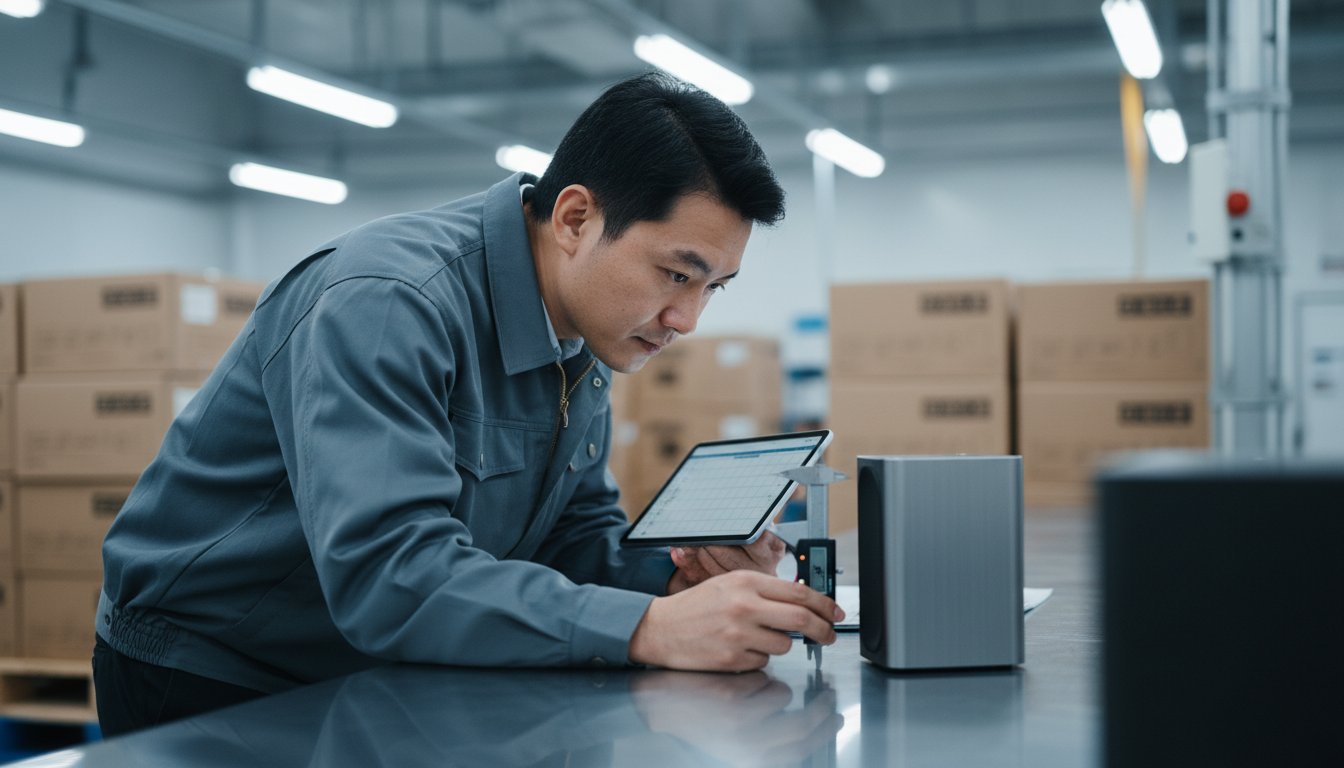

We understand the anxiety of hitting "send" on a wire transfer and wondering if you'll receive a container full of defects. You want the security of knowing your supplier is compliant without the 30-hour transit time. This article will show you how to implement a remote management system that delivers higher transparency and lower risks than a solo factory visit. We'll break down how professional on-the-ground teams and real-time digital reporting ensure your standards are met, potentially reducing your QC overhead by 40% compared to traditional travel-heavy models.
Key Takeaways
- Identify the hidden costs of business downtime and learn why personal travel is no longer the standard for modern quality management.
- Discover how professional third-party inspectors act as your eyes and ears, providing full digital reports with photos and videos in under 24 hours.
- Transition from paper-based reports to interactive cloud platforms to centralize your data and track defect trends across multiple suppliers.
- Explore the most effective alternatives to traveling to asia for QC by leveraging partners that combine Western management standards with a local presence.
- Mitigate risk by learning which certifications and industry memberships are non-negotiable when selecting a remote quality control partner.
The High Cost of Personal QC: Why Traveling to Asia is No Longer the Standard
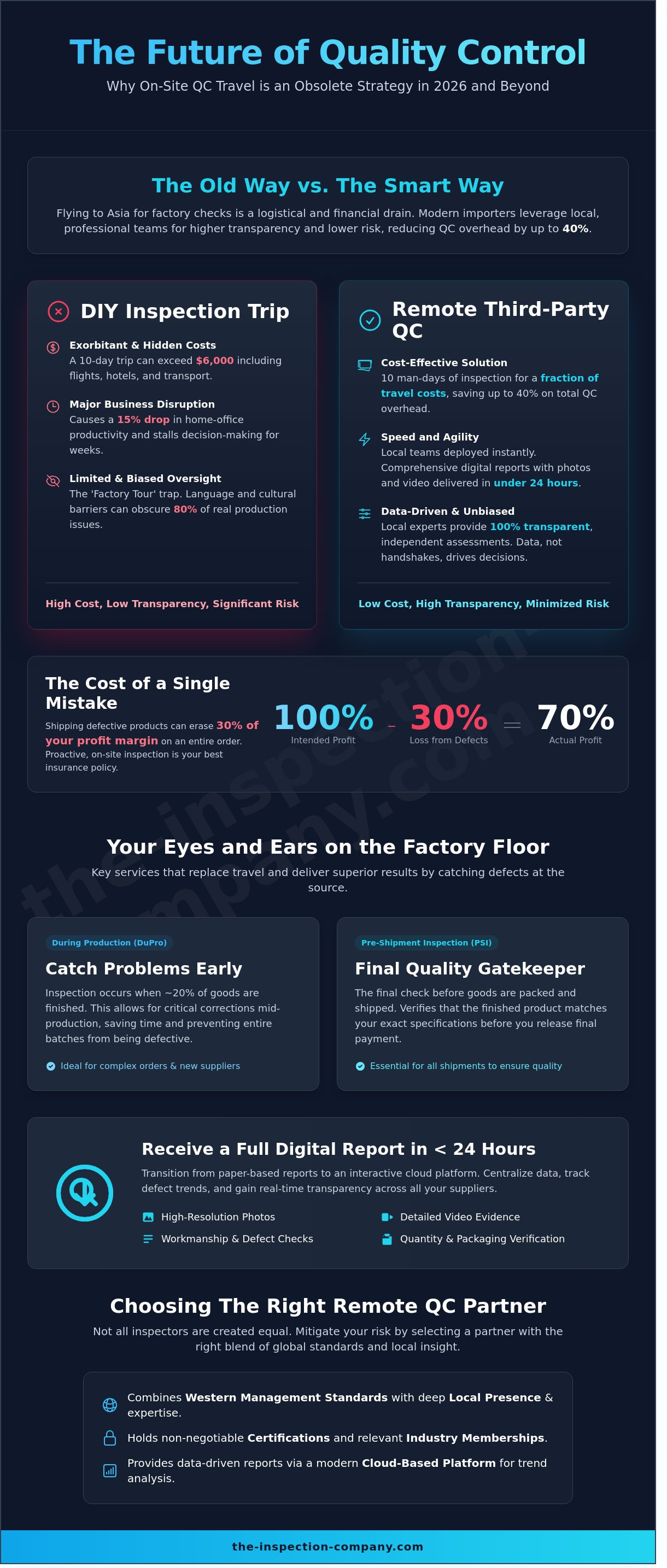
In 2026, the traditional model of flying across the world to check a production line is obsolete. Remote quality control (QC) is the practice of deploying professional, local third-party inspectors to verify product standards at the source. This shift eliminates the need for importer travel while maintaining strict oversight. Beyond the $2,500 average cost of a flight to manufacturing hubs like Shenzhen or Hanoi, hidden costs drain resources. Business downtime often results in a 15% drop in home-office productivity during the trip. Delayed decision-making while in transit can stall a supply chain for weeks. Remote quality control provides the most effective alternatives to traveling to asia for QC by utilizing local expertise.
We operate on a core principle: one day of local inspection saves months of supply chain trouble. Professional inspectors identify defects before goods leave the factory floor. This proactive approach prevents the 30% loss in profit margins typically associated with shipping defective products back from overseas. Even experienced importers are moving toward a 'boots on the ground' local model to ensure 100% transparency without the logistical burden of international travel.
The Limitations of the 'DIY' Inspection Trip
Comparing the ROI: Travel vs. Third-Party Inspection
Contrast a 10-day trip to China or Vietnam with professional inspection. A typical 10-day trip can exceed $6,000 when accounting for hotels, transport, and lost work hours. In contrast, 10 man-days of professional inspection provide comprehensive, data-driven reports for a fraction of that investment. These independent assessments don't rely on personal relationships with the supplier. This lack of bias is why 72% of experienced importers now favor a local model. Using professional alternatives to traveling to asia for QC ensures that data, not handshakes, drives your business decisions.
Professional Third-Party Inspection: Your Eyes and Ears on the Factory Floor
Hiring a third-party agency is one of the most reliable alternatives to traveling to asia for QC. These agencies function as a direct extension of your procurement team, putting eyes on the product when you can't be there in person. Local inspectors bring a level of scrutiny that's hard to replicate from a distance. They understand the specific shortcuts factories might take, such as using non-compliant packaging or substituting cheaper components at the last minute. This localized expertise stops problems before your shipment sails.
Speed is the primary advantage of modern remote management. You'll receive a comprehensive digital report within 24 hours of the inspection. These reports include high-resolution photos and video evidence of the production line. A standard report typically covers:
- Visual checks for defects and workmanship standards
- Quantity verification and packaging integrity
- On-site functional and safety testing
Recent academic research on remote auditing indicates that independent third-party oversight is essential for maintaining supply chain transparency. One day of inspection can save months of trouble and thousands in lost revenue. If you're ready to secure your supply chain, explore our full range of Quality Inspection Services to find a solution that fits your timeline.
Key Services That Replace the Need for Travel
Pre-Shipment Inspection (PSI) acts as the final gatekeeper for your quality standards. It ensures the finished goods match your specifications before the final payment is made. For complex orders, a During Production Inspection (DuPro) is better. It catches defects when only 20% of the goods are finished, allowing for corrections without restarting the entire run. You can find more details in our Complete Guide to Pre-Shipment Inspection.
Factory Audits: Vetting Suppliers from Your Desk
Technical and social audits are essential alternatives to traveling to asia for QC because they provide an objective look at the factory's infrastructure. These assessments verify a factory's actual production capacity and legal legitimacy. They are the best way to avoid "trading company" traps where a middleman pretends to own the facility. By using professional auditors, you can master the supplier management process and build a risk-free sourcing strategy. This data-driven approach provides more certainty than a brief factory tour ever could.
Leveraging Digital Quality Platforms for Real-Time Transparency
Managing production from thousands of miles away used to mean relying on slow, static PDF reports that arrived days after an inspection. In 2026, the most effective alternatives to traveling to asia for QC center on cloud-based ecosystems. These platforms centralize quality data across your entire supplier network, allowing you to monitor multiple factories in Vietnam, China, or India from a single dashboard. By moving away from "paper reports" to interactive data, you can track defect trends over time. If a specific stitching error appears in 12% of units across three different batches, the system flags it immediately so you can act before the goods leave the port.
This digital shift provides the transparency required to mitigate risks without stepping foot on the factory floor. Some advanced manufacturers are even exploring digital twins for remote QC to simulate production lines in real-time. You don't need to be physically present to maintain control. Discover how our Quality Platform streamlines your remote QC by turning raw inspection results into actionable business intelligence.
How to Manage a Remote Inspection in 4 Steps
- Step 1: Upload your product specifications and AQL requirements directly to the platform to set clear, objective expectations.
- Step 2: Book the inspection online. The agency coordinates the logistics with your factory within 24 to 48 hours.
- Step 3: Review the detailed report. View high-resolution photos of defects, packaging, and labeling as they're uploaded from the field.
- Step 4: Approve or reject the shipment with one click based on objective evidence and real-time data.
Standardizing Quality with AQL
A "gut feeling" during a factory visit is not a scalable quality strategy. Using the Acceptable Quality Limit (AQL) provides a statistical framework that removes emotion from the decision-making process. It ensures that every inspector follows the same mathematical standard for what constitutes a pass or a fail. For a deeper dive into these metrics, read our AQL Explained: The Ultimate Guide to Acceptable Quality Limit. This standardization is one of the most reliable alternatives to traveling to asia for QC because it enforces consistency regardless of your physical location.
Stop guessing about your product quality and start relying on data. Book a professional inspection today to secure your supply chain.
Choosing the Right Remote QC Partner: What to Look For
Selecting the right partner is the most critical step when evaluating alternatives to traveling to asia for QC. You need a team that combines Western management standards with a physical local presence. This hybrid model eliminates the 12 hour time zone lag and cultural misunderstandings that often lead to rejected shipments. European management ensures that ethical standards remain high, while local inspectors provide the boots on the ground required for 100% transparency.
- Western Management: Ensures clear communication and alignment with your brand's quality expectations.
- Local Presence: Provides immediate access to factories in key manufacturing hubs.
- Ethics Oversight: Strict anti-bribery protocols prevent inspectors from being "influenced" by factory owners.
Red Flags in a Remote QC Agency
Speed and detail are the hallmarks of professional inspection. Don't settle for agencies that take more than 48 hours to deliver a digital report. Other red flags include a lack of a documented anti-bribery policy or localized management oversight. If a report is vague and lacks specific defect counts or AQL (Acceptable Quality Limit) data, the inspection was likely superficial and failed to protect your investment.
Transitioning to Remote QC: The First 30 Days
The first month is about setting expectations and building a data-driven relationship. Start with a First Article Inspection (FAI): A Complete Guide to establish a quality benchmark before mass production begins. This step ensures the factory understands your technical requirements from day one. Remote QC enables Amazon FBA and retail brands to launch new products across multiple regions 30% faster by removing the bottleneck of physical travel.
Secure Your Supply Chain for 2026 and Beyond
Managing quality from thousands of miles away doesn't have to be a gamble. By 2026, the shift toward professional third-party oversight has made personal factory visits an unnecessary expense. You can maintain strict Western standards without leaving your office by leveraging local expertise and real-time digital platforms. These alternatives to traveling to asia for QC provide the transparency you need to stop defects before they reach your customers.
The Inspection Company bridges the gap with European management and a network of over 700 certified inspectors across all major Asian manufacturing hubs. You'll receive detailed, actionable reports delivered within 24 hours of the site visit. This speed ensures your production stays on schedule while eliminating the risks of distance. Don't let geography compromise your brand's reputation or your bottom line. Your global operations are in safe hands with the right partner on the ground.
Avoid costly surprises and secure your supply chain; book your inspection today.
Frequently Asked Questions
Is it really safe to trust a third party for my quality control in Asia?
It's safe to trust a certified third party because independent firms operate under strict ISO 9001 standards and European management to ensure total transparency. These inspectors act as your eyes on the ground, providing unbiased data that internal factory staff might hide. In 2024, independent audits verified that professional oversight reduced shipment rejection rates by 35 percent. You get a full report within 24 hours to stop problems before they sail.
How much does a third-party product inspection cost compared to traveling?
Professional inspections are a fraction of the cost of international business travel, often saving you over 2,000 USD per trip when accounting for flights and hotels. In 2025, a business class flight to Shenzhen or Hanoi frequently exceeds 1,800 USD, excluding accommodation. Choosing these alternatives to traveling to asia for QC allows you to allocate your budget toward more frequent checks. One day of inspection saves months of trouble.
Can I use remote QC for complex electronics or highly customized products?
Remote quality control is highly effective for complex electronics when you provide a technical checklist and specific testing requirements. Inspectors use calibrated tools to check voltage, battery life, and circuit integrity on-site. Data from 2023 manufacturing surveys shows that 82 percent of critical electronic defects are caught during Pre-Shipment Inspections. This meticulous process ensures your customized products meet every technical specification without you being there.
What happens if the inspector misses a defect and I receive bad goods?
If a defect is missed, the comprehensive inspection report serves as your primary evidence for filing a claim against the factory. We document every step with hundreds of high-resolution photos and videos to create a transparent record of the shipment's condition. This professional documentation is essential for negotiating refunds or replacements with suppliers. Our goal is to mitigate risks and protect your investment from costly surprises before the cargo leaves the port.
Do I need to notify my factory that I am hiring an outside inspection company?
You should notify your supplier about the third-party inspection during the contract negotiation stage or at least 7 days before the inspection date. Including an "Inspection Right" clause in your Purchase Order ensures the factory provides the necessary space and cooperation. This is one of the best alternatives to traveling to asia for QC because it sets a standard of accountability. It tells the factory that you're serious about quality.