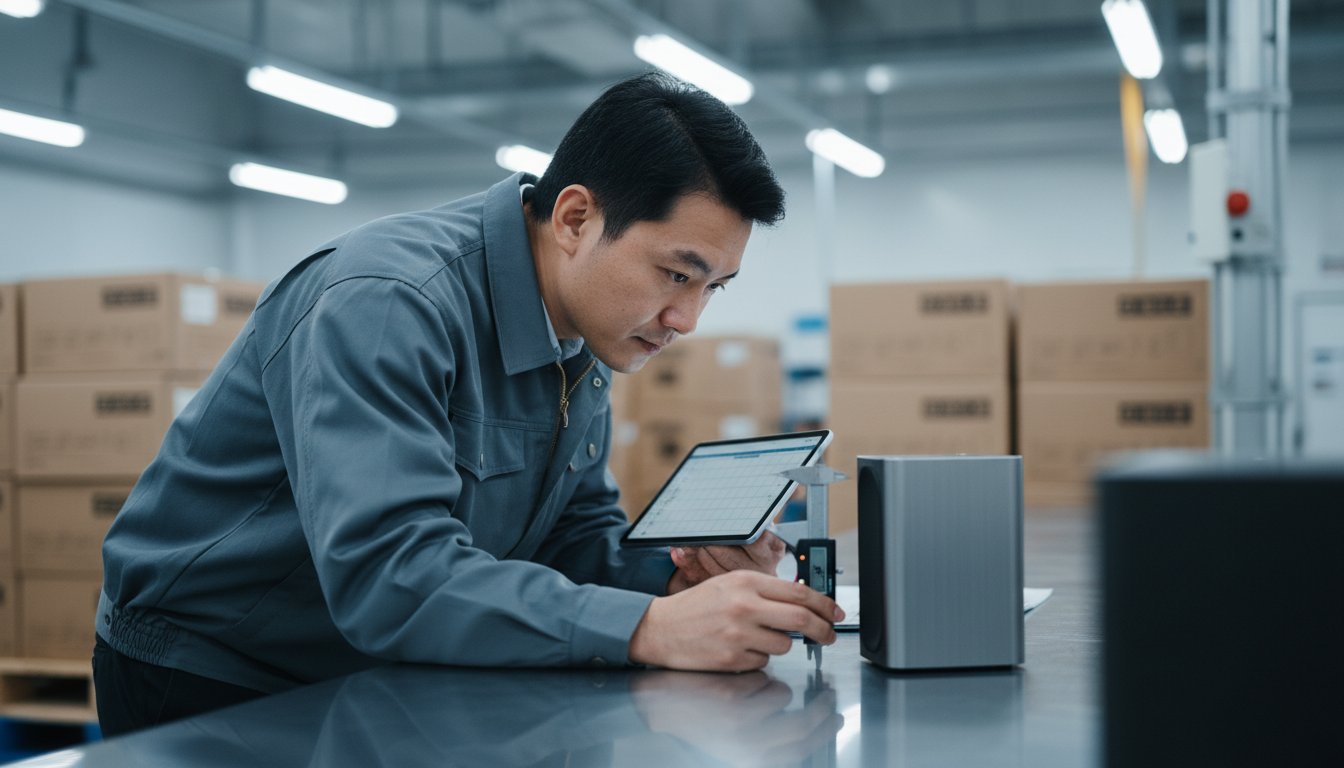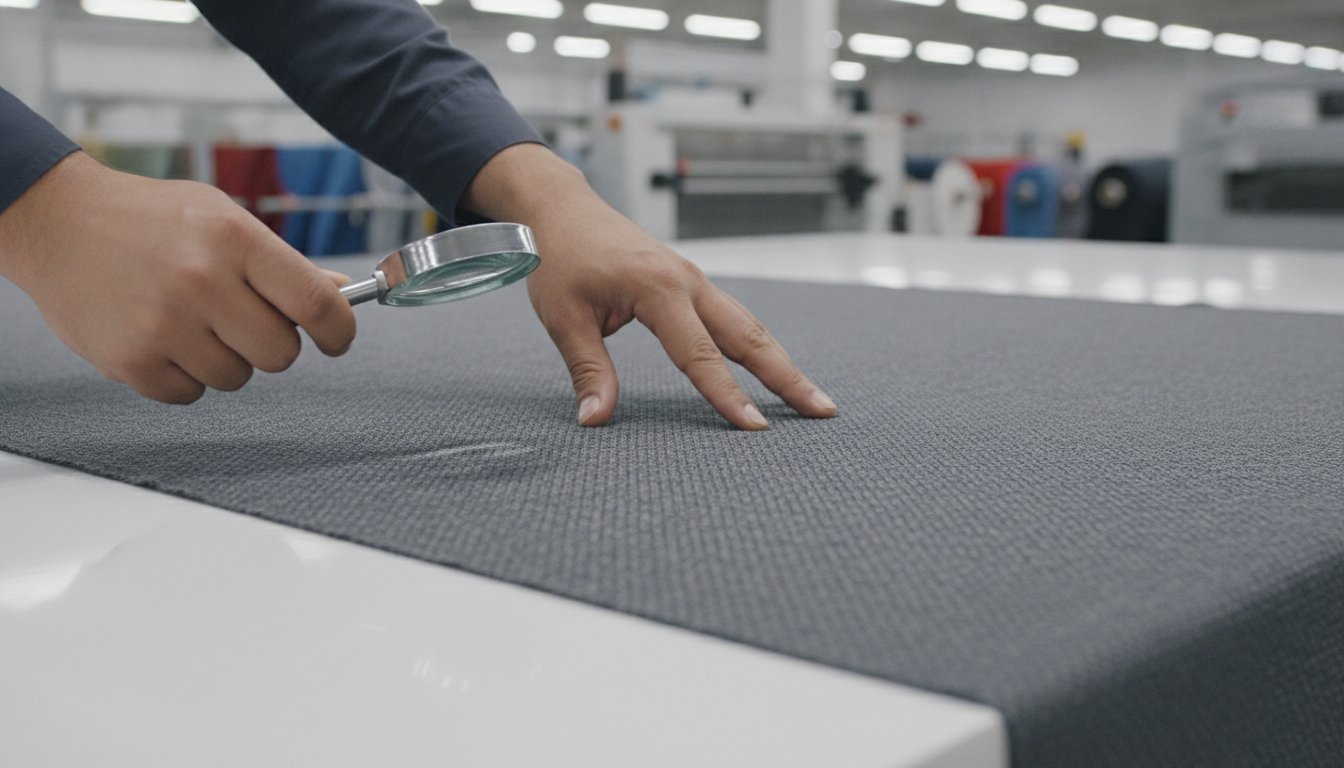

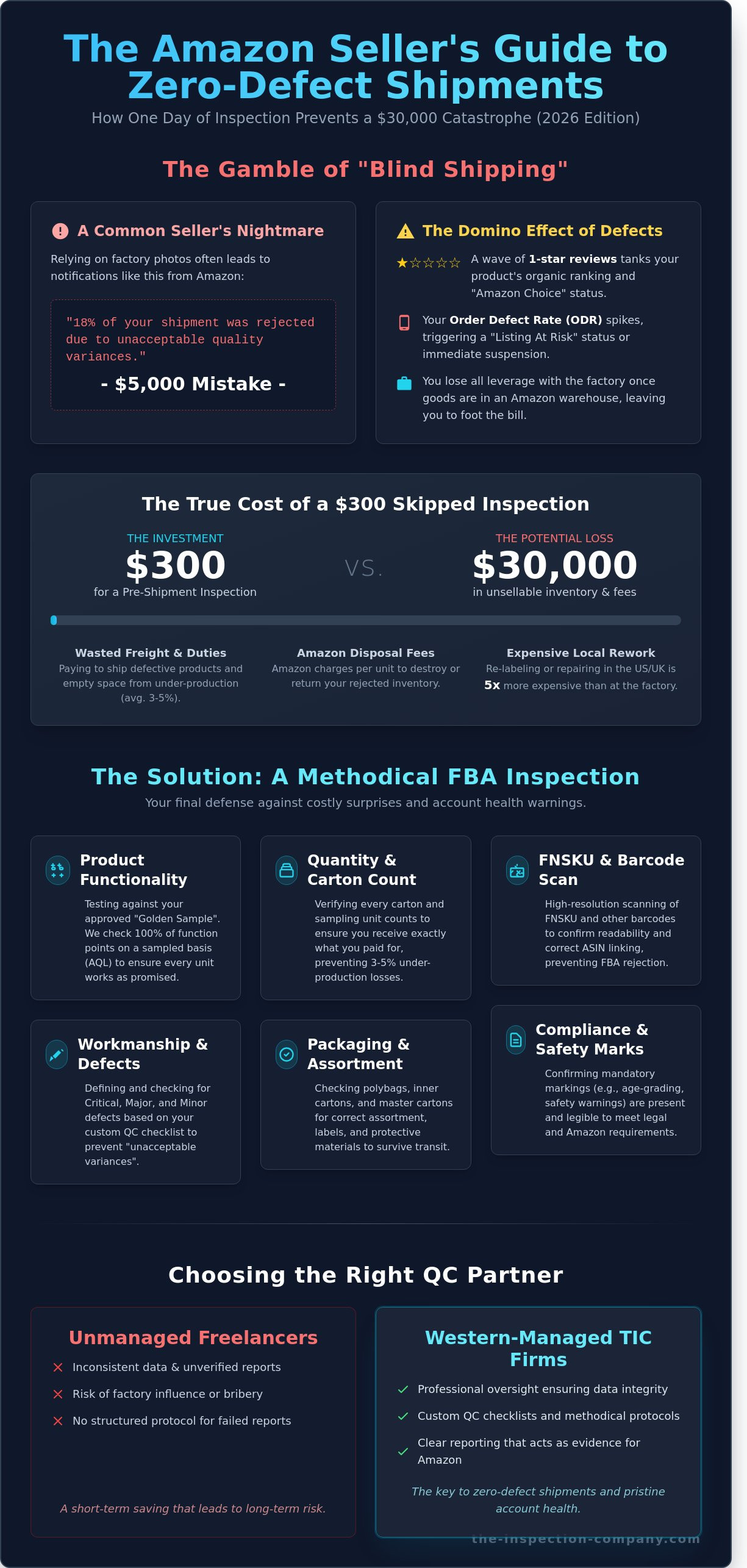
Imagine receiving a notification from Amazon Seller Central stating that 18% of your latest shipment was rejected due to "unacceptable quality variances." For many sellers, this $5,000 mistake is the reality of relying solely on factory-provided photos. You've worked hard to build your brand; yet one batch of defective products can trigger a wave of 1-star reviews and an immediate account suspension. It's a high-stakes environment where communication barriers with overseas factories often lead to expensive FBA re-labeling fees. Implementing third party quality control for amazon sellers is the only way to stop these problems before your shipment sails.
We understand that your business's survival depends on consistency and precision. You deserve the peace of mind that comes with knowing a professional, Western-managed eye is on the ground. This 2026 guide will teach you how to achieve zero-defect shipments and seamless FBA check-ins by utilizing methodical inspection protocols. You'll learn how one day of inspection can save months of trouble; ensuring your account health remains pristine while your competitors struggle with costly surprises.
Key Takeaways
- Understand why the 2026 Amazon landscape requires stricter compliance and how third party quality control for amazon sellers protects your account from costly rejections.
- Identify the critical checkpoints for FBA inspections, including product functionality testing against your "Golden Sample" and precise labeling verification.
- Learn why European-managed oversight is essential to avoid the inconsistent data and risks associated with unmanaged freelance inspectors.
- Discover how to implement a custom QC checklist and a failed report protocol that defines major, minor, and critical defects for your factory.
- Gain the tools to secure your shipments and avoid expensive surprises by conducting independent onsite verifications before final payment.
Why Amazon Sellers Require Specialized Third Party Quality Control
Third-party quality control is an independent, onsite verification of goods performed at the factory before you release final payment or authorize shipment. For international brands, Quality control (QC) ensures that every unit meets specific safety standards and customer expectations. By 2026, Amazon's enforcement of product safety and compliance documentation will reach new heights, making third party quality control for amazon sellers a mandatory part of the supply chain rather than an optional expense. One day of professional inspection saves months of account health disputes and potential legal liabilities.
Relying solely on a factory's internal QC is a high-stakes gamble. Factories often prioritize production speed over precision, leading to the "blind shipping" trap where defects remain hidden until a customer opens the box. Once defective goods land in an Amazon warehouse, you lose all leverage. You're stuck with the bill for shipping, storage, and disposal while your brand reputation takes a hit. Implementing third party quality control for amazon sellers is the only way to verify that your supplier hasn't cut corners on materials or packaging before the goods leave the country of origin.
Amazon's Compliance Enforcement and Your Account Health
Amazon monitors your Order Defect Rate (ODR) and return percentages with automated precision. A return rate exceeding 10% often triggers a "Listing At Risk" status or an immediate suspension. Professional inspection reports act as critical evidence during Amazon appeals, proving you've exercised due diligence in your manufacturing process. When Amazon issues a Technical Reference File (TRF) request, having a Testing, Inspection, and Certification (TIC) partner ensures you have the necessary documentation to keep your listing active and your account healthy.
The True Cost of Skipping FBA Inspection
Skipping a Pre-Shipment Inspection (PSI) creates massive hidden costs that quickly erase your profit margins. You'll pay for ocean freight, customs duties, and FBA storage for unsellable goods. If defects are discovered in the US or UK, re-labeling or repairing items at a local prep center is 5x more expensive than fixing them at the source. A single $300 inspection can prevent a $30,000 inventory loss by stopping defective goods before they leave the factory floor.
- Freight and Duties: You pay to ship air and trash if 20% of your batch is defective.
- Disposal Fees: Amazon charges per unit to destroy or return your inventory.
- Organic Ranking: High return rates tank your "Amazon Choice" status and search visibility.
Critical Checkpoints: What Your Amazon FBA Inspection Must Cover
Amazon's inbound requirements are notoriously rigid. A single oversight during production can lead to account health warnings or expensive inventory disposal. Utilizing third party quality control for amazon sellers acts as your final defense against these risks. Inspectors verify your batch against the "Golden Sample" approved during your prototyping phase. They check 100% of function points on a sampled basis using AQL standards like ISO 2859-1. This ensures that the 2,000 units you're shipping actually perform as promised.
Quantity verification is another vital step often overlooked by new importers. Statistics from 2023 show that factory under-production averages 3% to 5% on high-volume orders. If you pay for 5,000 units but the factory only ships 4,800, you lose your profit margin before the goods even reach the port. We count every carton and verify the unit count within selected boxes to ensure you get exactly what you paid for. Beyond quantity, compliance with U.S. product safety regulations is a legal necessity. Our inspectors confirm that mandatory safety marks and age-grading labels are present and legible to prevent costly legal surprises.
FNSKU and Barcode Verification
Incorrect labeling is the leading cause of "problem receives" at Amazon fulfillment centers. If an FNSKU barcode is unscannable or linked to the wrong ASIN, Amazon charges unplanned service fees or rejects the shipment entirely. Our inspectors use high-resolution scanners to test barcode readability on 10 or more units per carton. We also check the adhesive quality; labels that peel off in a humid shipping container will result in "lost" inventory. Visual checks ensure "Made in" country of origin markings and shipping marks match your specific Amazon packing list.
The 3-Foot Drop Test and Packaging Standards
Amazon's logistics chain is brutal on retail packaging. We perform the ISTA 1A drop test, which involves dropping a master carton 10 times from a height of 30 inches onto various corners and faces. If the product breaks or the retail box collapses, the packaging is insufficient for the "last mile" delivery. For items in poly bags, we verify the bag thickness is at least 1.5 mil and check for suffocation warnings on any opening larger than 5 inches. If you're worried about your current factory's attention to detail, a professional pre-shipment report gives you the data needed to demand corrections before you send the final payment.
Choosing the Right Partner: Local Inspectors vs. Managed TIC Firms
Selecting the wrong partner for third party quality control for amazon sellers often leads to a blind spot in your supply chain. Many importers attempt to save costs by hiring unmanaged freelance inspectors found on social media or gig platforms. This approach carries a 30% higher risk of report manipulation or bribery. These individuals lack the standardized training and systemic oversight required to catch subtle manufacturing shifts. A managed Testing, Inspection, and Certification (TIC) firm provides a layer of accountability that freelancers cannot match. By 2026, the industry standard for report delivery is 24 hours. If your partner takes three days to send data, your shipment is already delayed or, worse, already on a vessel.
Understanding the Benefits of a QC program is essential for long-term profitability and risk mitigation. A structured program ensures that your QC partner has a network reach spanning every major manufacturing hub from Dongguan to Ho Chi Minh City. Without this reach, you'll pay exorbitant travel fees or settle for sub-par local agents who don't understand your specific product requirements.
European Standards with Asian Expertise
The Inspection Company bridges the gap between Western quality expectations and Asian manufacturing realities. With over 25 years of experience, our European management team enforces ISO 9001 certified processes across all operations. We maintain a permanent, physical presence in Hong Kong and mainland China. This on-the-ground proximity allows us to react within 48 hours to any inspection request. We don't just find defects; we translate technical failures into business risks you can understand. This cultural bridge is non-negotiable for sellers who need their products to meet strict EU or US safety standards.
Evaluating Inspection Reports: What to Look For
A professional report is your only tool for making a "Go/No-Go" decision. Reliable third party quality control for amazon sellers provides a clear breakdown of critical, major, and minor defects. Your report must include:
- High-resolution photo evidence of the product, packaging, and shipping labels.
- AQL (Acceptable Quality Level) data clearly presented for decision making.
- On-site test results, such as drop tests or function checks, with timestamps.
You should also have a direct line to an account manager. Relying solely on a PDF from an anonymous inspector is a recipe for confusion. Direct communication ensures you understand the context behind the numbers before you authorize the final wire transfer to your supplier.
The Amazon Seller’s QC Checklist and Failed Report Protocol
Generic factory standards rarely meet the strict requirements of the Amazon marketplace. Your product niche dictates your specific risk profile. A silicone kitchen utensil requires different safety checks than a lithium-ion powered device. Implementing third party quality control for amazon sellers allows you to move beyond basic factory checks and enforce a custom checklist that targets your product's known failure points.
Defining Your Quality Standards (AQL)
Most professional importers use the ISO 2859-1 standard, commonly known as AQL (Acceptance Quality Limit). For consumer goods sold on Amazon, the 0/2.5/4.0 baseline is the industry standard. This means your shipment can't have any critical defects, more than 2.5% major defects, or more than 4.0% minor defects. Setting these limits balances production reality with the need to maintain a 4.5-star rating.
Critical Defect Definition: For an Amazon seller, a critical defect is any flaw that makes the product unsafe, violates mandatory legal regulations like CPSC or CE, or could lead to a catastrophic "Product Safety" strike on Seller Central. There is zero tolerance for these issues.
- Major Defects: Issues that reduce the product's usability or lead to a customer return.
- Minor Defects: Small aesthetic flaws that don't affect function but represent poor workmanship.
Managing Factory Re-work and Re-inspections
Receiving a "Failed" report is not a reason to panic; it's the system working as intended. It's the last barrier preventing a 20% return rate. The golden rule is simple: never ship a failed lot without a verified re-inspection. If you skip this step, you're essentially gambling your account health on a factory's promise to "fix it."
Hold your supplier financially accountable for quality lapses. Your Purchase Order should clearly state that the factory pays for all re-inspection fees if the initial third party quality control for amazon sellers results in a failure. This 200 to 300 dollar penalty encourages the factory to perform their own internal QC more diligently before our inspectors arrive. To build your own criteria, see our guide on creating an effective inspection checklist.
Don't let a bad batch ruin your brand's reputation. Book your professional inspection today and stop problems before your shipment sails.
Secure Your FBA Shipments with The Inspection Company
Selling on Amazon leaves zero room for error. A single 1% defect rate can trigger a wave of negative reviews or a total listing block. Our specialized Amazon FBA service is built to handle these high stakes. We don't just check boxes; we verify that your packaging, labeling, and product quality align perfectly with Amazon’s strict Terms of Service. With over 700 inspectors stationed across Asia, we provide the boots-on-the-ground presence you need to secure your supply chain.
Speed is critical in e-commerce. You can't afford to wait days for results while your inventory sits idle. We deliver comprehensive reports within 24 hours of the site visit. This allows you to make "Ship or Stay" decisions immediately. You'll know exactly what's in the box before it leaves the factory floor. Our European management team ensures that every inspection follows a rigorous protocol of professionalism and integrity.
Why 25,000+ Importers Trust TIC
Importers rely on us because we've spent 25 years stopping costly surprises before they reach the port. Our massive inspector network covers China, Vietnam, India, and other major hubs. This reach means we're usually only a short drive away from your supplier. By using our third party quality control for amazon sellers, you gain a partner that understands the specific nuances of FBA requirements, from suffocation warning labels to correct pallet dimensions.
Our reports are designed to be bulletproof. If Amazon requests proof of compliance or safety testing, our documentation provides the clear, fact-based evidence you need. We've helped over 25,000 clients avoid the financial disaster of shipping defective goods. One day of inspection can save you months of legal and logistical trouble.
Get Started: Book Your Inspection Today
Our booking process is streamlined into three simple steps. First, you submit a request through our platform. Second, we handle all coordination with your factory to schedule the visit. Third, you receive your detailed report. We maintain transparent pricing with no hidden travel fees for major manufacturing hubs, so you can budget accurately.
Protect Your Amazon Brand Growth in 2026 and Beyond
Amazon's marketplace doesn't forgive quality lapses. As we head into 2026, the difference between a top-tier seller and a suspended account often comes down to the integrity of a single shipment. Implementing robust third party quality control for amazon sellers isn't just a safety net; it's a strategic necessity to avoid costly surprises before your goods leave the factory. You've seen how specialized FBA inspections must cover critical checkpoints like carton drop tests and labeling accuracy to prevent rejected inventory. Relying on unverified local inspectors is a risk that often leads to failed reports and missed deadlines.
Partnering with an established firm ensures your brand's reputation remains intact. The Inspection Company brings over 25 years of industry experience and European management to every audit. With a network of 700+ professional inspectors across Asia and ISO 9001 certified quality management, we provide the transparency you need to scale with confidence. One day of inspection can save months of financial trouble. It's time to stop problems before your shipment sails.
Secure your Amazon business-Get an instant inspection quote today
Your success depends on consistent quality, and we're here to help you achieve it.
Frequently Asked Questions
Is a third-party inspection really necessary for every Amazon shipment?
Yes, because 15% of first-time shipments contain critical defects that could trigger an immediate account suspension. Skipping even one shipment puts your 4.8-star rating at risk. One day of inspection saves months of trouble by identifying issues before goods leave the factory. It's a standard business practice for 90% of successful seven-figure sellers who want to avoid costly surprises.
How much does a typical Amazon FBA inspection cost in 2026?
You should budget between $280 and $350 per man-day for a professional inspection in 2026. This flat rate covers the inspector's travel, on-site time, and the generation of a comprehensive digital report. For a standard 2,000-unit order, this equates to roughly $0.15 per unit. It's a small price to pay to avoid the $5,000 cost of a total shipment rejection by Amazon.
What happens if the inspection report shows my product failed?
You must halt the shipment and demand the factory performs a 100% rework of the affected batch. If 5% of your samples fail the AQL standard, the risk of negative reviews is too high to proceed. Don't release the final payment until a re-inspection confirms the factory corrected every identified defect. This process ensures you only pay for sellable, high-quality inventory that won't result in returns.
Can an inspection company help with Amazon's compliance document requests?
Professional third party quality control for amazon sellers includes verifying that physical products match certifications like UL, CE, or FCC. We review the technical files and laboratory test reports against the actual production run to ensure 100% alignment. This documentation is vital when Amazon's compliance team requests proof of safety standards within a 24-hour window. We provide the evidence you need to stay active.
How long does it take to receive the final inspection report?
You'll receive your detailed inspection report within 24 hours of the inspector leaving the factory site. Our team uses mobile reporting technology to upload photos and data in real-time. This fast turnaround allows you to make an immediate ship or fix decision without delaying your 30-day transit window. Speed is essential to maintain your inventory levels at FBA warehouses and prevent stock-outs.
Does the inspector check the labels and barcodes for FBA?
Yes, every inspection includes a scan test of your FNSKU barcodes and a 100% verification of carton marking requirements. If your labels are unreadable or the "Made in China" country of origin is missing, Amazon will charge a $0.30 per unit labeling fee or reject the pallet entirely. We verify that 100% of the outer cartons meet Amazon's strict dimensional and weight specifications to avoid penalties.
What is the difference between a factory audit and a product inspection?
A factory audit evaluates the manufacturer's ISO 9001 systems and production capacity before you place an order. In contrast, a product inspection focuses on the specific goods you've purchased to ensure they meet your quality standards. Think of the audit as vetting the partner and the inspection as vetting the individual shipment. Both are necessary to reduce your total business risk when sourcing from Asia.
How do I choose between a Pre-Shipment and a During-Production inspection?
Select a Pre-Shipment Inspection (PSI) when 100% of your order is finished and at least 80% is packed. This is the most common form of third party quality control for amazon sellers because it provides a final look at the goods. Use a During-Production check if your order exceeds 5,000 units or has a complex 12-week manufacturing cycle. Catching errors early prevents large-scale waste and delays.