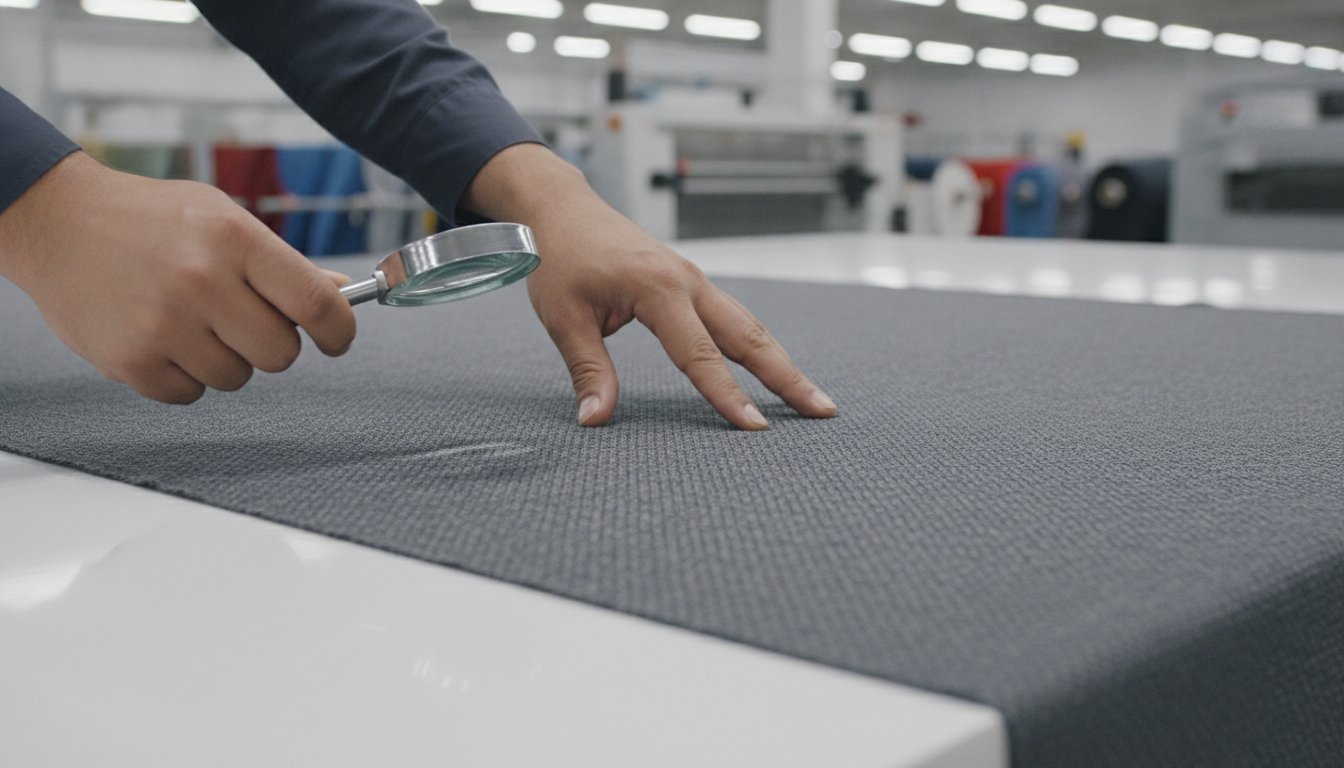
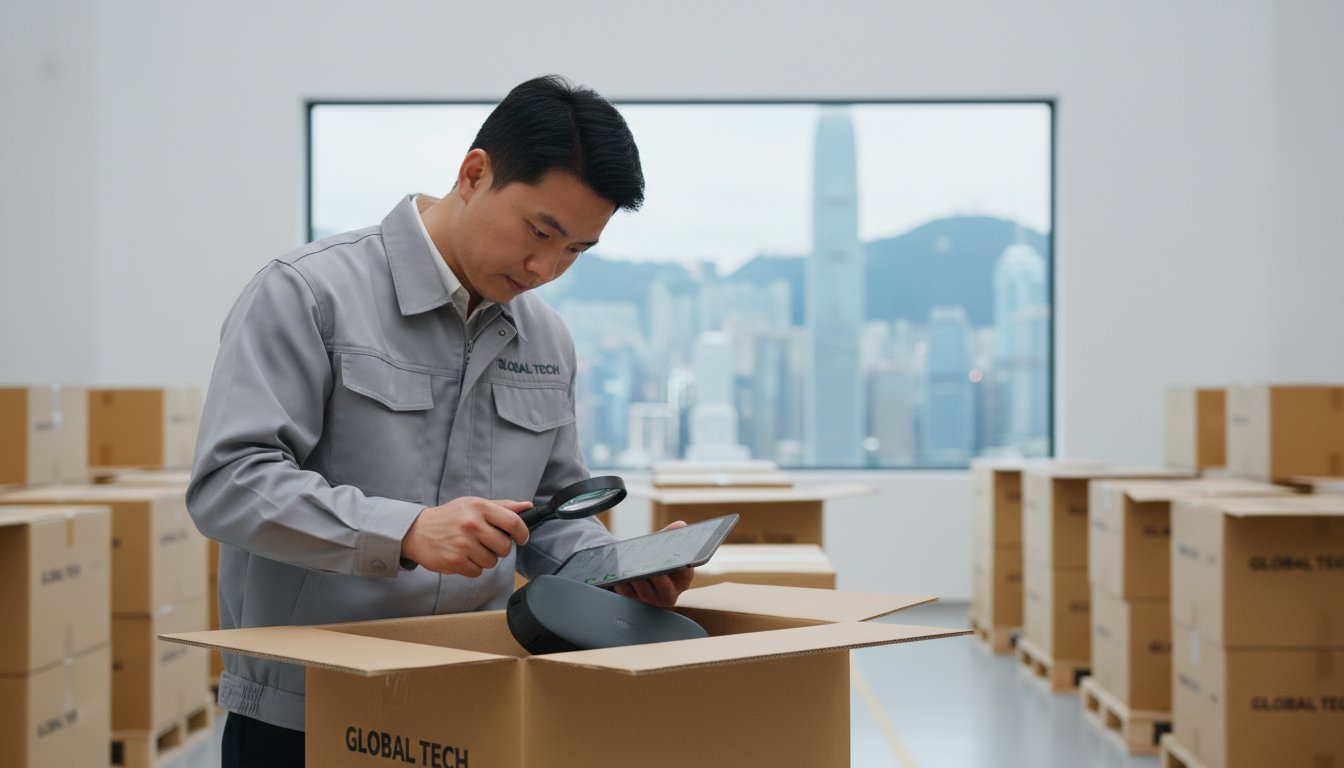
Your production run in Asia is complete, and the final payment is due. But as you prepare to authorize the transfer, a critical question lingers: is the quality you paid for actually in the boxes? Without a final, independent verification, you risk receiving a shipment filled with costly defects that can damage both your finances and your brand's reputation. This is precisely why professional pre-shipment inspection services are not a luxury, but an essential final checkpoint in your quality control process.
This article is your guide to understanding how this critical step protects your investment and provides complete peace of mind. You will learn how a final inspection eliminates surprises, verifies that your goods match your exact specifications, and gives you the reliable, fact-based report needed to make an informed ship-or-reject decision. We will also outline the key factors for choosing the right inspection partner to secure your supply chain in Asia.
Key Takeaways
- A Pre-Shipment Inspection (PSI) is your final opportunity to identify and address costly quality issues before your products leave the factory.
- Discover how inspectors use a detailed checklist and the industry-standard AQL sampling method to provide an objective assessment of your shipment's quality.
- Choosing the right partner for pre-shipment inspection services is as critical as the inspection itself; learn the key criteria for making a reliable choice.
- Understand the straightforward process for booking an inspection and receiving a detailed report, empowering you to make an informed ship/no-ship decision.
Why Pre-Shipment Inspection (PSI) is a Critical Investment, Not an Expense
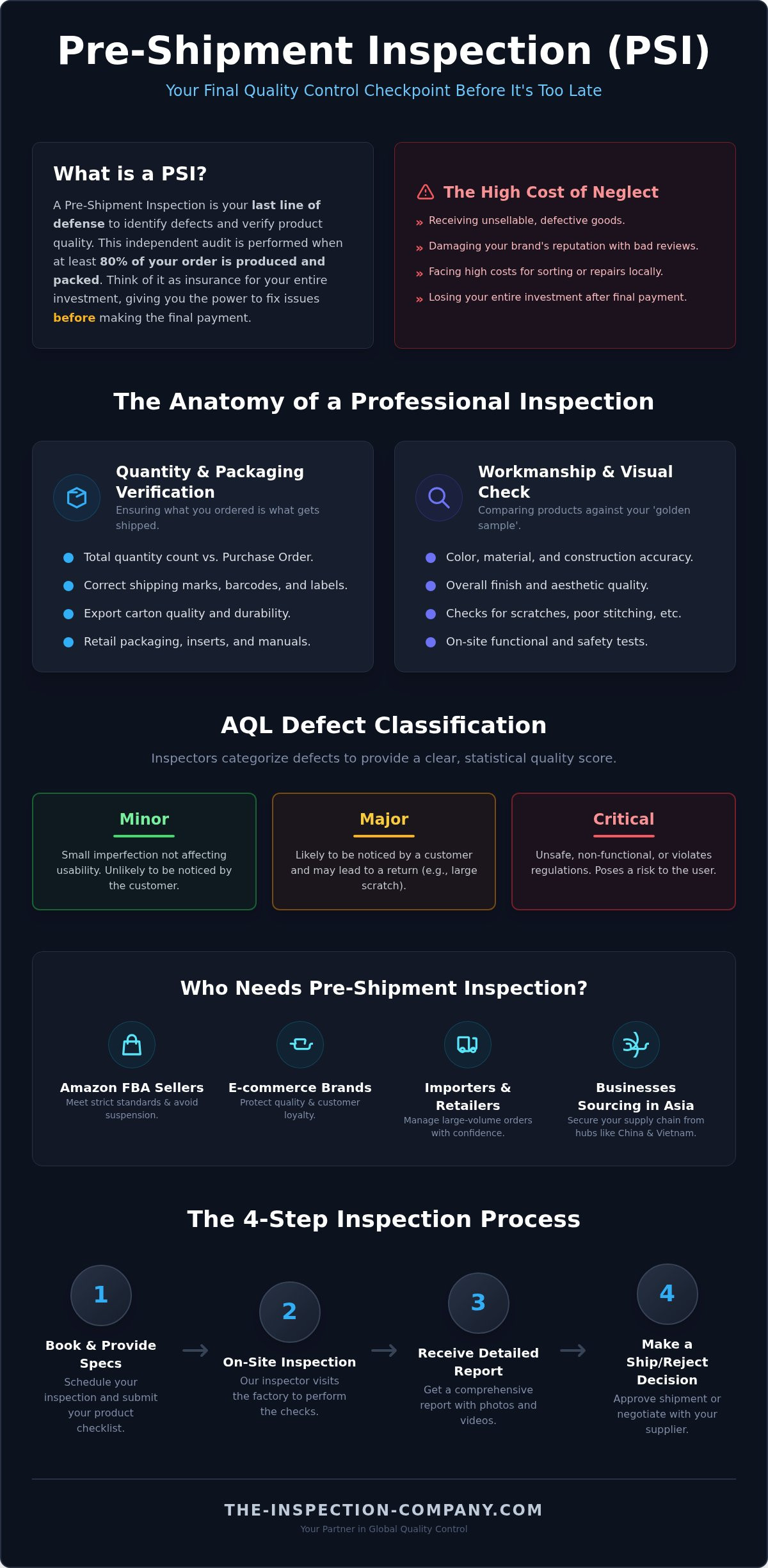
Think of a Pre-Shipment Inspection (PSI) as your final opportunity-your last line of defense to identify quality issues, defects, or non-compliance before your products leave the factory. As the most common quality control check, a PSI is conducted when production is at least 80% complete and packed for shipping. This isn't an operational expense; it's insurance on your entire investment. Relying solely on a factory's internal QC reports is a significant risk, as their interests may not align with yours.
An independent Pre-shipment inspection provides an unbiased, detailed report, giving you the critical leverage needed to negotiate with your supplier to fix problems before you release final payment. It’s the core of effective pre-shipment inspection services and the key to avoiding costly surprises.
The True Cost of Skipping a Final Inspection
The financial and reputational damage from a single bad shipment can be catastrophic. The risks of forgoing a final check include:
- Receiving a container of defective, unsellable goods.
- The high cost of processing returns, managing negative reviews, and repairing your brand’s reputation.
- Unexpected expenses for sorting or reworking products in your home country, where labor costs are significantly higher.
- Losing your entire investment if final payment is released for faulty products.
Who Needs Pre-Shipment Inspection Services?
Professional quality control is essential for any business that relies on overseas manufacturing. Our pre-shipment inspection services are critical for:
- Amazon FBA Sellers who must meet strict compliance standards to avoid costly penalties or account suspension.
- E-commerce Brands dedicated to protecting their quality standards, customer loyalty, and online reputation.
- Importers and Retailers managing large-volume orders from new or even long-term suppliers.
- Any business sourcing products from manufacturing hubs like China, Vietnam, India, or elsewhere in Asia.
The Anatomy of a Professional PSI: What Inspectors Actually Check
A professional Pre-Shipment Inspection (PSI) is not a random check; it is a methodical and systematic evaluation designed to protect your investment and brand reputation. Our inspectors follow a detailed, pre-agreed checklist tailored to your product's specific requirements, a process aligned with the official European Commission definition of PSI. We use the industry-standard AQL (Acceptable Quality Limit) sampling method to provide a statistical basis for accepting or rejecting a production lot. The entire process is documented with high-resolution photos and video, providing you with objective, actionable data to make a confident shipping decision.
Quantity and Packaging Verification
Mistakes in quantity and packaging lead to costly logistical nightmares and customer dissatisfaction. Our inspectors meticulously verify these critical details on-site to ensure what you ordered is what gets packed.
- Quantity Count: We verify that the total number of packed units matches your purchase order exactly.
- Packaging & Labeling: Shipping marks, barcodes, country of origin labels, and other required markings are checked for accuracy and compliance.
- Carton Quality: We assess the quality of export cartons to ensure they can withstand the rigors of international shipping and protect your products from transit damage.
- Retail Packaging: All inner boxes, inserts, manuals, and polybags are checked against your specifications to guarantee a perfect customer-facing presentation.
Workmanship and Defect Classification
This is the core of quality control. Using your approved sample as the 'golden standard,' our inspectors conduct a thorough visual check to identify any issues that could damage your brand. Our professional pre-shipment inspection services classify all defects according to AQL standards:
- Minor Defects: Small imperfections that do not affect the product's usability and are unlikely to be noticed by the end customer.
- Major Defects: Issues likely to be noticed by a customer, potentially leading to returns, such as significant scratches, poor stitching, or incorrect colors.
- Critical Defects: Unsafe or non-functional defects that pose a risk to the user or violate regulations.
We ensure that the product's color, material, construction, and overall finish meet your exact specifications, stopping problems before they reach your customers.
On-Site Functional and Safety Testing
A product that looks good but doesn't work is a liability. Our inspectors perform a range of on-site tests to verify that your products function as intended. This is a practical, real-world check of core functionality, including checking assembly, confirming measurements and weight against your technical files, and performing basic safety checks for issues like sharp edges or instability. For electronics, this means powering on a sample of units to ensure they operate correctly, preventing you from receiving a shipment of non-functional goods.
How to Choose the Right Pre-Shipment Inspection Partner
The decision to use pre-shipment inspection services is a critical first step, but the outcome hinges entirely on the partner you choose. Not all third-party inspection companies are created equal. Your goal is to find a partner who acts as your trusted eyes and ears on the factory floor-an extension of your own business dedicated to protecting your investment. The right choice is built on three pillars: transparency, expertise, and unwavering reliability.
Key Criteria for Selecting Your Inspection Service
Vetting a potential partner requires a methodical approach. To avoid costly surprises and ensure you receive actionable intelligence, focus on these core qualifications:
- Operational Footprint: Confirm the company has a strong, established presence in your specific manufacturing country or region. A local team means faster deployment, lower travel costs, and crucial on-the-ground knowledge.
- Product-Specific Expertise: An inspector who understands textiles may not be qualified to evaluate consumer electronics. Verify they have documented experience and established checklists for your exact product category to ensure a relevant and thorough inspection.
- Official Accreditations: Look for internationally recognized certifications like ISO 9001. This demonstrates that the company adheres to a strict quality management system for its own operations, which translates to more reliable and consistent service for you.
- Sample Reports: Always ask for a sample inspection report. Evaluate its clarity, level of detail, and use of high-quality photographs. A professional report should be easy to understand and provide all the data you need to make a confident shipping decision.
Red Flags to Watch Out For
Just as important as knowing what to look for is knowing what to avoid. Steer clear of any company that exhibits these warning signs, as they often lead to poor outcomes and financial loss:
- Vague Pricing: A reliable partner provides a clear, all-inclusive quotation. Be wary of unusually low base prices followed by hidden fees for travel, weekends, or overtime.
- No Anti-Bribery Policy: Integrity is non-negotiable. If a company cannot provide a clear and strictly enforced anti-bribery policy, you cannot trust the objectivity of their inspectors or their findings.
- Poor Communication: Slow or unclear responses during the quoting process are a strong indicator of how they will perform once you are a client. Professionalism and speed are paramount.
- Generic Reports: If a sample report is vague, lacks photographic evidence, or uses generic language, it suggests a "check-the-box" approach rather than a detailed, product-focused analysis.
Why European Management in Asia Matters
For businesses importing from Asia, a partner with European management provides a distinct competitive advantage. This structure effectively bridges the cultural and communication gap that can exist between Western buyers and Asian factories. It ensures your quality standards, ethical expectations, and deadlines are clearly understood and enforced without ambiguity. You gain a single point of contact who intuitively grasps your requirements, providing a seamless experience and preventing the misunderstandings that can derail a production timeline. See how our expertise can protect your next shipment.
The Inspection Process Step-by-Step: From Booking to Decision
We believe securing your supply chain shouldn't be complicated. Our process is engineered for clarity and efficiency, putting you firmly in control of your product quality. From the moment you book to your final decision, we provide the critical data you need to act decisively and avoid costly surprises. This straightforward, three-step approach is the foundation of our professional pre-shipment inspection services.
Step 1: Booking and Providing Specifications
The process begins with your online booking request. To ensure our inspector has a complete understanding of your standards, we require a few key documents. This preparation is critical for a successful and targeted inspection. We need:
- Your purchase order (PO) and detailed product specifications.
- A comprehensive quality checklist or specific requirements you need verified.
- Your supplier’s contact information and the full factory address.
Once we have this information, our coordination team contacts your supplier directly to schedule the inspection, saving you valuable time and eliminating communication barriers.
Step 2: The On-Site Inspection
On the scheduled day, our certified inspector travels to the factory. They act as your eyes and ears on the ground, executing a meticulous evaluation based on your checklist and internationally recognized AQL (Acceptance Quality Limit) standards.
Every step-from quantity verification and workmanship assessment to on-site product testing-is systematically documented with high-resolution photographs. All defects and deviations are captured to provide a clear, unbiased picture of your production run before it's packed for shipment.
Step 3: Receiving Your Report and Making a Decision
Speed is critical when a shipment is pending. You will receive a comprehensive PDF inspection report directly in your inbox, typically within 24 hours. The report is designed for quick comprehension, featuring a clear summary, detailed findings, and indisputable photographic evidence.
Armed with this objective data, you can make an informed, low-risk decision:
- Approve the shipment with confidence.
- Reject the shipment due to non-compliance.
- Request a rework from the supplier to fix identified defects.
This report becomes your leverage, allowing you to hold your supplier accountable and ensure your quality standards are met before final payment and shipment. Ready to take control? Secure your next shipment by booking an inspection today.
Your Final Checkpoint for Quality and Confidence
In the complex world of international trade, a pre-shipment inspection is not merely an expense-it is a critical investment in your brand's reputation and financial health. It acts as your final opportunity to verify product quality, quantity, and compliance before your goods are dispatched from Asia. By understanding the inspection process and choosing a dependable partner, you effectively mitigate risks and prevent costly errors from ever reaching your customers.
Don't leave your next shipment to chance. With over 25 years of quality control experience in Asia and a commitment to the highest standards under European management, we are your trusted eyes on the ground. Our professional pre-shipment inspection services provide the clarity you need, delivering detailed reports within 24 hours so you can make confident, data-driven decisions.
Get a Free Quote and Secure Your Next Shipment Today.
Take control of your supply chain and ship with absolute certainty.
Frequently Asked Questions About Pre-Shipment Inspection Services
What happens if my pre-shipment inspection fails?
A "Fail" result empowers you to prevent a costly mistake. Your detailed inspection report serves as objective evidence to negotiate with your supplier. You can demand they rework the defective units, sort the entire batch, or provide a discount. This crucial step ensures you do not pay for and ship substandard products, giving you full control over your quality standards and protecting your investment before the goods leave the factory.
How much do pre-shipment inspection services cost?
Our pricing is a transparent, flat daily rate per inspector. This all-inclusive fee covers the inspector's time, travel, and the creation of your comprehensive report, ensuring there are no hidden surprises. Think of this cost not as an expense, but as a critical investment. One day of inspection reliably protects your entire shipment's value, saving you from the far greater financial damage of receiving defective goods.
Can my supplier bribe the inspector for a good report?
Absolutely not. We enforce a strict, zero-tolerance anti-bribery policy to guarantee the integrity of every report. Our inspectors are vetted professionals bound by a rigorous code of conduct. To further ensure objectivity, our European management team rotates inspectors and performs regular, unannounced checks on-site. Our commitment is to provide you with impartial, factual data you can trust to make critical business decisions.
Do I need to send a physical sample to the inspection company?
No, you do not need to send a sample to our office. Our inspectors work directly at your supplier's factory. For an accurate inspection, you must provide us with detailed product specifications, artwork files, and ensure your supplier has an approved "golden sample" on-site for direct comparison. Clear documentation is the key to ensuring our team verifies your products against your exact quality standards.
How many units do you check during an AQL inspection?
The number of units we check is determined by the internationally recognized AQL (Acceptance Quality Limit) standard. This statistical tool uses your total order quantity (lot size) and chosen inspection level to define a random sample size. For instance, in a shipment of 3,000 units at Level II, we would inspect 125 units. This method provides a highly accurate snapshot of the entire batch's quality without needing to check every single item.
How far in advance do I need to book an inspection?
We recommend booking your inspection at least two to three working days in advance. This allows sufficient time to coordinate with your supplier and confirm that at least 80% of your goods are packed and ready for final inspection. Booking ahead ensures inspector availability and helps prevent any potential delays in your shipment schedule. While we strive to accommodate last-minute requests, advance notice guarantees a smoother process.
What's the difference between a pre-shipment inspection and a factory audit?
A pre-shipment inspection is product-focused, evaluating the quality, specifications, and quantity of your completed goods before they are shipped. In contrast, a factory audit is supplier-focused. It assesses the factory's systems, capabilities, and ethical compliance to determine if they are a reliable long-term partner. The inspection protects a specific order, while the audit mitigates risk at the supplier level.