Have you recently encountered an unfamiliar term on a supplier report or in an email and found yourself wondering what it means? If you're new to importing or simply trying to navigate the complexities of quality control, this uncertainty is a common challenge. Gaining clarity on these terms and services is the first step toward securing your supply chain and avoiding costly surprises. You need to know: is this a service you should use, a standard you must meet, or something else entirely?
This guide, presented by The Inspection Company, is designed to provide complete clarity. We will explore the essential role that third-party inspection (3PI) companies play in protecting your business when sourcing from Asia. By the time you finish reading, you will understand how to verify product quality, minimize risk, and ensure your shipment meets every specification before it leaves the factory. Gain the confidence you need to manage your international suppliers effectively.
Key Takeaways
- While the direct hqts meaning refers to a specific company, understanding the term is the first step to securing your supply chain with professional quality control.
- A third-party inspection (3PI) company provides an unbiased, on-the-ground assessment of your products, minimizing the risk of receiving a defective shipment.
- Learn which core inspection services are critical for verifying quality at different stages of the production process to prevent costly errors before they ship.
- Gain a clear framework for evaluating and choosing the right inspection partner to protect your business and investment when sourcing from Asia.
What Does the Acronym HQTS Actually Mean?
If you are an importer sourcing products from Asia, you have likely encountered a variety of acronyms. When you see the term HQTS, the direct answer is that HQTS stands for Helmsman Quality & Technology Services. It is not a general industry standard or a type of inspection process; rather, it is the brand name of a major international quality control and inspection company.
You might come across this name on a supplier's factory audit report, in a list of approved third-party inspection (3PI) providers, or during discussions in industry forums about reliable partners for verifying product quality. Understanding the hqts meaning is the first step to navigating the landscape of third-party verification services and securing your supply chain.
The Literal Definition
The name-Helmsman Quality & Technology Services-reflects the company's mission to guide importers through the complexities of global manufacturing. Founded in 1995, HQTS has grown to become one of the largest and most established third-party service providers headquartered in Asia. With decades of experience, it has built a significant presence in the quality assurance industry, offering a comprehensive suite of services to minimize sourcing risks.
Context: HQTS in the Quality Control Landscape
In the global supply chain, HQTS operates as a major player among other well-known 3PI companies. Their primary purpose is to act as an independent, objective partner for businesses buying products from overseas. On behalf of an importer, their teams conduct on-site inspections and audits to verify that goods meet all required specifications and safety standards. This process of independent quality control is essential for avoiding costly defects, shipment delays, and damage to your brand's reputation. While their network is global, HQTS has a particularly strong operational footprint in China and across Southeast Asia, making them a frequent choice for companies sourcing from these critical manufacturing hubs.
The Broader Picture: The Role of Third-Party Inspection (3PI) Companies
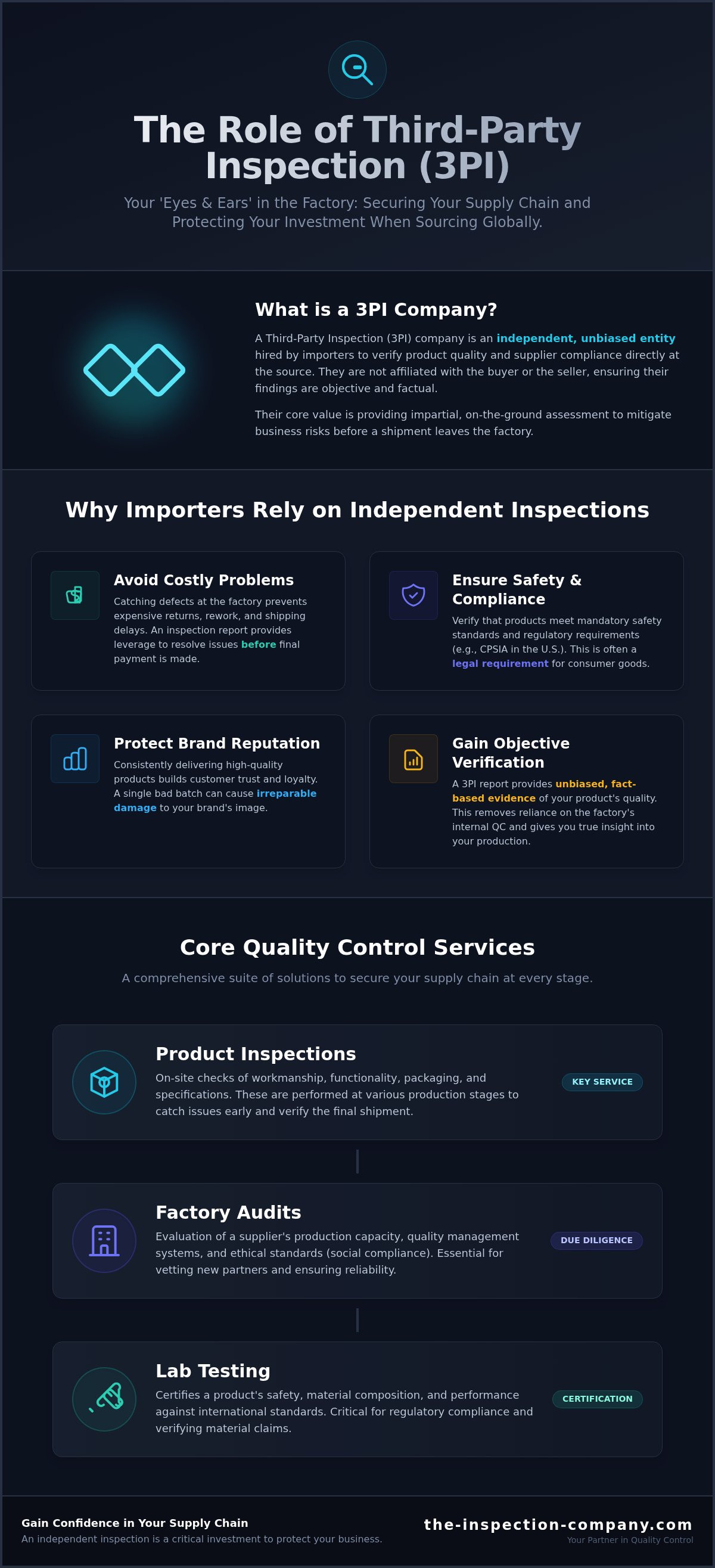
While understanding the hqts meaning is a key step, it’s more important to grasp the essential role companies like it play in global trade. HQTS is a Third-Party Inspection (3PI) company, an independent and unbiased entity hired by importers to verify product quality and supplier compliance directly at the source. In essence, a 3PI provider acts as your trusted 'eyes and ears' in the factory, thousands of miles away.
The core value of a 3PI company lies in its independence. It is not affiliated with the buyer or the seller, ensuring that its findings are objective and based solely on facts. This impartiality is critical for mitigating significant business risks, such as receiving a shipment of defective products, incorrect quantities, or goods that fail to meet market standards. One day of inspection can save months of trouble and protect your investment.
Why Importers Rely on Independent Inspections
Engaging an independent inspection service is a non-negotiable step for serious importers looking to protect their bottom line and brand. The primary goal is to identify and resolve quality issues before the goods are shipped and final payment is made. Key reasons include:
- Avoiding Costly Problems: Catching defects at the factory prevents expensive returns, rework, and shipping delays after the products arrive in your home country.
- Verifying Quality Before Payment: An objective inspection report gives you the leverage to address issues with your supplier before releasing the final balance payment.
- Ensuring Safety and Compliance: 3PIs verify that products meet mandatory safety standards and regulatory requirements. For many consumer goods, especially those for children, regulations like the U.S. Consumer Product Safety Improvement Act (CPSIA) legally require third-party testing.
- Protecting Brand Reputation: Consistently delivering high-quality products is essential for customer trust and loyalty. A single bad batch of products can cause irreparable damage to your brand.
Key Services Offered by 3PI Providers
Whether you are researching the hqts meaning or comparing other providers, you will find a consistent suite of core services designed to secure your supply chain. The leading 3PI companies offer a similar range of solutions, including Product Inspections to check workmanship and specifications on-site, Factory Audits to evaluate a supplier’s production capacity and ethical standards, and Lab Testing to certify a product’s safety and material composition against international standards.
Core Quality Control Services Explained
Understanding acronyms is only the first step. To fully grasp the hqts meaning and the value inspection companies provide, you must understand the specific services they use to protect your business. These are not just procedural checks; they are essential tools for any business sourcing from Asia, designed to mitigate specific risks at critical stages of the production process.
Below are the most common and vital quality control services that safeguard your investments and ensure your products meet your standards before they ever leave the factory.
Pre-Shipment Inspection (PSI)
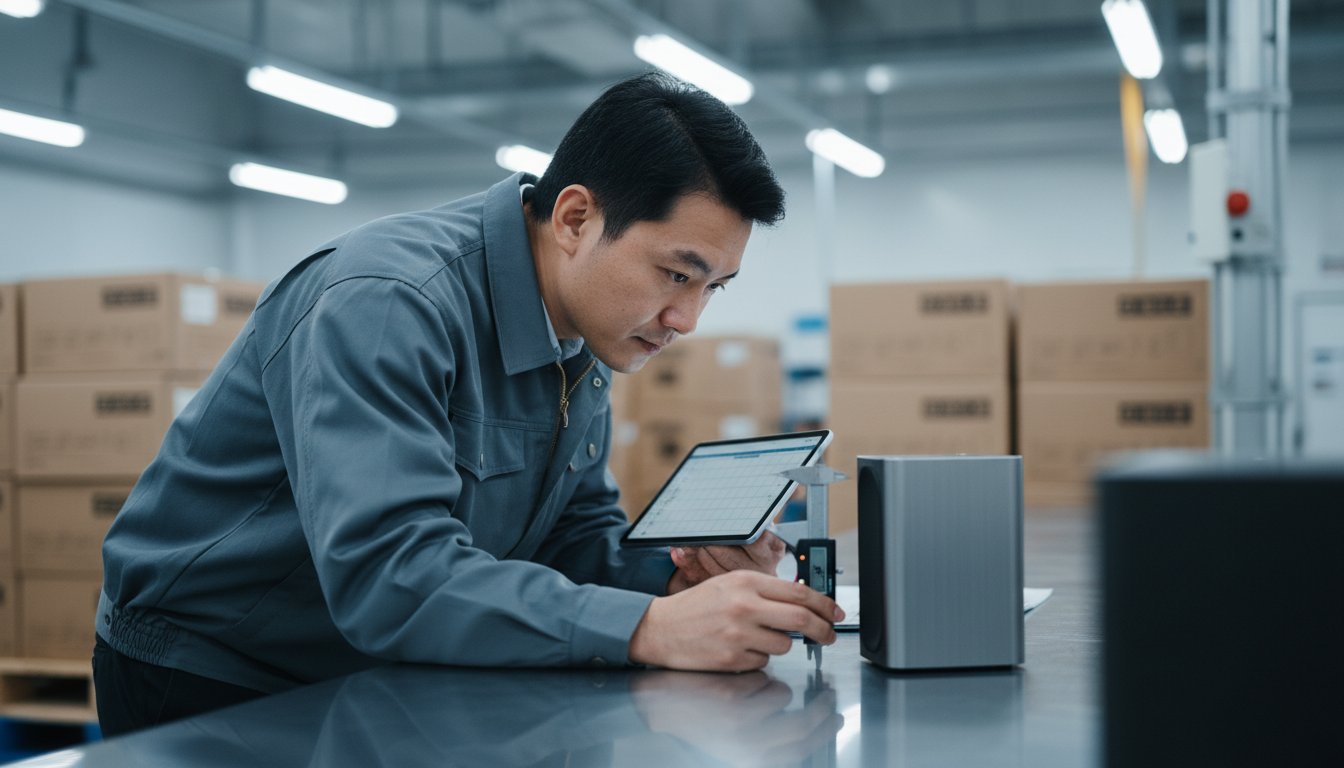
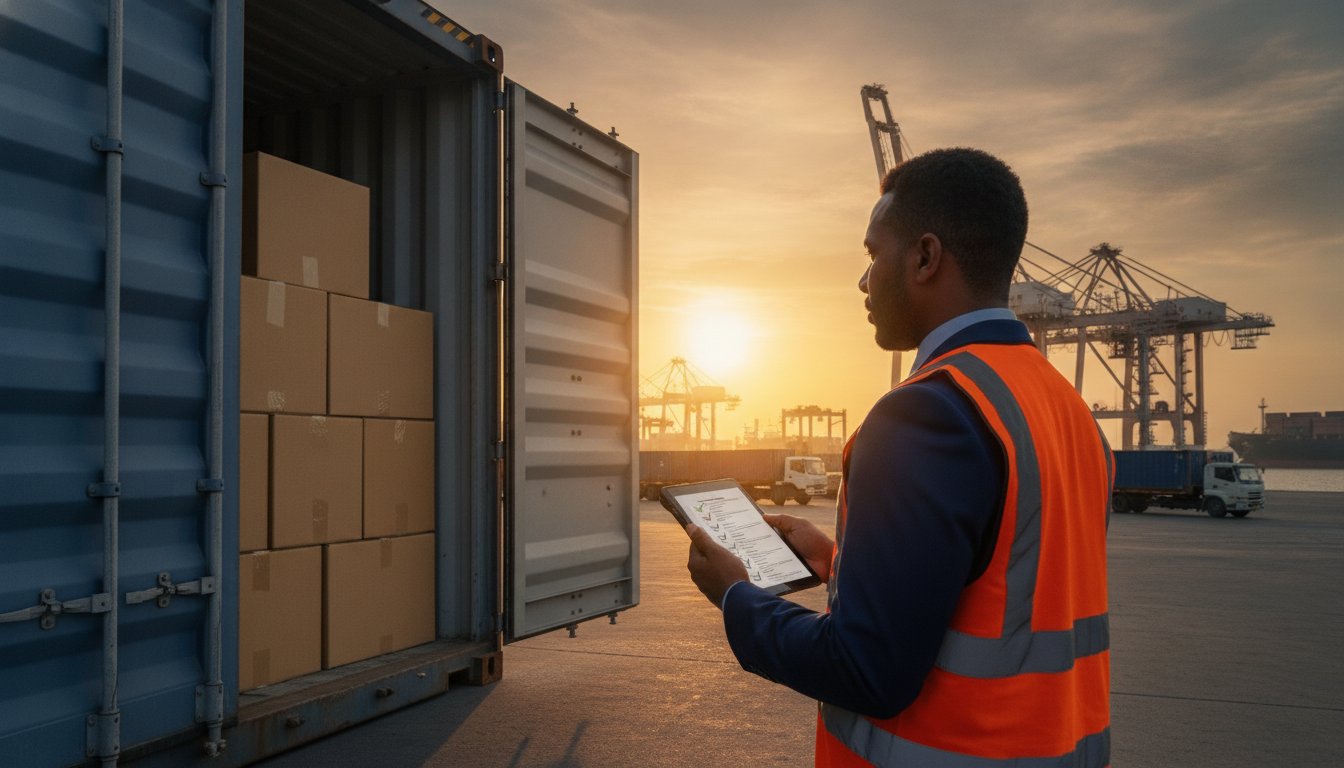
A Pre-Shipment Inspection is the most common and critical quality control check. It is your final opportunity to verify an order's quality before it is dispatched and paid for in full. This inspection occurs when 100% of your products are manufactured and at least 80% are packed for shipping. An independent inspector verifies everything on-site, including quantity, workmanship, function, packaging, and labeling. This service directly prevents the risk of receiving incorrect, defective, or damaged goods. Learn more about how a Pre-Shipment Inspection can protect your order.
Factory & Social Compliance Audits
While an inspection assesses the product, an audit assesses the supplier. A factory audit is a comprehensive evaluation of a manufacturer's capabilities, systems, and ethical standards. It is crucial for verifying that a potential partner has the infrastructure and processes to deliver consistent quality and operate responsibly. Key areas covered include:
- Quality Management Systems (e.g., ISO 9001)
- Production capacity and machinery
- Certifications and legal documentation
- Social compliance and safe working conditions
An audit helps you avoid the immense risk of partnering with an unqualified or unethical factory, protecting both your product quality and your brand's reputation.
During Production Inspection (DUPRO)
A During Production Inspection, or DUPRO, is an early-warning system that takes place when 20-50% of your order is complete. Its purpose is to identify quality issues and deviations from your specifications early in the production cycle. This is ideal for large, complex orders or when working with a new supplier for the first time. By catching problems mid-process, you give the factory time to implement corrective actions, preventing the catastrophic risk of an entire production run failing final inspection and causing major delays.
How to Choose the Right Inspection Partner for Your Business
Understanding industry terms is the first step, but selecting the right third-party inspection (3PI) company is what truly protects your investment. Moving beyond the basic hqts meaning and acronyms, a strategic partner helps you mitigate risks, ensure quality, and avoid costly supply chain disruptions. The right choice is not just about finding an inspector; it’s about securing a reliable guardian for your brand's reputation.
Essential Criteria for Evaluation
When vetting potential partners, focus on their operational capabilities. A reliable company should offer more than just a certificate. Look for concrete evidence of their competence and structure:
- Inspector Network: Do they have a robust presence in your primary sourcing countries? An extensive network ensures they can deploy qualified inspectors quickly, wherever your factory is located.
- Reporting Speed and Clarity: Vague or delayed reports are useless. Demand detailed, easy-to-understand reports with clear images and findings, delivered within 24 hours of the inspection.
- Accreditations: Verify their credentials. An ISO 9001 certification, for example, demonstrates a commitment to internationally recognized quality management standards.
- Transparent Pricing: Avoid hidden fees. A trustworthy partner offers a clear, all-inclusive man-day rate so you can budget effectively without surprises.
The Value of Experience and Communication
Every product category has unique challenges. Your inspection partner should have demonstrable experience with your specific products, from textiles to electronics. This expertise ensures they know exactly what defects to look for. Furthermore, responsive customer service is non-negotiable. A partner with Western or European management often provides a crucial advantage, as they inherently understand international quality standards and can communicate your requirements to local teams without ambiguity.
Beyond the Inspection: The Booking Process
A complicated booking system is a red flag. The best quality control partners simplify the process, reflecting their overall efficiency. Look for a company with a fast, intuitive online platform where you can provide a clear inspection checklist and tailor the service to your exact needs. This level of control and ease-of-use shows that a company respects your time and is built for the modern importer. See how easy it is to book an inspection with our platform.
Secure Your Supply Chain: Beyond the HQTS Meaning
Ultimately, understanding the hqts meaning is just the starting point. The crucial takeaway is the immense value that independent, third-party quality control brings to your international sourcing strategy. By partnering with a reliable inspection service, you gain an indispensable defense against product defects, shipment delays, and supplier non-compliance. This proactive approach doesn't just save you money on returns; it protects your brand's hard-earned reputation and ensures customer satisfaction.
Choosing the right partner is critical. The Inspection Company combines rigorous European management standards with the on-the-ground expertise of over 700 inspectors across Asia. We deliver the transparency and control you need, providing fast, detailed reports within 24 hours. We stop problems before your shipment sails, giving you the confidence to manage your supply chain effectively and make informed decisions with certainty.
Avoid costly surprises. Get your free, no-obligation inspection quote today.
Frequently Asked Questions
Is HQTS the only inspection company in China?
No, China has a vast landscape of quality control providers. While understanding the hqts meaning is a good starting point as they are a prominent player, numerous other local and international firms exist. The critical factor is to select an accredited, experienced, and independent company. Always verify credentials like ISO 17020 accreditation and look for a strong track record in your specific product category to ensure reliable quality verification and minimize supply chain risks.
What is the difference between an inspection company and a trading company?
An inspection company is an independent, third-party service that verifies product quality on your behalf. Their sole focus is to provide an unbiased assessment of your goods against your exact specifications. A trading company, conversely, acts as a middleman, buying from a factory and selling to you. They have a vested financial interest in the transaction completing, which can create a significant conflict of interest when it comes to transparent quality reporting.
How much does a typical product inspection cost in Asia?
A standard product inspection in major Asian manufacturing hubs typically costs between $250 and $350 USD per inspector-day. This all-inclusive price usually covers the inspector's time on-site, travel expenses, and the generation of a detailed report delivered within 24 hours. This single-day investment is a small price to pay to avoid the immense costs associated with defective products, shipment delays, and potential product recalls.
What is AQL and how is it used in third-party inspections?
AQL stands for Acceptable Quality Limit. It is a statistical method that determines the maximum number of defective units considered acceptable during a random sampling of a product batch. Inspectors use standardized AQL tables to define the sample size and the pass/fail thresholds for minor, major, and critical defects. This provides an objective, data-driven basis for deciding whether to approve a shipment, ensuring your quality standards are consistently met.
Can I perform a quality inspection myself instead of hiring a company?
While possible, performing an inspection yourself is often impractical and inefficient. The costs of international travel, accommodation, and time away from your core business activities can far exceed the fee for a professional service. Third-party inspectors also bring specialized equipment, local knowledge, and an unbiased perspective. They are trained to identify subtle defects and manufacturing issues that an untrained eye would likely miss, providing a more reliable and cost-effective result.
Why can't I just rely on my supplier's internal QC team?
Relying solely on your supplier's internal Quality Control (QC) team creates a clear conflict of interest. Their primary objective is to manufacture and ship the product, and their quality standards may not be as stringent as yours. An independent inspection company works exclusively for you, providing an objective and unbiased verification of quality. This ensures your specifications are met before you approve final payment, protecting your investment and your brand's reputation.