
Scrolling through thousands of suppliers on Alibaba can feel like a high-stakes gamble. You’ve found a product with potential, but a wave of uncertainty follows: How do you separate a legitimate factory from a middleman? Which certifications are meaningful? And how can you be certain the Alibaba manufacturer you choose will deliver the quality your business demands? Placing a large order without a clear verification strategy is one of the biggest risks an importer can take, potentially leading to costly defects, shipment delays, and significant financial loss.
This guide is designed to remove that guesswork and mitigate your risk. We will provide you with a proven, 7-step framework to confidently evaluate and verify potential suppliers before you commit significant capital. By following this methodical process, you will gain the confidence to place large orders, avoid costly returns, and find a reliable, long-term partner who can help your business grow. It’s time to stop worrying and start sourcing with a clear, repeatable, and secure plan.
Key Takeaways
- Learn how to analyze a supplier's profile to distinguish a legitimate alibaba manufacturer from a less capable trading company.
- Move beyond basic price inquiries by asking targeted questions and evaluating physical samples-your first tangible proof of quality.
- Understand why Alibaba's verification badges are only a starting point and independent verification is essential to truly mitigate risk.
- Discover how to use a Pre-Shipment Inspection (PSI) as the final quality gate to ensure your mass production meets standards before you release final payment.
Step 1: Strategic Searching and Filtering on Alibaba
Your success in sourcing from China begins not with a negotiation, but with a search. Finding a reliable partner requires a methodical approach that goes beyond simply typing a product name. The initial goal is to distinguish a true alibaba manufacturer, who has direct control over production and quality, from a trading company that acts as a middleman. Applying Strategic sourcing principles at this early stage is essential to build a foundation of security and avoid costly problems later. Using Alibaba’s built-in tools correctly allows you to cut through the noise and create a shortlist of credible, verified potential partners.
Using 'Verified Supplier' and 'Trade Assurance' Filters
Before you assess any supplier’s products, you must first verify their legitimacy and secure your transaction. Prioritize these two non-negotiable filters to minimize your initial risk:
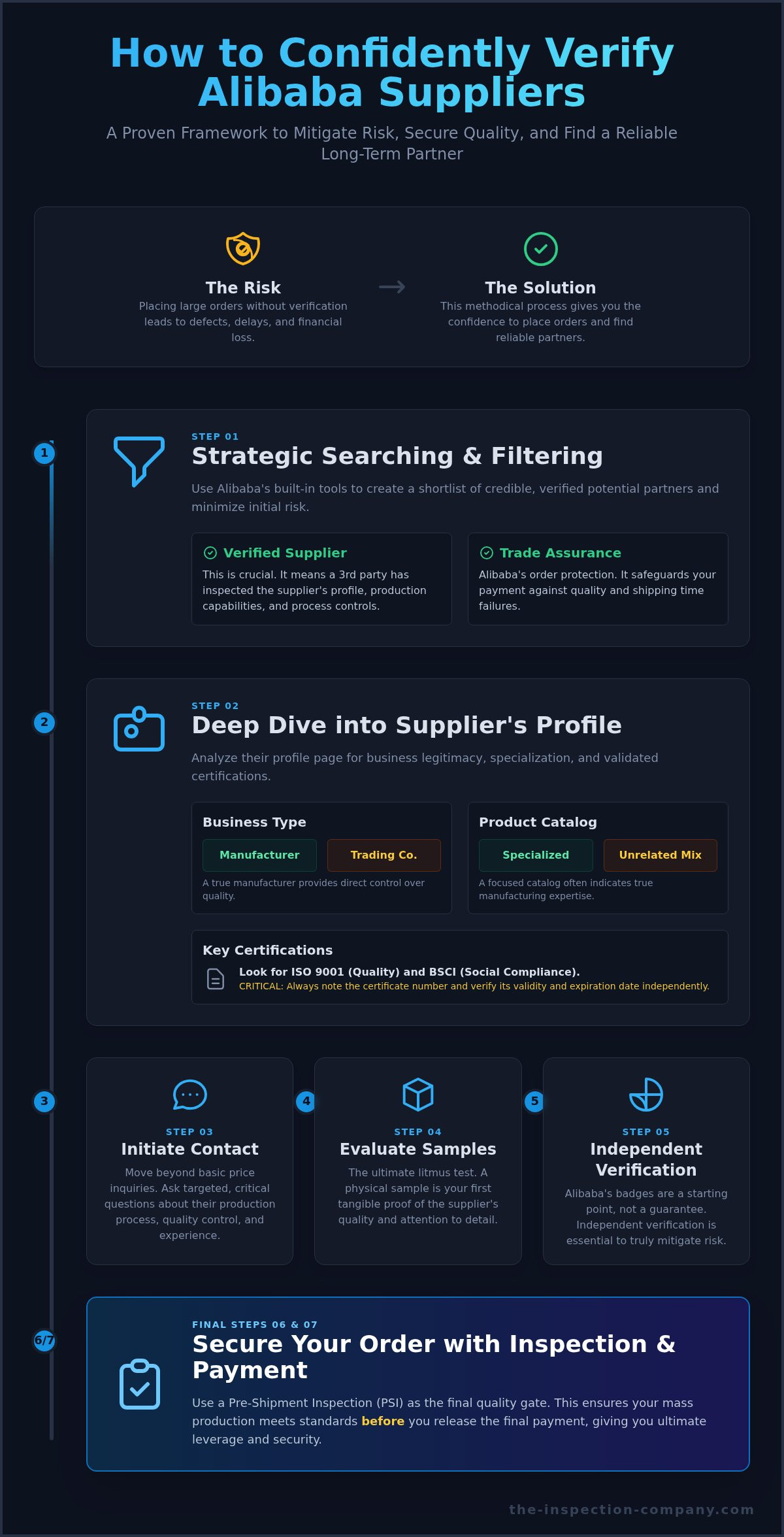
- Verified Supplier: This is the most important badge to look for. It signifies that the supplier's company profile, management system, production capabilities, and process controls have been assessed, certified, and/or inspected by an independent third-party institution. This is a critical first layer of due diligence.
- Trade Assurance: Always enable this filter. Trade Assurance is Alibaba's built-in order protection service. It safeguards your payment and provides recourse if the supplier fails to meet the agreed-upon shipping time or product quality standards outlined in your contract.
Be aware: While these verifications confirm a supplier’s existence and provide financial protection, they do not guarantee consistent product quality for every order. They are a starting point, not a final guarantee.
Understanding Supplier Tiers and History
A supplier’s history on the platform provides valuable insight into their stability and experience with international exports. When evaluating a potential alibaba manufacturer, look at their tenure. A supplier with 3+ years as a 'Gold Supplier' indicates a business that is established and has consistently invested in its presence on the platform. However, it is crucial to understand that 'Gold Supplier' is a paid premium membership. While it shows a level of commitment, it is primarily a marketing tool and should not be mistaken for an independent quality certification. A long history is a positive indicator, but it must be combined with further verification steps.
Step 2: Deep Dive into the Supplier's Profile Page
Once you've shortlisted potential suppliers, the next critical step is to perform desk research on their Alibaba profile page. This is more than just looking at product photos; it's a forensic analysis of their business legitimacy. A thorough review at this stage allows you to screen out unqualified or high-risk candidates without wasting time on back-and-forth communication. Think of this as your first line of defense, where you verify claims and look for red flags before committing any resources.
Decoding Business Information and Company Videos
Navigate to the supplier’s ‘Company Profile’ tab. Here, you will find their business license information and registered address. The most important detail to verify is their business type. Are they listed as a ‘Manufacturer,’ a ‘Trading Company,’ or both? This distinction is crucial for your sourcing strategy. This initial verification is a foundational step, similar to how government bodies advise businesses to investigate potential representatives before finalizing agreements. Also, watch any available factory tour videos. Look for signs of a professional, organized operation versus a small, chaotic workshop.
Reviewing Product Catalogs and Certifications
A supplier’s product catalog reveals their level of expertise. Does this alibaba manufacturer specialize in a specific product category, or do they sell an unrelated mix of items like electronics and apparel? A focused product line often indicates true manufacturing expertise and a deeper understanding of quality control for those items. Next, look for quality management and social compliance certifications. Key ones include:
- ISO 9001: A standard for quality management systems.
- BSCI: A standard for social compliance in the supply chain.
Do not take these at face value. Note the certificate number and issuing body to verify its validity and expiration date independently.
Assessing Response Rate and Transaction History
On the right-hand side of the profile, you'll find key performance metrics that offer insight into the supplier's reliability and experience. Pay close attention to their Response Rate; a figure of 90% or higher suggests a responsive and professional sales team. Review their transaction history to see their level of business activity and, more importantly, their ‘Main Markets.’ If they have a significant history of exporting to your country or region, it demonstrates they have the necessary experience with your specific shipping logistics and customs requirements, minimizing the risk of costly delays.
Step 3: Initiating Contact and Asking Critical Questions
Once you have a shortlist of potential suppliers, your first communication is a critical test. This initial contact is not just about getting a price; it's your first opportunity to gauge an Alibaba manufacturer's professionalism, responsiveness, and communication skills. How they reply-the speed, clarity, and thoroughness of their answers-provides immediate insight into what they would be like as a long-term partner. Moving beyond basic inquiries is essential to separate the professional factories from the trading companies or unresponsive suppliers.
Crafting a Professional First Inquiry
To be taken seriously, you must avoid generic, low-effort messages like "Hi, what is price?". These are often ignored by reputable suppliers who are inundated with requests. Instead, craft a professional message that demonstrates you are a serious buyer. Introduce your business, be specific about your product needs (e.g., materials, dimensions, target order quantity), and attach a detailed specification sheet if you have one. This level of detail shows you have done your research and signals that you are a valuable potential client.
Essential Supplier Questionnaire Checklist
A systematic approach is crucial for performing effective due diligence on key suppliers, and a standardized questionnaire is the best way to start. Sending the same core questions to each potential supplier allows you to compare their capabilities directly and objectively. Their answers will help you verify claims and identify potential risks before you invest any further.
Your checklist should include:
- Company & Products: What are your main products? Do you specialize in a particular material or process?
- Production Capacity: What is your Minimum Order Quantity (MOQ)? What is your standard production lead time for an order of [your target quantity]?
- Internal Quality Control (QC): Can you describe your internal QC process? How many full-time staff do you have dedicated to quality control? At what stages of production do you perform inspections?
- Third-Party Verification: Are you open to a third-party, pre-shipment inspection (PSI) conducted by our chosen quality control partner?
Pay close attention to their response on third-party verification. Any hesitation, resistance, or refusal to allow an independent inspection is a major red flag. A confident and reliable supplier will have no issue with an external party verifying the quality of their work.
Step 4: The Litmus Test - Requesting and Evaluating Samples
Digital communication and factory photos can only tell you so much. The single most critical step before committing to a large purchase order is to get a physical product in your hands. Never place a bulk order without first requesting and meticulously evaluating a production sample. This is not just a preview; it is your first tangible proof of an alibaba manufacturer's capabilities and their understanding of your requirements.
Think of the sample as a small, essential insurance policy. The cost of a sample and express shipping is insignificant compared to the financial risk of receiving thousands of units of defective or incorrect goods. This step is your primary defense against costly quality issues down the line.
Why a Production Sample is Non-Negotiable
The sample you approve becomes the "golden standard" for your entire production run. It is the definitive quality benchmark against which all future units will be measured during pre-shipment inspections. It allows you to move beyond specifications on a screen and physically test the product's functionality, fit, finish, and overall feel. Expect to pay for the sample and its shipping; this is a standard industry practice and a worthwhile investment to verify quality before committing capital.
What to Look For When Your Sample Arrives
Once the sample is in your hands, the real verification process begins. Do not simply give it a quick glance. Use your detailed product specification sheet as a checklist and conduct a thorough, methodical review. Document every detail with high-quality photos and notes.
Your evaluation should cover, at a minimum:
- Materials & Finish: Does the material feel and look as specified? Are there any unexpected textures, blemishes, or imperfections in the finish?
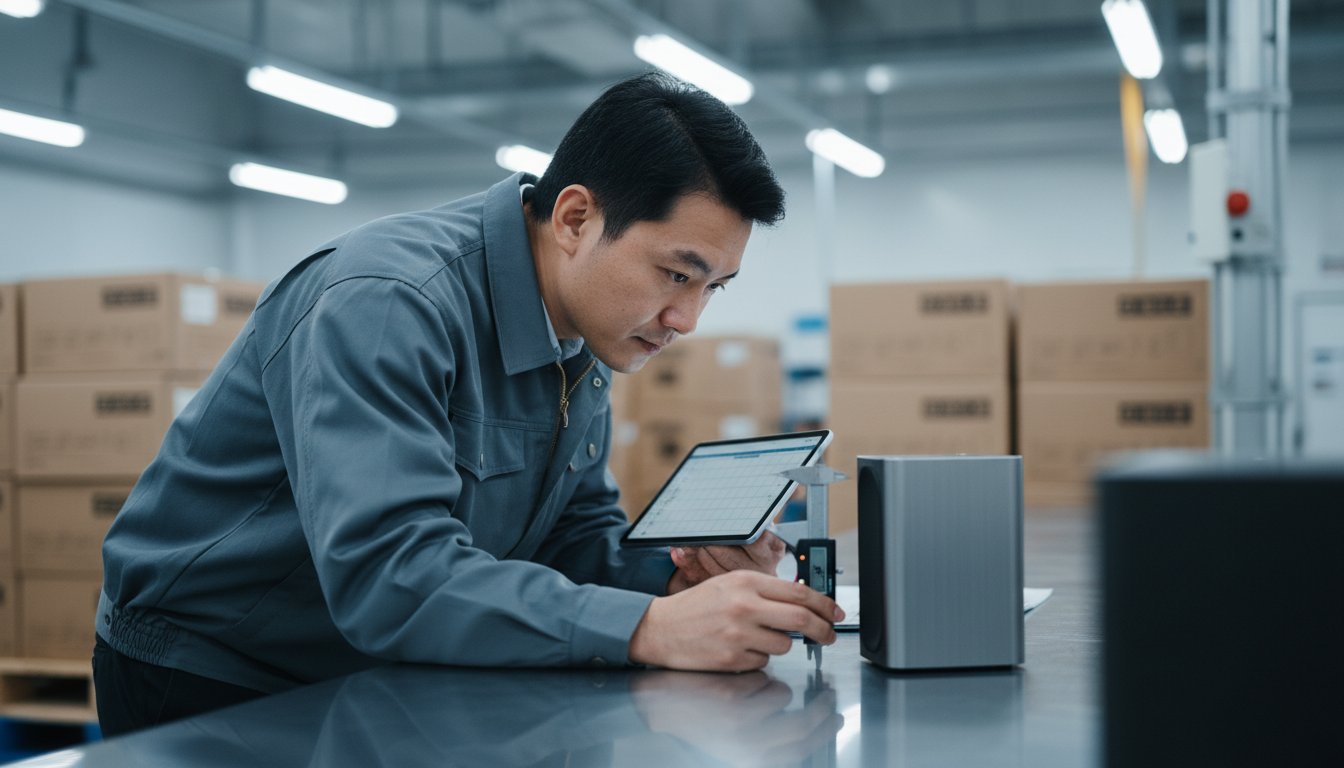
- Dimensions & Weight: Use calipers and a scale to verify that all measurements match your technical specifications precisely.
- Color Accuracy: Compare the colors against your specified Pantone codes. Be aware that screen colors are unreliable; you must use a physical Pantone swatch for an accurate comparison.
- Workmanship & Build Quality: Check for clean seams, proper alignment of parts, secure stitching, and overall structural integrity.
- Functionality: Test the product rigorously. Does it perform its intended function correctly and reliably?
If you find any deviations, provide clear, objective, and visual feedback to the alibaba manufacturer immediately. This professional communication is key to resolving issues before mass production begins.
Step 5: Beyond Alibaba - The Need for Independent Verification
Alibaba’s verification badges are a useful starting point, but they represent a snapshot in time and don’t reveal the complete picture. To truly minimize risk and operate like a professional importer, you must go beyond the platform's digital checks. Serious due diligence requires independent, on-the-ground verification to confirm that your potential partner has the capacity and quality systems to deliver on their promises.
What is a Factory Audit and Why is it Crucial?
A factory audit is a comprehensive, on-site evaluation of a supplier's facilities, systems, and legitimacy before you place an order. An independent inspector physically visits the factory to verify that they own the equipment they claim, employ the staff they advertise, and maintain a robust quality management system (e.g., ISO 9001). This step confirms you are dealing with a capable manufacturer, not just a convincing salesperson.
Red Flags a Factory Audit Can Uncover
Relying solely on a supplier's profile can lead to costly surprises. An independent audit is designed to uncover critical issues that are impossible to see from your desk, including:
- The alibaba manufacturer you vetted is actually a small trading office that plans to subcontract your order to a different, unvetted factory.
- A complete lack of documented quality control processes, which significantly increases the risk of defects in your final product.
- Poor working conditions or social compliance violations that could damage your brand’s reputation.
- Exaggerated claims about machinery, production capacity, or in-house technical expertise.
Making an Informed Decision with an Audit Report
Following the on-site visit, you receive a detailed report complete with photographic evidence and objective findings. This document is not a simple pass/fail grade; it is a powerful tool that provides the clarity needed to make a sound business decision. It gives you the confidence to move forward with a large order or the concrete evidence needed to walk away and avoid a potential disaster. One day of auditing can save you months of trouble and protect your investment.
Protect your business with a comprehensive Factory Audit.
Step 6 & 7: Securing Your Order with Inspection and Payment
You have successfully navigated the complexities of sourcing, vetted candidates, and selected a promising supplier. However, the process is not complete. Even the most reliable alibaba manufacturer can encounter issues during mass production. The final step is to verify the quality of your finished goods before they are shipped and before you release your final payment. This is your last, and most powerful, point of leverage.
Failing to verify production quality is one of the most common and costly mistakes importers make. It transforms a potential success into a logistical nightmare of returns, rework, and lost revenue. A professional, third-party inspection is the essential quality gate that protects your investment.
The Role of a Pre-Shipment Inspection (PSI)
A Pre-Shipment Inspection (PSI) is a systematic, on-site check of your products performed when at least 80% of your order is produced and packaged. An independent inspector visits the factory to act as your eyes and ears, ensuring your bulk order matches the 'golden sample' you approved. This is your final opportunity to identify and rectify quality issues before they leave the country of origin, saving you from disastrous surprises upon arrival.
During a PSI, the inspector will typically:
- Verify the total quantity of finished, packed goods.
- Check for cosmetic defects and workmanship issues based on AQL standards.
- Perform on-site tests for functionality, safety, and assembly.
- Confirm that packaging, labeling, and shipping marks are correct.
Approving Shipment and Making the Final Payment
Within 24 hours of the inspection, you will receive a detailed report with photos, videos, and a clear pass/fail/pending result. This document is your leverage. If the report reveals significant defects or deviations from your specifications, you can instruct your alibaba manufacturer to rework the faulty items. Do not approve the shipment or release the final payment-typically 70% of the order value-until you are satisfied that all issues have been resolved and, if necessary, re-inspected.
Once you approve the quality, you can confidently proceed with the final payment through a secure channel like Alibaba Trade Assurance, which provides an extra layer of protection. This methodical process ensures you only pay for what you ordered.
Need a reliable partner to verify your shipment? The Inspection Company provides fast, transparent Pre-Shipment Inspections across Asia.
Your Final Step: From Vetting to Verification
Navigating Alibaba for a reliable partner requires more than just good communication; it demands a systematic approach. As we've covered, thorough due diligence-from scrutinizing supplier profiles to meticulously evaluating product samples-lays the essential groundwork. However, the most critical step is independent verification. This is what ensures the alibaba manufacturer you’ve chosen can truly deliver on their promises and protects you from costly production errors.
Before you commit to a large order, ensure your investment is secure. With over 25 years of experience in quality control, The Inspection Company acts as your trusted team on the ground. Our European management and 700+ local inspectors across Asia provide the verification you need, delivering detailed reports with photos within 24 hours. Don't leave your shipment to chance. Get a Free Quote for a Factory Audit or Inspection Today.
By taking this crucial final step, you can build a secure, profitable, and long-lasting relationship with your supplier. Happy sourcing!
Frequently Asked Questions About Vetting an Alibaba Manufacturer
What's the difference between an Alibaba manufacturer and a trading company?
A manufacturer produces goods in their own factory, offering direct communication, potential for lower costs, and greater customization. A trading company, however, acts as a middleman, sourcing from various factories. While they may offer more product variety and smaller order quantities, you lose direct control over production. Verifying your supplier's status is a critical first step to ensure you can effectively manage quality control and minimize supply chain risks before placing an order.
Is Alibaba's 'Verified Supplier' or 'Gold Supplier' status a guarantee of good quality?
No, these designations are not a guarantee of product quality. A 'Gold Supplier' status is a paid membership, and 'Verified Supplier' confirms that a third party has audited their business license and physical location. While these badges indicate a more legitimate and established business, they do not certify the quality of a specific production run. An independent pre-shipment inspection remains the only reliable way to ensure your order meets your quality standards before payment and shipment.
How much does a professional factory audit or pre-shipment inspection typically cost?
The investment for professional quality control is minimal compared to the potential losses from a bad shipment. A standard pre-shipment inspection in major manufacturing hubs typically costs between $250 and $350 USD per inspector-day. A more in-depth factory audit, which assesses a supplier's quality management systems and capabilities, generally starts around $500. This single expense can save you thousands in costly defects, returns, and delays by stopping problems before they ship.
What are the biggest red flags to watch for when communicating with a new supplier?
Be cautious of suppliers who are evasive about their factory address, refuse to provide certifications, or are unwilling to produce a sample before a bulk order. Other red flags include pressure for 100% upfront payment via unsecured methods like Western Union and inconsistent communication. A professional supplier will be transparent and able to answer detailed technical questions about their production capabilities. Any hesitation on their part warrants further investigation and verification.
Can I trust the reviews and transaction history on a supplier's Alibaba page?
You should view a supplier's on-page reviews and transaction history as a preliminary screening tool, not as a final guarantee. While helpful, these metrics can be manipulated and do not reflect the quality of your specific, future order. A long history with positive reviews is a good starting point, but it is not a substitute for independent due diligence. The only way to truly verify quality is through a physical inspection of your goods before they are shipped.
Should I use an agent to source from Alibaba or do it myself?
Sourcing directly gives you maximum control over communication and price negotiation with an Alibaba manufacturer, but it requires significant time and experience. A sourcing agent can save time and navigate language barriers, but they add a layer of cost and can reduce transparency. Whichever path you choose, using an independent, third-party inspection company is essential. It ensures you receive an unbiased assessment of product quality, protecting your investment regardless of your sourcing method.