Imagine waiting 45 days for a sea freight shipment from Shenzhen, only to open the container and discover that 30% of your order contains critical assembly errors. This is a $15,000 nightmare that happens when small misunderstandings turn into mass-produced disasters. You likely already feel the stress of communication barriers with Asian factories, where "standard quality" often fails to match your specific requirements. It's a common anxiety for importers who want to avoid the hidden costs of re-working products once they land in a local warehouse.
By integrating an initial production check service into your workflow, you secure your standards at the very source. This proactive step identifies material or process issues when only 5% to 10% of the run is complete, saving you from catastrophic defects and shipping delays. This article explains how a professional inspection provides a definitive go/no-go signal, giving you total confidence that the factory understands your specifications before the bulk of your capital is committed. You'll learn how to stop problems before your shipment sails, ensuring your investment remains protected from the first unit to the last.
Key Takeaways
- Stop the "snowball effect" of manufacturing errors by identifying critical quality risks before they escalate into total production losses.
- Learn how an initial production check service validates your raw materials and first finished units to ensure strict compliance with your specifications.
- Discover why inspecting at the early production stage is the most cost-effective strategy to prevent widespread defects and avoidable shipping delays.
- Understand the essential data points to look for in a professional inspection report, including workmanship standards and on-site testing results.
- Leverage European management standards and local Asian expertise to secure your supply chain and avoid costly surprises before your goods leave the factory.
Table of Contents
What is an Initial Production Check Service?
Buying from Asia involves high stakes and tight margins. An initial production check service (IPC) is an on-site quality inspection performed when the factory has completed between 0% and 20% of your total order. It's the first line of defense against mass-produced defects. By sending an independent inspector to the factory floor at this early stage, you ensure that your specifications aren't just understood on paper, but are being executed on the machinery.
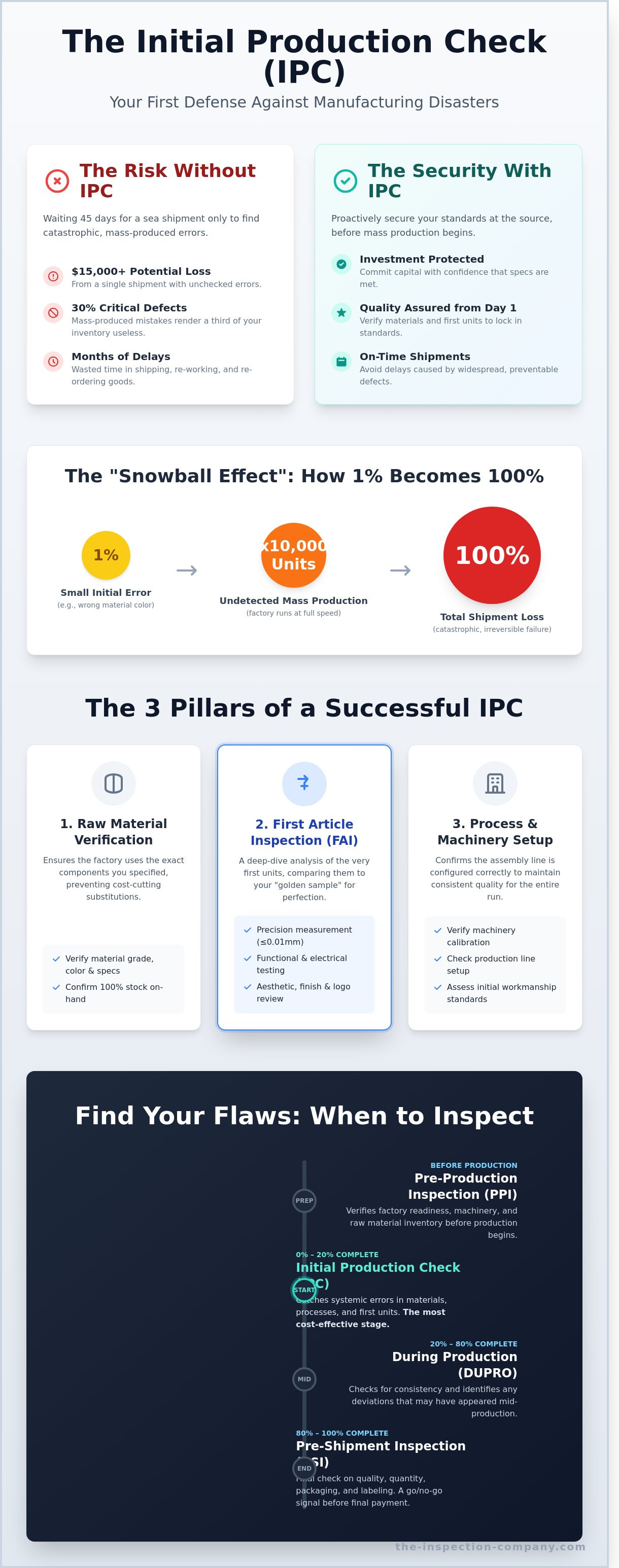
Think of quality control as a mathematical progression. A 1% measurement error in a plastic mold or a slight color deviation in the first hour of production results in a 100% loss of the shipment if the error remains undetected. This is the snowball effect; a small mistake at the start grows into a massive financial disaster by the time the goods reach the warehouse. One day of inspection saves months of trouble and thousands of dollars in wasted materials.
Our inspectors focus on the raw materials and components to ensure they match your bill of materials. A critical part of this process involves the First Article Inspection (FAI), where we verify the very first units coming off the line. In a 2026 professional QC strategy, the initial production check service is no longer optional. It's a mandatory safeguard against the rising costs of raw materials and the high turnover of factory labor in major manufacturing hubs.
The Core Objectives of an IPC Inspection
The primary goal is total verification before the factory accelerates to full speed. We confirm the factory is using the exact components you specified, such as 304-grade stainless steel rather than a cheaper 201-grade substitute. We also ensure the production line is set up according to your approved golden sample. If our inspector identifies a bottleneck or a technical deviation in the first 50 units, the factory can adjust the process immediately without scrapping the entire 10,000-unit run.
IPC vs. Pre-Production Inspection (PPI)
Terminology often confuses importers, but the distinction is vital for risk management. A PPI occurs before any machines start; it's a check of the factory's readiness and raw material inventory. An IPC is more reliable because it captures the manufacturing process in motion. You don't just look at piles of fabric or components; you see the first finished products. This provides concrete evidence of the factory's actual manufacturing capability rather than their theoretical promises.
The 3 Pillars of a Successful Initial Production Check
An initial production check service acts as a critical "Quality Safety Net" by identifying manufacturing flaws before they scale. Instead of waiting for a finished shipment to discover errors, this service intervenes when only 1% to 10% of the order is completed. This proactive approach stops the "snowball effect" where a single setup error ruins an entire production run. By verifying three specific areas, we eliminate the risks that lead to costly recalls and lost retail partnerships.
Raw Material and Component Inspection
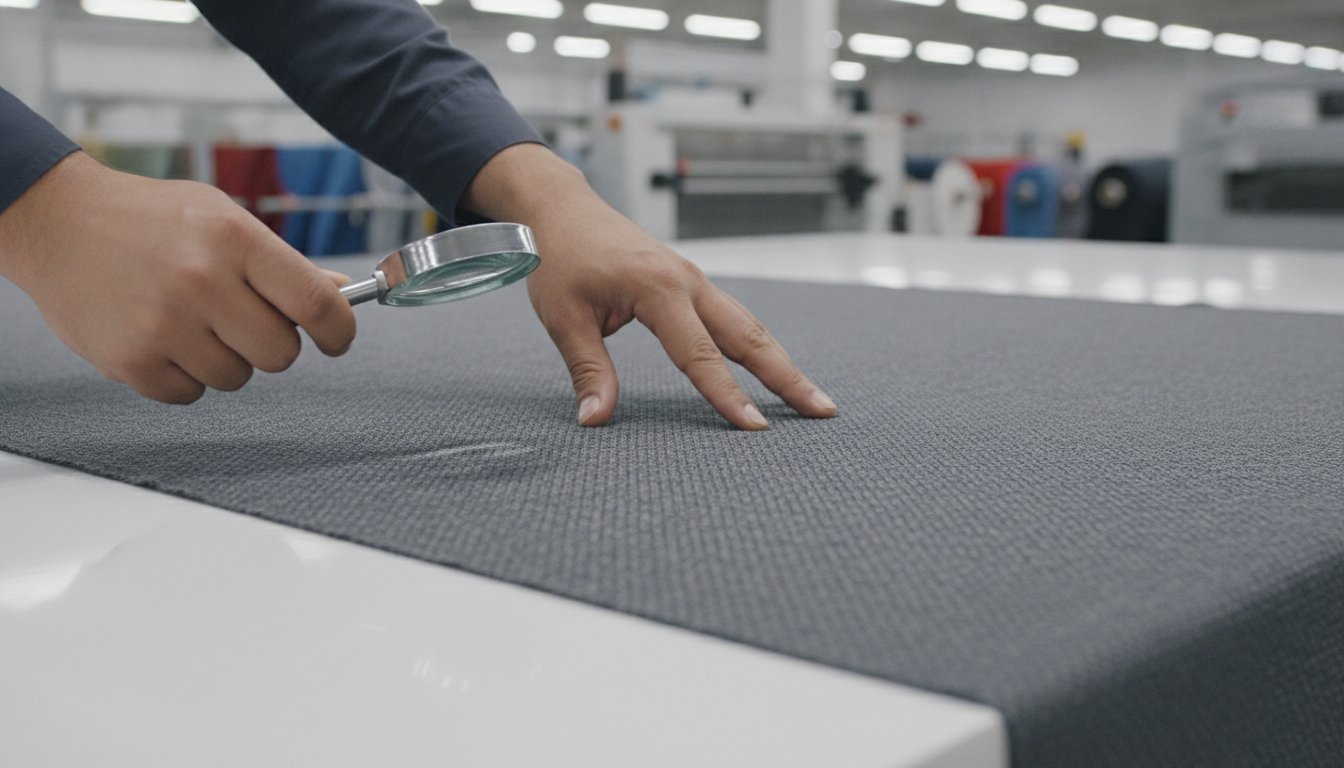
Factories occasionally substitute specified components for lower-grade alternatives to offset rising costs; a practice that can compromise the entire shipment. We verify the grade, color, and technical specifications of all inputs against your approved requirements. Our inspectors also confirm the factory has 100% of the necessary stock on-hand to prevent delays. Material verification is the foundation of product durability. Adhering to these rigorous standards is a core component of Export Quality Management, ensuring your products remain competitive in high-standard markets.
First Article Inspection (FAI) Mechanics
The First Article Inspection involves a deep-dive analysis of the very first units off the line. We compare these units against the "golden sample" provided during the prototyping phase. Our process includes:
-
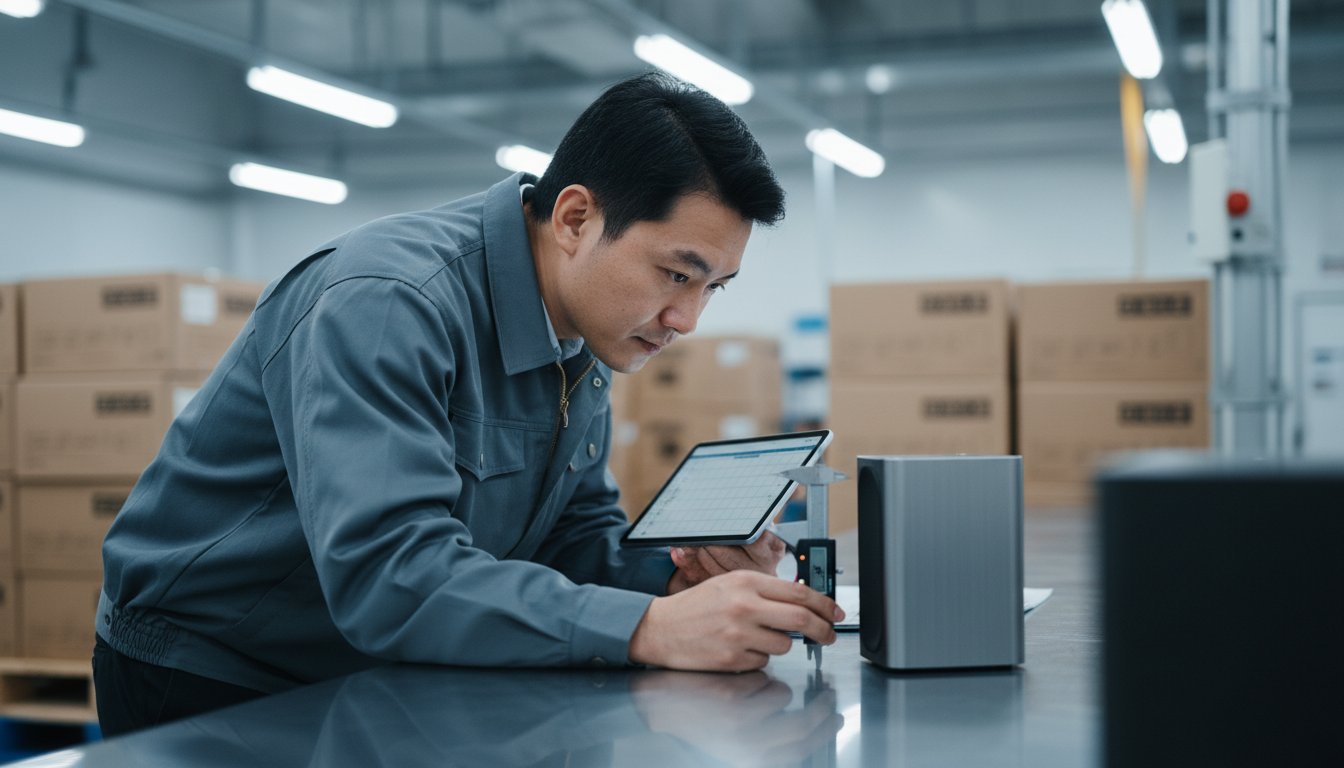
Precision Measurement: Using calipers and gauges to ensure dimensions stay within a 0.01mm tolerance.
-
Functional Testing: Verifying that mechanical parts move correctly and electrical components power on as intended.
-
Aesthetic Review: Checking for paint consistency, logo placement, and surface finish defects.
Detecting a safety deviation at this stage saves thousands of dollars in wasted materials and labor.
Production Process and Machinery Setup
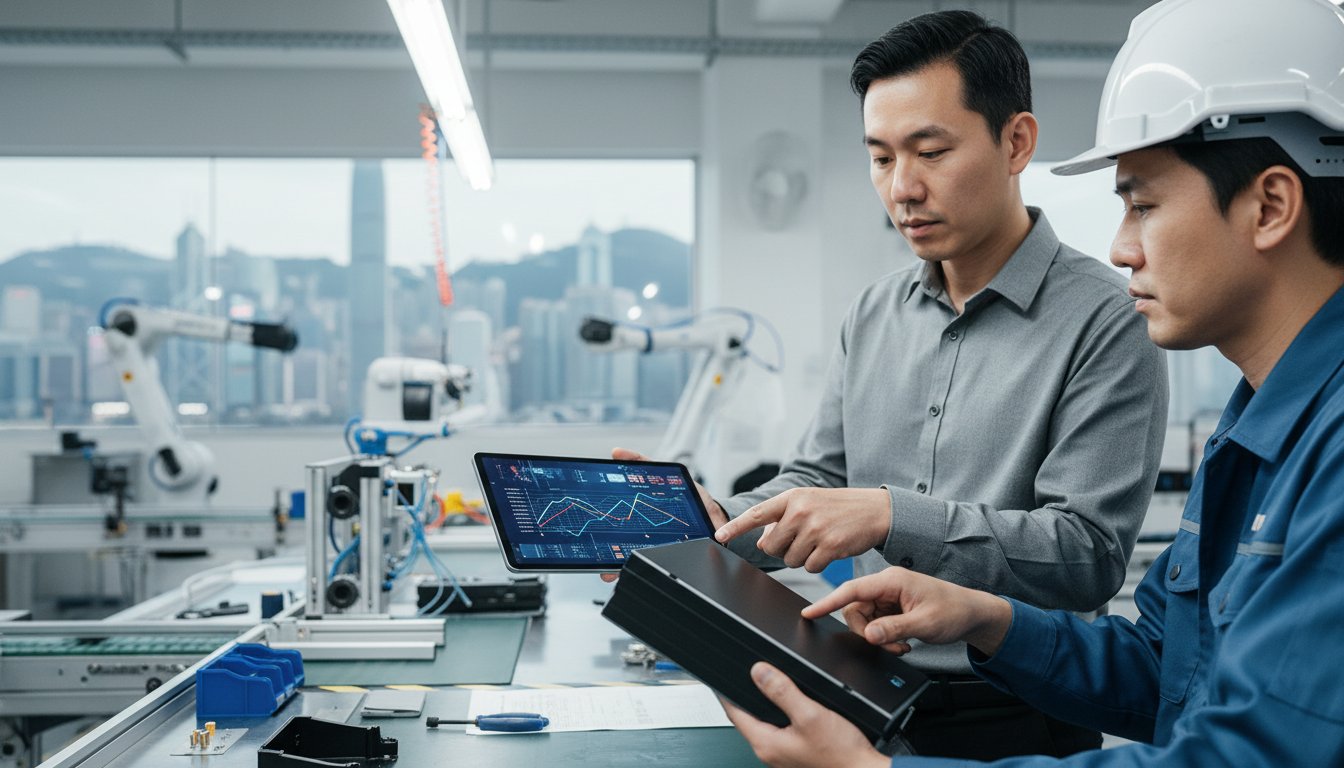
Even the best materials fail if the assembly line is configured incorrectly. We audit the factory's moulds, tools, and calibration settings to ensure they align with your technical files. It's common to find that operators haven't been fully briefed on specific assembly nuances; our presence ensures they understand every instruction. We also evaluate the factory’s internal QC checkpoints to confirm they are active and effective. If you want to ensure your factory is truly prepared, you can book a professional audit to secure your production line. These three pillars work in unison to provide a transparent, data-driven view of your order's health before it's too late to pivot.
IPC vs. DUPRO vs. PSI: Choosing the Right Strategy
Understanding the timing of quality control is vital for protecting your investment. An initial production check service occurs when only 1% to 10% of your order is finished. This differs from a During Production Inspection (DUPRO), which typically happens at the 30% to 50% mark, and a Pre-Shipment Inspection (PSI), conducted when the order is 100% complete. While a PSI is the final safeguard, it's often a "post-mortem" analysis. If the factory misinterprets your manufacturing standards, a PSI only confirms that your entire budget was spent on defective goods. By using an IPC, you identify "mass-defect" risks before the factory processes the remaining 90% of your raw materials.
When to Prioritize an IPC
You shouldn't treat every order with the same level of scrutiny, but specific scenarios make an IPC mandatory. For 85% of importers working with a new supplier, the first production run is the highest risk period because quality expectations haven't been calibrated. Complex products involving custom injection molds or intricate electronic components also require early intervention to ensure the assembly line is set up correctly. If you're managing seasonal inventory for Q4, you can't afford a 30-day delay for rework. An IPC ensures the first batch is perfect, keeping your shipping window secure.
The ROI of Early Detection
The financial logic of early inspection is clear. Correcting a technical flaw when only 20% of the components are assembled is a minor production adjustment. Discovering that same flaw during a PSI leads to a 100% shipment rejection, potentially costing your business $50,000 or more in lost sales and factory disputes. For sellers on Amazon or Shopify, a single batch of defective products can result in a 1-star review average that permanently kills a listing's conversion rate. Protecting your brand reputation starts at the factory floor, not the warehouse. One day of inspection at the start can save months of legal and logistical trouble later.
Integrating an initial production check service into a multi-stage plan is the most reliable way to manage high-value orders. For contracts exceeding $100,000, we recommend a "sandwich" strategy: an IPC to set the standard, followed by a PSI to confirm the final count and packaging. This layered approach eliminates the "surprises" that derail international trade. It's not just about finding errors; it's about establishing a transparent relationship with your supplier from day one.
Your IPC Checklist: What to Expect in the Inspection Report
The Inspection Company delivers a detailed digital report within 24 hours of the site visit. This document is your primary tool for risk mitigation; it provides an objective snapshot of your order when only 10% to 20% of production is complete. By using our initial production check service, you receive a factual basis for accepting or rejecting the start of a mass production run. The report doesn't just list observations; it categorizes data into actionable insights that protect your capital.
The Anatomy of a Professional IPC Report
Every report follows a rigorous structure based on ISO 2859-1 standards. Our inspectors document four critical pillars: Quantity, Workmanship, On-Site Tests, and Specifications. We don't rely on vague descriptions. If a color variance is found, you'll see high-resolution photographic evidence comparing the golden sample to the production line output. This visual proof is essential for the AQL (Acceptable Quality Level) assessment, which determines if the number of minor, major, or critical defects exceeds your pre-defined limits. You can use these photos as direct leverage to negotiate immediate corrective actions with the factory manager before the remaining 90% of your goods are processed.
Interpreting Pass, Fail, and Pending Results
The report summary provides an immediate status. A "Pass" indicates production aligns with your specifications. A "Fail" means critical issues were identified that require a total production halt. "Pending" usually occurs when a specific test result requires your final decision or additional laboratory verification. Since 2024, we've seen a 12% increase in "Pending" results due to complex electronic components requiring specialized calibration. Don't ignore these flags. A pending status is an invitation to pause and clarify requirements before costs escalate.
2026 Supply Chain Nuances in Asia
Manufacturing dynamics in 2026 have shifted. While China remains a powerhouse, hubs in Vietnam and India face unique "Subcontracting Risks." Factories often outsource components to smaller, unvetted workshops to meet deadlines. Our initial production check service specifically verifies that production is happening at the agreed-upon location. We also integrate basic social compliance checks to ensure no child labor or safety violations are present at this early stage. For a more comprehensive evaluation of a new partner's infrastructure, we recommend our Factory Audit Services to ensure long-term compliance with global ESG standards.
Secure your production standards today: Book your Initial Production Check with our expert team.
Why The Inspection Company is Your Best Partner in Asia
Selecting a partner for your initial production check service is a critical decision that directly impacts your bottom line. The Inspection Company bridges the gap between Western quality expectations and Asian manufacturing realities. We combine European management oversight with a massive on-the-ground presence. With over 700 trained inspectors operating across China, Vietnam, India, and Thailand, we provide the localized expertise necessary to navigate complex supply chains. One day of inspection can save months of trouble, and we've built our reputation on being the eyes and ears of our clients since 2007.
Our "24-Hour Promise" sets the industry standard for speed and reliability. You won't wait days for results while your production line continues to churn out potential errors. We deliver detailed digital reports within one day of the inspection. These reports include high-resolution imagery and objective data points, allowing you to make informed decisions in real-time. Because we maintain 100% independence, we have zero factory bias. We don't accept commissions from suppliers, ensuring our transparency is never compromised.
-
700+ Professional Inspectors: Strategic placement in every major manufacturing hub in Asia.
-
24-Hour Reporting: Digital insights delivered to your inbox the day after the visit.
-
Zero Bias: Absolute independence from factories to ensure honest, raw data.
-
25 Years of Experience: Deep institutional knowledge of Asian production cycles.
European Standards, Local Presence
Communication breakdowns often lead to the most "costly surprises" in international trade. Our management team applies rigorous Western quality benchmarks to every initial production check service we perform. We ensure ISO 9001 standards are strictly followed from the moment the first raw materials hit the factory floor. Our commitment to integrity includes strict anti-bribery protocols. Every inspector undergoes regular ethics training to prevent the "factory favors" that often plague less professional agencies.
Streamlined Booking and Coordination
We've simplified the logistics of quality control to save you time. You don't need to struggle with time zones or language barriers to schedule a visit. Once you provide the factory contact details, our team handles all coordination and scheduling directly with the manufacturer. We offer customizable inspection protocols tailored to your specific product category, whether you're shipping complex electronics or high-volume textiles. Book your Initial Production Check today and secure your next shipment before it leaves the source.
Secure Your Manufacturing Success From the First Batch
Waiting until your shipment is packed and ready for the vessel is a gamble that costs both time and capital. An initial production check service ensures you catch critical defects when only 10% of the order is complete. This proactive strategy identifies raw material discrepancies and machinery calibration errors before they escalate into mass production failures. It's the most effective way to align your supplier's output with your exact specifications from day one.
The Inspection Company brings Western quality standards directly to your factory floor through our experienced European management team. With a network of 700+ professional inspectors across Asia and an ISO 9001 certified quality management system; we provide the transparency required to manage remote production with absolute confidence. One day of inspection saves months of supply chain trouble. You don't have to leave your brand's reputation to chance when you have experts verifying every detail on the ground.
Avoid costly surprises—Book your IPC inspection with The Inspection Company now
Take the first step toward a flawless delivery and build a supply chain that lasts.
Frequently Asked Questions
What is the main difference between an initial production check and a pre-shipment inspection?
An initial production check service occurs when 0% to 20% of the order is completed, while a pre-shipment inspection (PSI) takes place only after 80% of goods are finished and packed. The IPC focuses on raw materials and first production runs to catch errors at the source. The PSI is your final gatekeeper before the container is sealed and the balance payment is made.
How much does an initial production check service typically cost?
A standard initial production check service typically costs between $200 and $300 per man-day in major manufacturing hubs like China, Vietnam, or India. This flat fee covers the inspector's time, travel, and a detailed digital report delivered within 24 hours. Investing this small amount prevents the 15% to 30% loss in total order value often caused by undetected mass production defects.
Can an IPC prevent delays in my shipping schedule?
Yes, an IPC prevents shipping delays by identifying material shortages or technical errors before they affect the entire batch. Catching a color mismatch at the 10% production stage allows for immediate correction. If you wait until the final inspection, rework can push your delivery date back by 14 to 21 days, causing missed retail windows and expensive contract penalties.
What happens if the factory fails the initial production check?
You must immediately issue a Corrective Action Plan (CAP) to the factory management if they fail the inspection. We provide a detailed report with 30 to 50 high-resolution photos of every defect found. The factory then has 48 hours to implement changes or source new materials. This proactive approach ensures you don't pay for 1,000 units of unsellable inventory.
Is an IPC necessary for repeat orders with the same factory?
An IPC is vital for repeat orders because factories often switch sub-suppliers or experience 15% staff turnover between production runs. Even if the first three orders were perfect, the fourth might use a cheaper grade of plastic or different internal components. Regular checks maintain a consistent quality baseline and remind the supplier that your standards don't slip over time.
How many units does the inspector check during an IPC?
Inspectors typically check a sample size based on the ISO 2859-1 (AQL) standard, often reviewing 32 to 125 units depending on your specific lot size. During the initial phase, we also examine 100% of the raw materials and the first finished prototypes. This statistical approach provides 95% confidence that the entire production run will meet your specifications.
Do I need to be present at the factory during the initial production check?
You don't need to be at the factory because our independent inspectors act as your professional eyes and ears on the ground. We provide a comprehensive report within 24 hours that includes detailed photos and video footage of the production line. This remote oversight saves you the $1,500 to $3,500 cost of international travel and accommodation.
Which industries benefit most from an IPC service?
Industries with complex assembly or high material costs, such as electronics, textiles, and furniture, benefit most from these checks. For example, 40% of electronics defects stem from incorrect internal components that are hidden once the casing is closed. Early verification in the garment industry ensures fabric weight and dye lots match your approved gold sample before the first 500 units are cut.