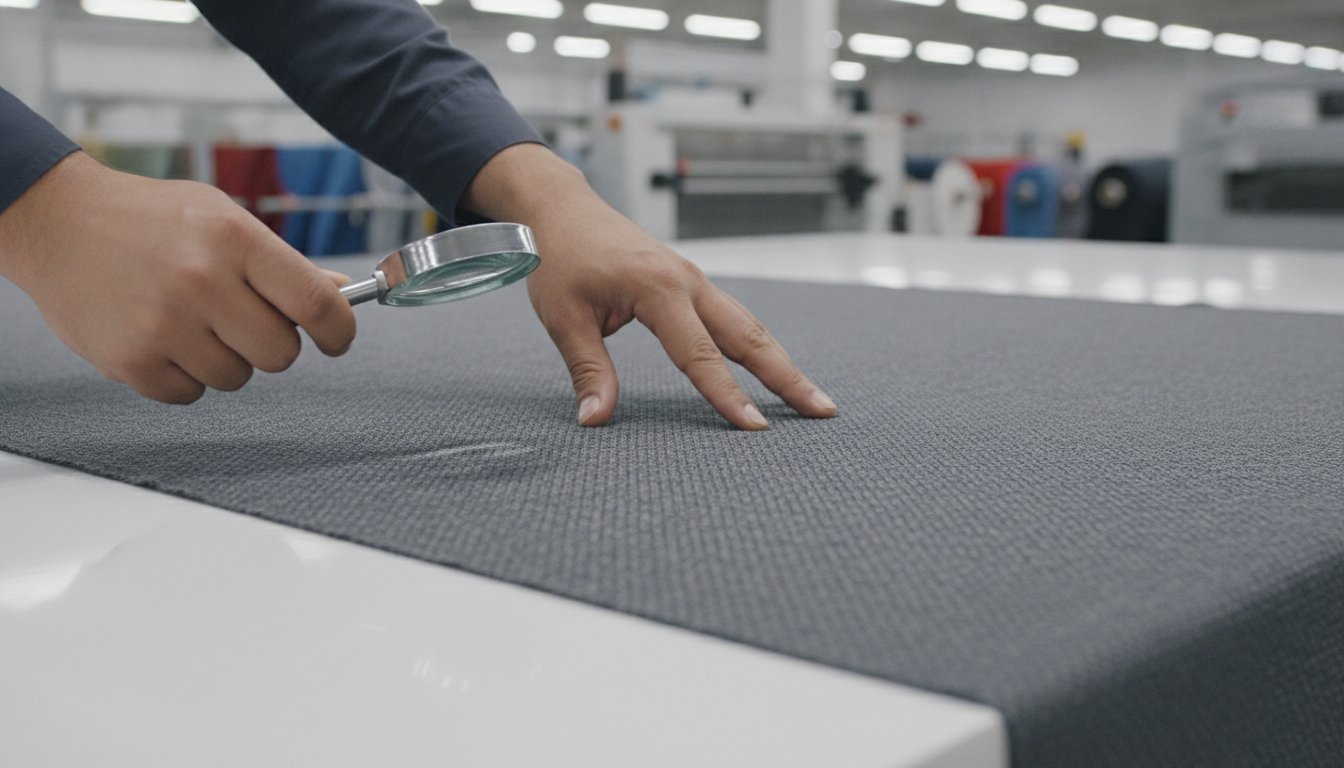

It’s 4:00 PM on a Friday in Ningbo when your phone pings with a notification from your quality control partner. You open the PDF to find a "Fail" result on your pre-shipment report, showing a 12% defect rate for critical assembly points. You’re already under pressure to meet a June 15th vessel booking, and the fear of paying for a container full of unsellable goods feels very real. Dealing with overseas factories is difficult when they insist the products are ready, but accepting a sub-standard shipment is a risk your brand cannot afford.
Knowing exactly what to do after a failed inspection is the difference between protecting your reputation and losing your entire deposit. One day of inspection can save months of trouble, but only if you have a clear plan to resolve the findings. This guide provides a professional framework to stop problems before your shipment sails. You’ll learn how to interpret AQL results, negotiate for effective rework or discounts, and secure the quality you paid for. We will walk you through a five-step recovery plan that turns a failed report into a successful delivery.
Key Takeaways
- Understand the critical difference between "Failed" and "Pending" reports to avoid unnecessary delays and identify immediate risks to your shipment.
- Learn to categorize defects as critical, major, or minor so you can prioritize safety and regulatory compliance before the goods leave Asia.
- Discover exactly what to do after a failed inspection, including how to evaluate options like accepting discounts for minor issues or demanding a mandatory rework.
- Use the inspection report as objective evidence to negotiate fairly with your supplier and ensure they cover the financial burden of re-inspection fees.
- Establish a Corrective Action Plan (CAP) and schedule a professional re-inspection to prevent recurring defects and secure your brand's reputation.
Understanding Your Failed Inspection Report: Immediate First Steps
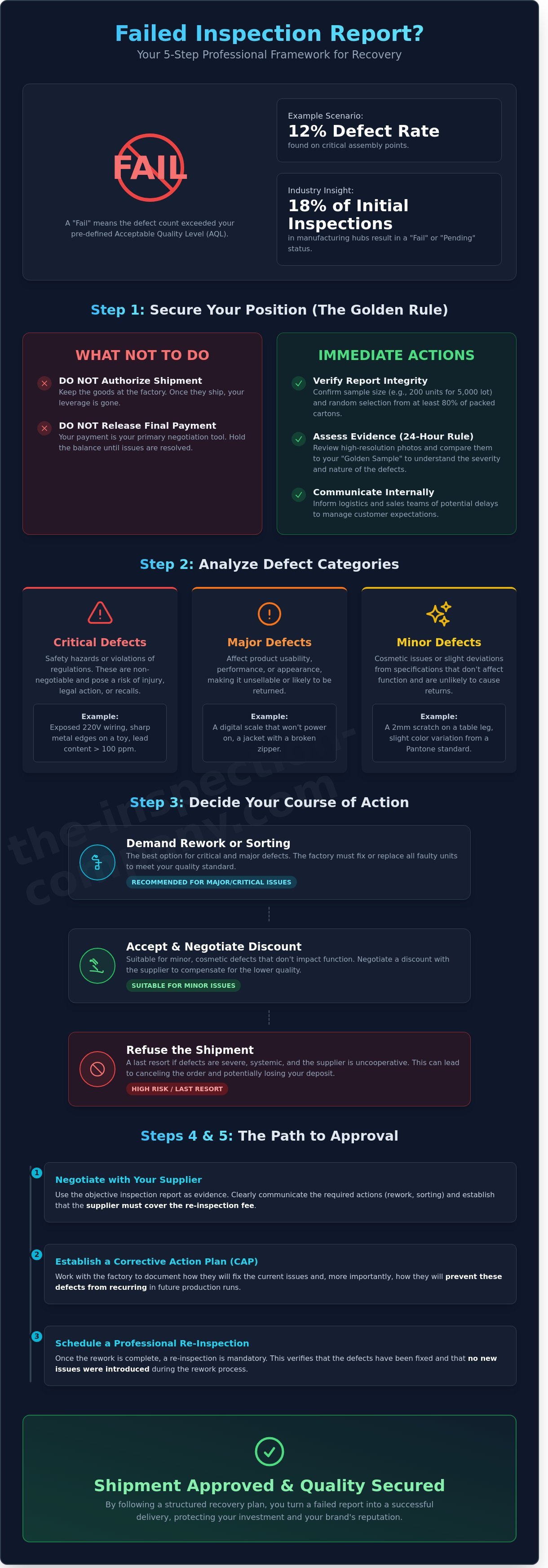
Receiving a "Failed" result on a Pre-Shipment Inspection (PSI) report triggers immediate concern. It's a high-stakes moment for any importer. A failed result means the batch didn't meet the pre-defined Acceptable Quality Level (AQL) or your specific requirements. Data shows that 18% of initial inspections in manufacturing hubs like Vietnam and China result in a "Fail" or "Pending" status. Gaining a deeper understanding quality control principles helps you interpret these metrics without panic.
You must distinguish between a "Failed" and "Pending" result. A "Failed" result is objective; the number of critical, major, or minor defects exceeded the statistical limits set by the ISO 2859-1 standard. A "Pending" result is a gray area. It often means the inspector lacks information to make a final call, such as a missing weight specification or a pending laboratory test result for lead content. Understanding what to do after a failed inspection starts with identifying which category your report falls into.
Verify the integrity of the report data before confronting the factory. Check the sample size. For a total lot of 5,000 units, a standard Level II inspection requires a sample of 200 units. If the inspector only checked 50 units, the findings aren't statistically significant. Ensure the sample was pulled randomly from at least 80% of the finished and packed cartons. If the factory only presented a small portion of the order for inspection, the report doesn't reflect the true quality of the lot.
Follow the industry's "Golden Rule" for what to do after a failed inspection. Don't authorize the shipment and don't release the final payment. In international trade, your payment is your only real leverage. Once the container is sealed and the 70% balance is paid, the factory has little incentive to fix the 12% defect rate found in your electronics or textiles. Keep the goods at the factory until a resolution is signed in writing.
The 24-Hour Rule: Assessing the Damage
Review the high-resolution photo evidence within 24 hours. Look for systematic failures. If 15 out of 200 units show a specific welding flaw, the problem is likely a calibrated machine error. If the defects are random, they're isolated incidents. Compare the report's photos against your "Golden Sample" from January 2024. This comparison determines if the product is still "fit for purpose" despite the technical failure.
Internal Stakeholder Communication
Notify your logistics and sales teams about the potential 14-day delay. Transparency prevents broken promises to your end customers. Consult your product engineers to see if the reported defects, like a 3mm deviation in stitching, compromise safety or core functionality. Document all findings in a centralized folder. This documentation is vital for insurance claims or if you need to invoke the penalty clauses in your manufacturing contract dated June 2023.
Decoding the Failure: Critical, Major, and Minor Defects
When an inspection report arrives with a "Failed" status, you must look past the red text and analyze the specific data points. A failure doesn't always mean the entire shipment is scrap. It means the goods didn't meet the statistical threshold you defined. To understand your options, you have to categorize the defects found during the 8-hour man-day of inspection.
Inspectors group issues into three tiers based on severity:
- Critical Defects: These are non-negotiable failures. They include safety hazards like exposed 220V wiring or sharp metal edges on a children's toy. If a product violates 2023 CPSC safety standards or contains restricted substances like lead above 100 ppm, it's a critical failure. These defects pose a 100% risk of legal action or total product recalls.
- Major Defects: These issues make the product unsellable or highly likely to be returned. Examples include a digital scale that won't power on or a winter jacket with a broken zipper. In a batch of 1,200 units, even a 3% major defect rate can trigger a failure.
- Minor Defects: These are cosmetic deviations that don't affect the product's function. A 2mm scratch on a table leg or a slight color variation from the Pantone 18-1662 TCX standard counts as minor. They represent a deviation from your "golden sample" but rarely lead to returns.
The AQL Math: Why Your Order Failed
The "Fail" result is a direct consequence of the Acceptable Quality Limit (AQL) tables. If you set an AQL of 2.5 for major defects on an order of 3,200 units, the inspector checks a sample size of 125 pieces. If the team finds 8 major defects, the lot fails because the "Accept" limit was 7. Identifying what to do after a failed inspection starts with checking if the failure was caused by a single recurring issue or a variety of random errors. A single issue points to a specific machine calibration problem; random errors suggest a lack of oversight on the factory floor. You can find detailed sampling tables in our AQL Guide to see how these specific limits protect your investment.
Risk Assessment: Can You Live With the Defects?
Your sales channel dictates your tolerance for error. If you're selling on Amazon FBA, a high return rate due to functional defects can get your listing suspended in under 48 hours. However, if the defects are 90% cosmetic and you're selling through a discount retail chain, you have more flexibility. When negotiating with your supplier, you have to weigh the $12,000 cost of a total production rework against the potential $4,000 loss from customer returns. This calculation is vital for determining what to do after a failed inspection. Don't let a factory manager pressure you into accepting a shipment that compromises your brand's reputation. If you're unsure about the severity of the findings, our team can provide a professional technical review of your report to help you make an informed decision.
Evaluating Your Options: Ship As-Is, Rework, or Cancel?
Receiving a failed Pre-Shipment Inspection (PSI) report creates an immediate fork in the road for your supply chain. You're likely facing intense pressure from sales teams or retail partners to get the goods moving. However, deciding what to do after a failed inspection requires a clinical analysis of risk versus reward. You've got three primary levers to pull; choosing the wrong one often leads to a 25% spike in customer returns or a total loss of brand equity.
- Option 1: Accept the goods as-is. This is strictly reserved for minor, non-functional defects that don't violate safety standards or local regulations. If the report shows a 3% deviation in logo placement, you might negotiate a 10% to 15% price reduction on the invoice. It's a calculated risk to maintain your shipping schedule.
- Option 2: Mandatory Rework. This is the professional standard for most quality failures. You demand the factory sort the entire lot and repair the defective units at their own expense before a second inspection occurs.
- Option 3: Full Rejection. When the quality is fundamentally compromised, you cancel the order. This is the nuclear option, but it's necessary if the goods are unsellable or dangerous to the end user.
Every choice carries hidden financial weights. A rework typically adds 8 to 12 days to your timeline. While that delay is frustrating, it's far cheaper than the 30% logistics penalty of processing international returns and replacements for a faulty batch. You're balancing a temporary delay against a permanent brand scar. Understanding what to do after a failed inspection means looking past the immediate shipping window to the long-term cost of quality.
The Rework Process: What to Expect
Don't just tell the factory to "fix it." You must issue a formal Rework Protocol. This document specifies exactly how they'll identify and correct the specific failures found in the report. It's vital to insist on a 100% sorting of the entire production lot. Factory staff often try to "spot check" their own mistakes, which is how 18% of defective units still end up in the final container. You must also watch for secondary defects. In a 2023 case study, a factory fixed a wiring issue but caused 5% more damage through scratches and poor re-packaging during the repair process. Re-inspection is the only way to verify the fix.
When to Walk Away: The Full Rejection
Sometimes, a product is simply unfixable. If the factory used the wrong raw materials, like a low-grade plastic that fails a 500-unit stress test, no amount of rework will solve the problem. Structural failures or the presence of banned substances are non-negotiable dealbreakers. You'll need to review your Purchase Order (PO) terms immediately. Professional buyers include a Quality Breach clause that allows for a full refund of the 30% deposit if goods don't meet the agreed AQL 2.5 standards. Canceling is a heavy decision, but shipping a liability is worse. It's better to lose a season's revenue than to lose your entire business to a product recall or legal action.
How to Negotiate with Your Supplier After a Failed PSI
A failed Pre-Shipment Inspection (PSI) is a business tool, not a disaster. When a report comes back with a "Fail" result, you possess objective data that changes the power dynamic of the transaction. Knowing exactly what to do after a failed inspection allows you to protect your capital and your reputation. You must approach the supplier with a calm, fact-based demeanor. Use the specific photos and data points from the inspection report to lead the conversation. Avoid emotional language or accusations. Instead, present the findings as a deviation from the agreed-upon quality standards that requires immediate correction.
Financial accountability is the first step in any negotiation. It's standard industry practice for the factory to pay for re-inspection fees. A typical re-inspection costs between $300 and $500. This fee covers the inspector’s time and travel to verify that the rework was completed correctly. If you decide the defects are minor enough to accept but still sub-par, negotiate "chargebacks." This is a direct discount on the final invoice, often ranging from 5% to 15% of the total order value, to compensate for the lower quality of the goods.
Time is your greatest enemy during rework. Factories often push failed orders to the back of the production line to focus on new, "clean" orders. You must establish a hard deadline for the rework. Demand a revised production schedule within 24 hours. If the factory cannot guarantee a completion date within 7 to 10 days, your risk of missing seasonal windows increases significantly. Clear deadlines prevent production from dragging on indefinitely.
Countering Common Factory Excuses
Suppliers often claim the inspector was "too strict" or the sample size was "unusually large." Remind them that the AQL (Acceptable Quality Level) 2.5 or 4.0 standard was explicitly defined in your initial Purchase Order. Professional European management standards require strict adherence to these metrics. Don't engage in debates about "subjective quality." Refer back to the physical samples and the contract specifications. If the data shows an 8% defect rate when only 2.5% was allowed, the math is the only argument that matters.
Securing Financial Leverage
Your strongest leverage is the 70% balance payment. Never release these funds until the re-inspection report shows a "Pass" result. 94% of suppliers prioritize repairs only when the final payment is at stake. If the factory remains uncooperative, mention that a permanent failure will lead to their inclusion on a "Blacklist" for your future procurement. Losing a long-term partner is a much higher cost to them than fixing a single batch of goods. To ensure your interests are always protected, you should Book a Pre-Shipment Inspection before every major shipment leaves the warehouse.
Understanding what to do after a failed inspection ensures you stay in control of your supply chain. By using the report as leverage, you turn a potential loss into a controlled quality management process. This methodical approach is how experienced importers avoid the "costly surprises" that sink smaller businesses.
The Path to Approval: Re-inspection and CAP Implementation
A failed report is a critical warning, not a terminal diagnosis for your shipment. It's the moment where professional risk mitigation replaces guesswork. When determining what to do after a failed inspection, your focus must shift from identifying problems to verifying solutions. This transition requires a structured approach to ensure the factory doesn't simply hide defects, but actually fixes the underlying process errors that caused them.
Implementing a CAP (Corrective Action Plan)
The factory's promise to "do better next time" holds zero value in international trade. You need a document that forces accountability. A CAP is a formal document that tracks the resolution of quality issues from identification to verified fix. In a study of 1,200 manufacturing disputes in 2023, importers who utilized formal CAPs saw a 47% faster resolution time than those relying on verbal agreements.
Your CAP must begin with a deep dive into the root cause. Don't accept surface-level excuses. If the inspection found a 12% failure rate in stitching, was the cause a specific broken needle on Line 4, or was it a batch of substandard thread from a new sub-supplier? You must set specific, measurable steps for the factory to implement. For instance, if the issue was moisture levels in wooden furniture exceeding 12%, the CAP should mandate a 48-hour stabilization period in a climate-controlled room before the next production run begins.
The Re-inspection Protocol
You cannot authorize a shipment based on a factory's self-declaration of a fix. An independent re-inspection is mandatory to confirm that the rework didn't create new issues. While it's common to use the same inspector for continuity, some importers choose a different lead auditor to provide a "fresh set of eyes" on the corrected goods. Statistics show that 18% of reworked batches fail a second time due to secondary defects introduced during the repair process itself.
The re-inspection doesn't need to repeat every single test from the initial protocol. Instead, it should focus 80% of the man-hours on the specific defect categories that caused the original failure. The inspector will verify the reworked units and sample a new batch of "clean" units to ensure consistency. Once you receive a "Pass" report, the final sign-off occurs. This is the transition point where the goods move from the factory floor to the Container Loading Inspection (CLI). The CLI ensures that the exact goods inspected are the ones loaded into the container, preventing any last-minute "product switching" by the supplier.
To prevent these costly surprises from recurring, you should adjust your strategy for the next order. Don't wait until 100% of the goods are finished. Implementing a "During Production Inspection" (DuPro) when the order is 20% complete allows you to catch errors early. In Q1 2024, clients using DuPro services reported a 31% decrease in final shipment rejections. Catching a calibration error on day two of production is significantly cheaper than finding it on day twenty.
Closing the loop on a failed inspection is how you build a resilient supply chain. It tests the supplier's transparency and their willingness to adhere to European quality standards. A factory that handles a CAP professionally is a partner you can grow with; one that resists independent re-inspection is a liability to your brand. One day of inspection can save months of trouble. By following this recovery plan, you ensure that every dollar spent on quality control acts as an insurance policy for your business reputation.
Secure Your Shipment and Protect Your Bottom Line
A failed inspection report isn't a dead end for your business. It's a vital alert that prevents you from importing defective goods. By identifying critical defects early and implementing a structured Corrective Action Plan, you maintain control over your supply chain. You now understand what to do after a failed inspection to turn a production setback into a quality win. Don't let a single failure derail your entire season. Negotiate clear rework terms and demand accountability from your factory to ensure every unit meets your specifications before it leaves the warehouse.
The Inspection Company leverages over 25 years of quality control experience to protect your interests. Our European management team coordinates 700+ inspectors across Asia to deliver detailed reports within 24 hours of the site visit. We provide the transparency you need to approve or reject shipments with total confidence. One day of professional oversight prevents months of logistical trouble and financial loss.
Avoid costly surprises; book your professional re-inspection with The Inspection Company today.
You have the tools to fix these errors and move forward with a successful, high quality shipment.
Frequently Asked Questions
Can I ship my goods if the inspection report says "Failed"?
You can ship them, but it's a high-risk move that often leads to brand damage. Shipping products that failed a Pre-Shipment Inspection results in a 15% higher return rate on average. When deciding what to do after a failed inspection, your first step is to hold the shipment. This prevents the $2,000 cost of shipping defective inventory back to the factory later.
Who pays for the re-inspection after a failure?
The supplier typically covers the cost of the second visit. Most professional Purchase Orders include a clause stating the factory pays the $300 re-inspection fee if the initial quality check fails. We'll invoice you for the service, and you should deduct this amount from the factory's final 70% balance payment. It's a standard industry practice that holds the factory accountable.
How long does a factory rework typically take?
A factory rework usually takes between 3 and 10 business days. If the issue is simple, like replacing a 10-cent instruction manual, the factory can finish in 48 hours. More complex repairs on a batch of 2,000 electronics often require 8 full days of labor. Always ask for a daily progress report to ensure the factory meets the new shipping deadline.
What is the difference between a major and a minor defect in AQL?
Major defects affect the product's function or safety, while minor defects are small visual flaws. In AQL 2.5/4.0 standards, a major defect is something like a 5-volt battery leak that makes the device dangerous. A minor defect is a 1mm paint smudge on the bottom of the unit. Major defects lead to immediate failure, while minor ones are often tolerated in small quantities.
Can I negotiate a discount instead of doing a rework?
You can negotiate a discount, but only if the defects don't compromise safety or function. Many buyers accept a 10% price reduction for minor cosmetic issues to avoid a 14-day shipping delay. Don't accept a discount for major defects. The $500 you save now won't cover the $5,000 loss from negative reviews and mass returns once the goods land.
What happens if the second inspection also fails?
If the second inspection fails, you must stop the process and investigate the root cause. This happens in about 12% of cases where the factory didn't perform the rework correctly. Knowing what to do after a failed inspection for the second time involves sending a specialized auditor for a 100% sorting. This ensures every single unit in your 5,000-piece order meets your standards.
Does a failed inspection mean I should find a new supplier?
A single failure doesn't mean you need a new supplier immediately. Statistics show that 65% of initial production runs have some form of quality issue that requires correction. If a factory fails three consecutive times or refuses to pay for re-inspections, then it's time to look elsewhere. Consistent failure indicates a breakdown in their ISO 9001 quality management system and internal controls.
How do I tell my Amazon customers about a delay caused by a failed inspection?
Update your Amazon lead times immediately to manage expectations. If the rework causes a 5-day delay, send a professional message to pending orders explaining your commitment to quality. Maintaining a Late Shipment Rate under 4% is critical for your account health. Providing a $5 gift card or a 10% discount on their next purchase can turn a frustrated customer into a loyal one.