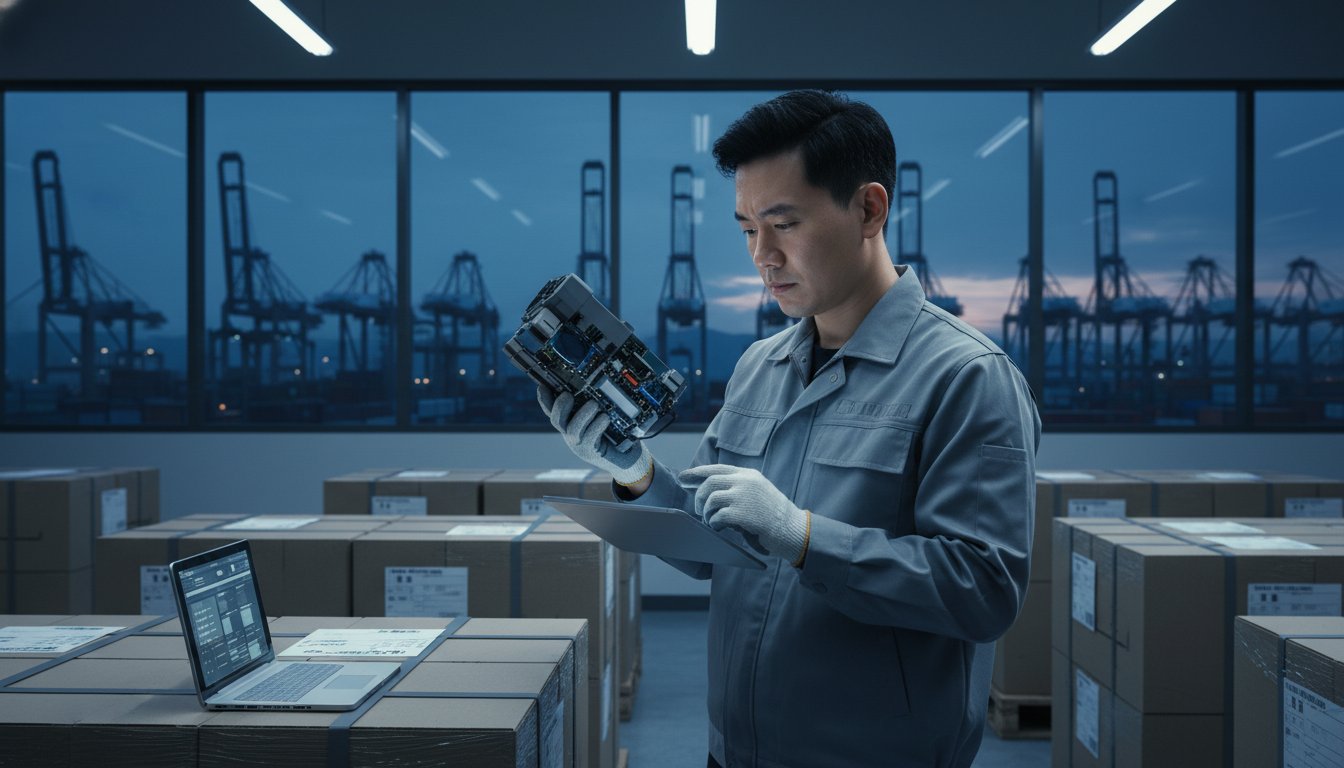
Last Tuesday, a mid-sized electronics importer discovered that a "Label Created" notification was merely a mask for a 14-day production delay and a 15% defect rate. For many businesses, asking what does pre shipment mean is the first step toward avoiding such a disaster. You likely feel that a tracking update represents progress; yet, a digital status offers no insight into the physical condition or compliance of your goods.
We understand the stress of waiting for a container while your capital remains at risk. This guide clarifies the vital distinction between a logistics status and the rigorous Pre-Shipment Inspection (PSI) protocols that actually protect your investment. You'll learn how to stop quality failures before they leave the factory, which significantly lowers the risk of customer returns and expensive chargebacks. We'll examine the specific inspection checkpoints that ensure your shipment is compliant and ready for the market so you can avoid costly surprises before your goods sail.
Key Takeaways
- Clarify exactly what does pre shipment mean in 2026 by distinguishing between a courier's tracking status and a vital quality control milestone.
- Identify the specific workmanship standards and quantity checks used to catch critical defects before they impact your brand’s reputation.
- Recognize why this stage represents the "point of no return" and how to use inspection reports as essential financial leverage for final payments.
- Learn the strategic timeline for booking inspections and the necessary steps to provide a detailed checklist that secures your supply chain.
- Discover how combining European management standards with local Asian expertise can stop costly problems before your shipment sails.
What Does Pre-Shipment Mean? Defining the Term in 2026
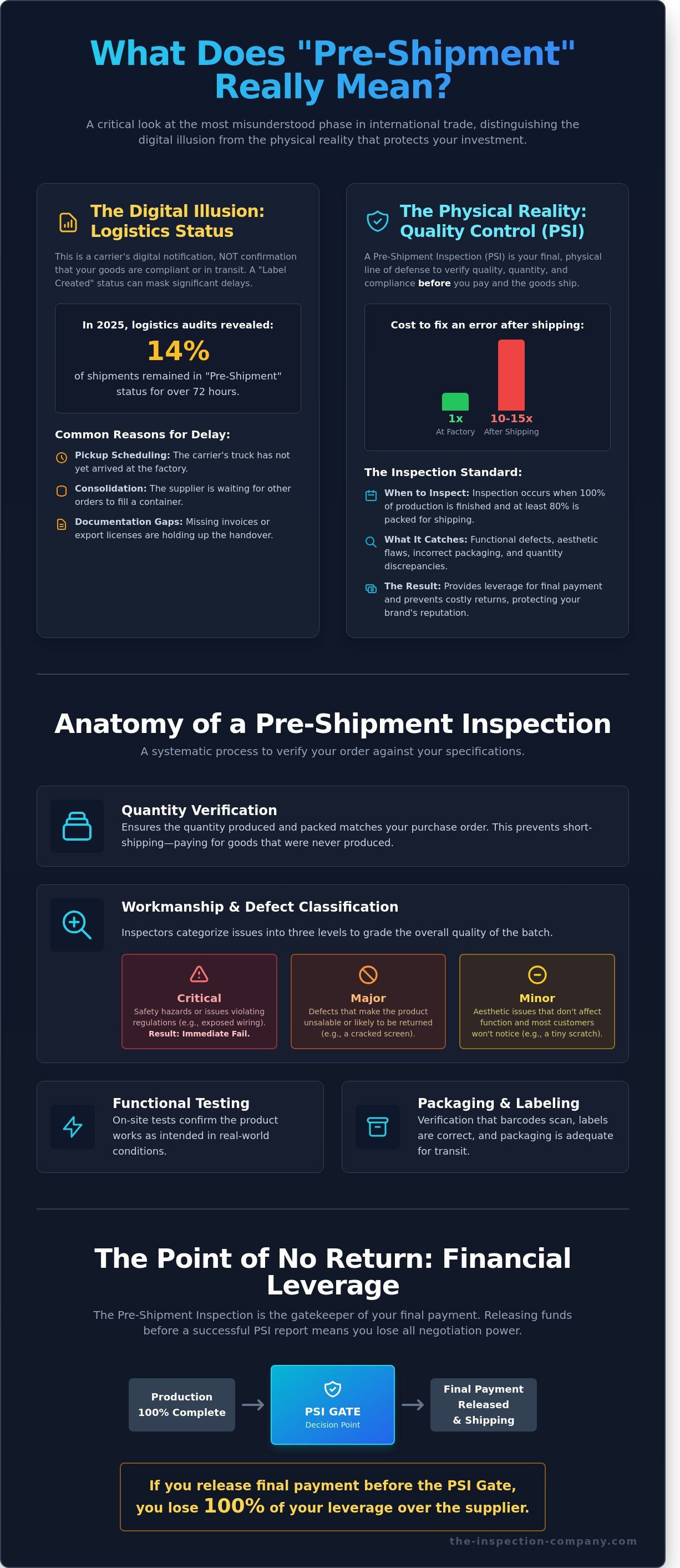
Understanding what does pre shipment mean is the difference between a successful import and a $25,000 loss. In 2026, the term carries a dual identity that often confuses new and experienced importers alike. For a logistics coordinator, it’s a digital tracking status; for a quality manager, it’s a critical risk-mitigation gate. This phase begins the moment production hits 100% and ends only when the container seal is locked. It dictates your legal standing. If you release final payment before verifying this stage, you lose 100% of your leverage over the supplier.
This period is the most misunderstood window in international trade. Many buyers assume their goods are safe once the factory says they're "ready." However, data from 2025 shows that 18% of orders reported as "ready" by suppliers still had pending packaging or labeling errors. The pre-shipment phase is your final opportunity to catch defects. Once the goods are on the water, the cost to fix an error increases by 10 to 15 times. We stop problems before your shipment sails, ensuring that what you paid for is actually what is inside the box.
Pre-Shipment as a Logistics Status
When a carrier like DHL or FedEx displays "Pre-shipment info sent," they've merely received digital data. The "Label Created" trap is a common point of friction for businesses. It means the supplier printed a sticker, not that the goods left the factory floor. In 2025, logistics audits revealed that 14% of shipments stayed in this status for over 72 hours. This delay often happens for three reasons:
- Pickup Scheduling: The carrier hasn't sent a truck to the factory or warehouse yet.
- Consolidation: The supplier is waiting for other orders to fill a container.
- Documentation Gaps: Missing commercial invoices or export licenses are holding up the physical hand-off.
Don't assume transit has begun until the status updates to "Arrived at Facility." This distinction is vital for meeting your own customer deadlines and managing inventory flow accurately.
Pre-Shipment as a Quality Control Phase
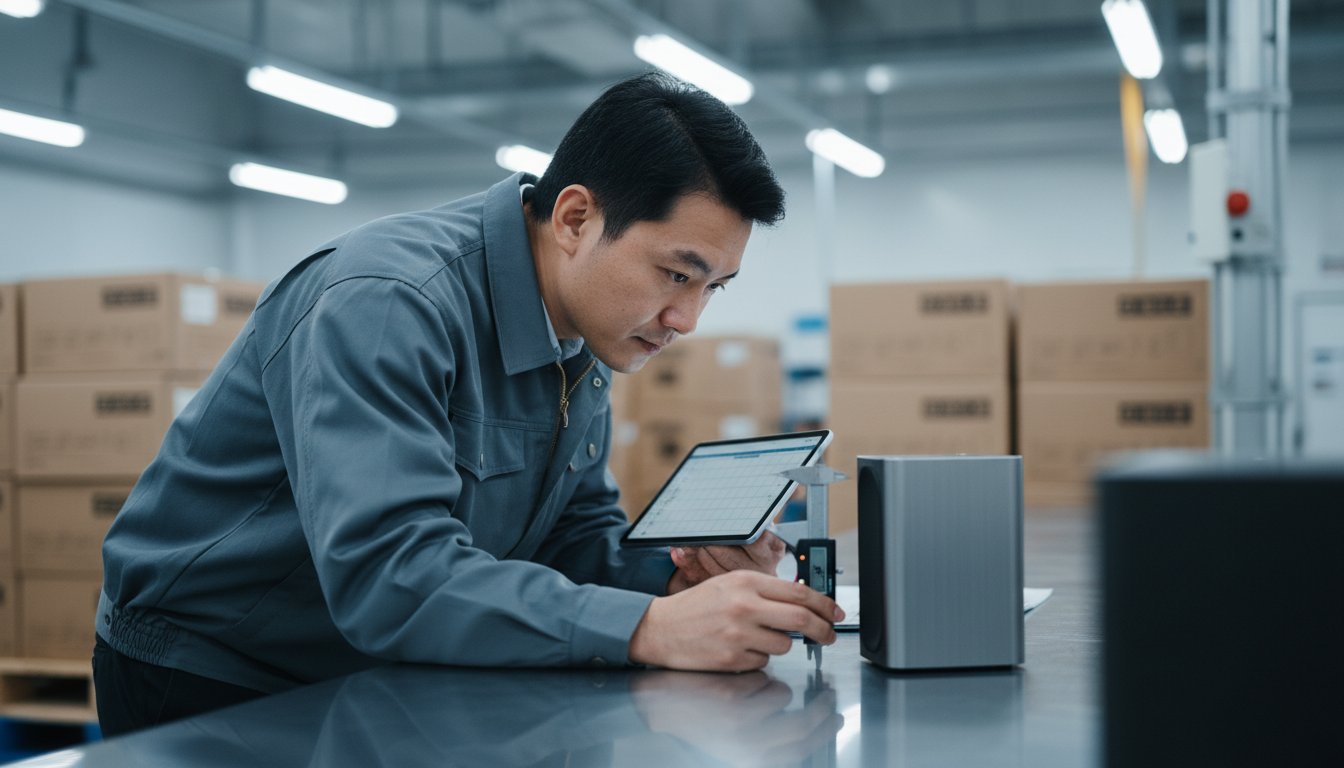
The Pre-shipment inspection, or PSI, is your last line of defense against sub-standard products. It’s a formal process where an independent inspector visits the factory to verify the order against your specifications. We follow the 80% rule; the inspection occurs only when at least 80% of the order is packed and 100% is finished. This ensures the sample we test is a true representation of the entire batch. Using a third-party is vital here. Internal factory reports often overlook defects that lead to 5% or 10% return rates once the goods reach their destination.
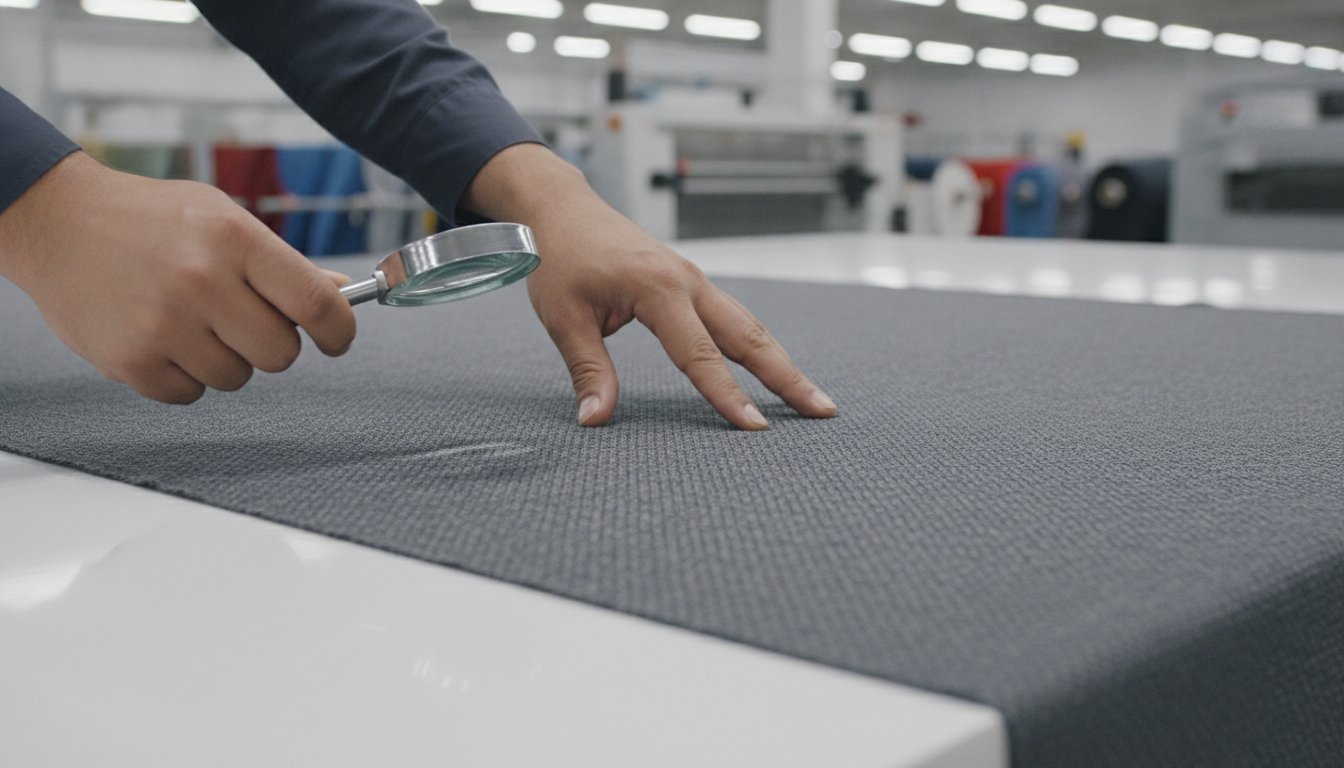
During this window, an inspector checks for functional defects, aesthetic flaws, and packaging compliance. It’s a methodical process. One day of inspection can save months of trouble and thousands in shipping costs for defective goods. By defining what does pre shipment mean through the lens of quality, you shift from a reactive business model to a proactive one. Our European management team ensures that these inspections meet ISO 9001 standards, providing the transparent data you need to approve or reject a shipment before it's too late.
The Anatomy of a Pre-Shipment Inspection (PSI)
Understanding what does pre shipment mean requires a look at the actual inspection floor. A PSI isn't a casual glance at a few boxes; it's a systematic barrier against financial loss. Inspectors start by verifying the total quantity against your purchase order. If you ordered 5,000 units and the factory only produced 4,850, you're losing 3% of your inventory before it even leaves the warehouse. This step prevents short-shipping and ensures you don't pay for goods that don't exist. By defining what does pre shipment mean through the lens of a physical audit, you move from guesswork to data-driven decision making.
Workmanship evaluation follows a strict hierarchy of defects. Inspectors categorize issues into three buckets. Critical defects are safety hazards, like exposed wiring, that could lead to a total product recall. Major defects, such as a cracked screen, render the product unsalable or likely to be returned. Minor defects are aesthetic issues like a small scratch that don't affect function. In a typical batch of 1,000 electronics, finding even 1 critical defect means an immediate fail. This meticulous grading protects your brand reputation from the 25% of customers who will abandon a brand after a single poor experience.
On-site functional testing proves the product works in real-world conditions. If it's a kitchen appliance, it's plugged in and run through a full 10-minute cycle. Packaging and labeling compliance checks ensure the barcodes scan and the "Made in China" or "Made in Vietnam" marks are present. Missing a single country-of-origin label can lead to a 100% rejection rate at US Customs. This leads to thousands of dollars in storage fees and delayed launches. This is your last chance to catch errors while the goods are still in the factory's hands.
Standard PSI Protocols
Visual inspections focus on color consistency and finish. If your brand's Pantone color is 286C but the product arrives in 285C, your brand identity is compromised. Physical requirements involve weighing every 10th carton and measuring dimensions to within a 0.5mm tolerance. Safety tests, like the ISTA 1A drop test, simulate the 12-foot fall a box might take in a shipping hub. This ensures the 5-layer corrugated cardboard actually protects your investment during transit.
The AQL Sampling Method
Inspectors use the ISO 2859-1 standard, commonly known as the AQL (Acceptance Quality Limit) chart. You don't need to check 100% of the goods because a random sample provides a 95% confidence level in the batch quality. For a lot size of 3,200 units, an inspector typically pulls 125 units for review. If they find more than 7 major defects, the whole shipment is rejected. This method allows for professional quality control without the massive cost of checking every single item. It's the most efficient way to stop problems before your shipment sails.
Why Pre-Shipment is the Most Critical Stage for Importers
Understanding what does pre shipment mean is vital because this stage represents your final opportunity to stop a disaster before it crosses an ocean. Once a container is sealed and loaded onto a vessel, you lose all physical and financial control over the goods. If that shipment arrives at your warehouse with a 12% defect rate, the cost to fix the issue triples. You're no longer just paying for production; you're paying for international freight, import duties, and the logistical nightmare of return shipping or local disposal fees.
Smart importers use this stage as their primary financial lever. Most manufacturing contracts in Asia operate on a 30/70 payment structure, where the final 70% is due upon completion. By making a "Passed" inspection report a mandatory condition for the final wire transfer, you maintain the upper hand. If the goods don't meet your specifications, the money stays in your bank account. This financial pressure is the only language many factories truly respect when quality begins to slip during a high-pressure production run.
One day of inspection, which typically costs around $300, can save months of administrative trouble and tens of thousands of dollars in lost revenue. Consider a batch of 5,000 power banks. If a random sampling reveals that 150 units have swelling batteries, you've identified a fire hazard before it hits the water. Without this check, you'd face a total inventory loss and potential legal action. The math is simple: a $300 investment to protect a $45,000 shipment is the most cost-effective insurance policy in international trade.
Avoiding the Costs of Failure
Shipping air and water is expensive; shipping defective goods is a financial catastrophe. In 2023, global return logistics costs rose by 14%, making it nearly impossible to turn a profit on corrected batches. On platforms like Amazon, a single "Product Safety" flag triggered by a bad batch can suspend your listing for 30 days. This downtime costs a mid-sized seller roughly $1,500 per day in lost sales. Beyond the money, legal compliance is non-negotiable. If your products fail to meet FCC or CE standards, you risk fines reaching $50,000 per violation in specific jurisdictions.
Supplier Management and Accountability
Factories prioritize clients who verify quality. When a manufacturer knows an independent inspector will check 80 units from a 1,000-unit lot based on AQL 2.5 standards, they pay closer attention to the assembly line. This "threat" of inspection creates a culture of accountability. To master what does pre shipment mean, you must also master the Corrective Action Plan (CAP). If an inspection fails, don't just cancel the order. Demand a CAP that requires the factory to re-sort the entire lot and replace defective units within a 48-hour window at their own expense. This process builds a long-term quality history, signaling to the supplier that your brand won't accept "good enough" as a standard for delivery.
How to Manage the Pre-Shipment Phase Effectively
Effective management of the quality control process prevents the 15% margin loss typically associated with returned or unsellable goods. To truly master what does pre shipment mean for your bottom line, you've got to move beyond passive waiting and implement a rigorous four-step protocol. This phase is the last opportunity to catch errors while the goods are still in the manufacturer's hands.
Start by booking your inspection 5 to 7 days before the planned ship date. This timing is vital. It provides enough room for the inspection agency to coordinate travel to the factory site and allows for a 48-hour buffer if the factory isn't actually ready. 12% of inspections are delayed because factories claim readiness when they've only finished 80% of the order; booking early ensures you aren't caught in a logistical bottleneck.
Precision requires a detailed inspection checklist. Don't rely on the agency's standard protocol alone. You should specify AQL (Acceptable Quality Limit) levels, Pantone color matches, and exact weight tolerances. If your product has moving parts, include a specific cycle test in your instructions. Providing clear parameters ensures the digital report you receive is based on your specific brand standards, not a generic template used for hundreds of other clients.
Data loses value the longer it sits. You must review the digital inspection report within 24 hours of its completion. Professional agencies provide high-resolution photos and video evidence of the testing process. Checking this quickly allows you to address discrepancies with the factory manager while the workers who handled the batch are still on-site. If you wait 48 or 72 hours, the goods might already be loaded onto a container.
Your final leverage is the Shipment Release document. Never authorize the final payment or the pickup of goods until you've signed off on the inspection results. 80% of successful importers use this hold as their primary tool for quality enforcement. If the report shows a Fail or Pending status, the goods stay at the factory until the issues are resolved. This prevents the nightmare of discovering defects after the ship has already left port.
Communicating with Your Factory
Clear communication starts long before the goods are finished. You should write specific inspection clauses into your initial purchase contract. Explicitly state that the factory is responsible for the costs of any re-inspections if the initial one fails. This single clause often reduces defect rates by 22% because it forces the factory's internal QC team to be more diligent. Additionally, confirm the factory will provide a dedicated, well-lit space and any necessary testing equipment for the third-party inspector.
Special Considerations for Amazon FBA Sellers
Amazon's fulfillment centers are notoriously strict. 30% of FBA shipment rejections are caused by unreadable FNSKU barcodes or incorrect carton labeling. During the pre-shipment phase, your inspector must verify that every barcode scans perfectly. Understanding what does pre shipment mean for Amazon compliance is the difference between a successful launch and a logistics nightmare. Confirm packaging durability via a 3-foot drop test. For more specialized help, check out our Amazon FBA Service details to avoid costly account suspensions.
Securing Your Supply Chain with The Inspection Company
To truly master what does pre shipment mean for your bottom line, you have to move beyond theory and into active risk management. International trade is fraught with variables that can turn a profitable quarter into a logistical nightmare. The Inspection Company (TIC) serves as your frontline defense against manufacturing errors and shipping blunders. We combine rigorous European management standards with a massive, localized presence across Asia. This hybrid model ensures that Western quality expectations are met on factory floors in China, Vietnam, India, and Thailand without the high costs of flying your own team overseas.
Our operational strength lies in our network of 725 qualified inspectors. These professionals aren't generalists; they're specialists trained to spot 2% deviations in color or 0.5mm discrepancies in product dimensions. Having boots on the ground means we can deploy an expert to your supplier's facility within 48 hours of your request. This rapid response prevents production delays while ensuring that your manufacturer doesn't cut corners during the final stages of the order.
Transparency is the core of our reporting process. You won't receive vague summaries or hearsay. Every TIC report is backed by high-resolution photos and video evidence of your specific goods. If a batch of electronics has a 3% failure rate during a function test, you'll see the video proof of the defect before the goods ever leave the loading dock. We deliver these comprehensive digital reports within 24 hours of the inspection. This speed allows you to make data-driven decisions about whether to approve the shipment or demand immediate re-work.
The TIC Advantage in Asia
Experience is the best hedge against risk. We've spent 26 years refining our quality control protocols to protect importers from costly surprises. As an ISO 9001 certified organization and a proud Sedex member, TIC operates under a framework of total trust and ethical compliance. You'll benefit from direct communication with our project managers. We don't use middlemen who might dilute the facts or delay your results. You get expert data delivered straight to your dashboard, allowing you to understand exactly what does pre shipment mean for your specific inventory's health.
Stop Problems Before They Sail
One day of professional inspection can save you six months of financial trouble and brand damage. We don't believe in one-size-fits-all solutions. Our team develops customized checklists for your specific product category, ensuring that every stitch, circuit, or seal is verified against your original specifications. Whether you are dealing with a new supplier or a long-term partner, our independent verification prevents the "quality fade" that often occurs in long-term manufacturing relationships.
- Get an instant, transparent quote for your next inspection.
- Review detailed checklists tailored to your industry standards.
- Access 4K video evidence of your product's performance.
- Receive your full report in 24 hours or less.
Don't leave your reputation to chance. Take control of your quality assurance process today. Get Your Free Inspection Quote Today and ensure your goods meet the standards your customers expect.
Secure Your Quality Before Your Cargo Leaves the Port
Understanding what does pre shipment mean is the difference between a successful product launch and a logistical nightmare. This stage acts as your final gatekeeper; it ensures every unit meets your specifications before it's loaded onto a container. By identifying defects at the factory, you eliminate the risk of paying for shipping, duties, and taxes on unsellable goods. It's the most cost-effective way to maintain your brand's integrity in a competitive market.
The Inspection Company brings over 25 years of experience to your supply chain. We deploy a network of 700+ inspectors across Asia to verify your order on-site. You won't have to wait days for results because we deliver detailed reporting within 24 hours of the site visit. Our ISO 9001 certified processes and European management guarantee that your quality standards are enforced with precision. Don't leave your investment to chance when you can have eyes on the ground tomorrow.
Avoid costly surprises-book your Pre-Shipment Inspection now
Take control of your manufacturing process today. With the right data in your hands, you can ship with total confidence and focus on growing your business.
Frequently Asked Questions
Does pre-shipment mean my order has been shipped?
No, your order hasn't left the origin point yet. In logistics, understanding what does pre shipment mean is critical because it indicates the items are packed and 100% produced, but still sitting in the supplier's warehouse. This stage is your final opportunity to verify quality standards before the container is sealed and the balance payment is sent to the manufacturer.
How long does a pre-shipment inspection usually take?
A standard on-site inspection typically takes 1 business day for a single inspector to complete. If the order exceeds 5,000 units or involves 5 or more different SKUs, the process might extend to 2 or 3 days. We deliver the final PDF report within 24 hours of the inspector leaving the factory site so you can make an immediate shipping decision.
What happens if a pre-shipment inspection fails?
You should immediately withhold the final 70% balance payment and issue a formal "Draft of Corrective Action" to the supplier. The factory must then rework the defective units, which often takes 5 to 10 days depending on the failure rate. Once the factory claims the issues are fixed, a re-inspection is mandatory to confirm the 0% critical defect target is met.
Is pre-shipment the same as 'shipping label created'?
No, these terms represent different stages of the supply chain. A "shipping label created" status usually appears in courier tracking like DHL or FedEx once a waybill is printed. In the context of international trade, what does pre shipment mean refers to the broader phase where goods are 80% to 100% packed and awaiting a final quality check before they're handed to the freight forwarder.
Who pays for the pre-shipment inspection, the buyer or the seller?
The buyer typically pays the initial inspection fee, which usually ranges from $200 to $300 per man-day. However, most professional purchase orders include a clause stating the seller must cover the costs of any necessary re-inspections if the first one fails. This financial accountability ensures the factory maintains at least a 98% compliance rate with your specific quality requirements and packaging standards.
Can I skip pre-shipment inspection if I've used the supplier before?
Skipping inspections is a high-risk move that often leads to "quality fade," where a supplier slowly reduces material quality over 3 or 4 orders to save costs. Even with a 5-year partnership, you should inspect at least 25% of your annual shipments. One single batch of 500 defective units can destroy your brand's reputation on platforms like Amazon or Shopify overnight.
What is a 'Pre-Shipment Inspection Certificate' and do I need one?
A PSI Certificate is a formal document verifying that the goods comply with specific standards or the terms of a Letter of Credit. You'll definitely need this if you're importing into one of the 30 countries that mandate it, such as Egypt, Ethiopia, or Uzbekistan. Without this certificate, your cargo might face 100% inspection by customs officials or be denied entry into the destination country entirely.
How many products are checked during a standard pre-shipment inspection?
Inspectors use the ISO 2859-1 (AQL) sampling tables to determine the exact number. For a lot size of 3,200 pieces, an inspector typically checks 125 or 200 individual units to reach a 95% confidence level. This statistical approach ensures you get a clear picture of the batch quality without the 400% higher cost of checking every single item in the shipment before it sails.