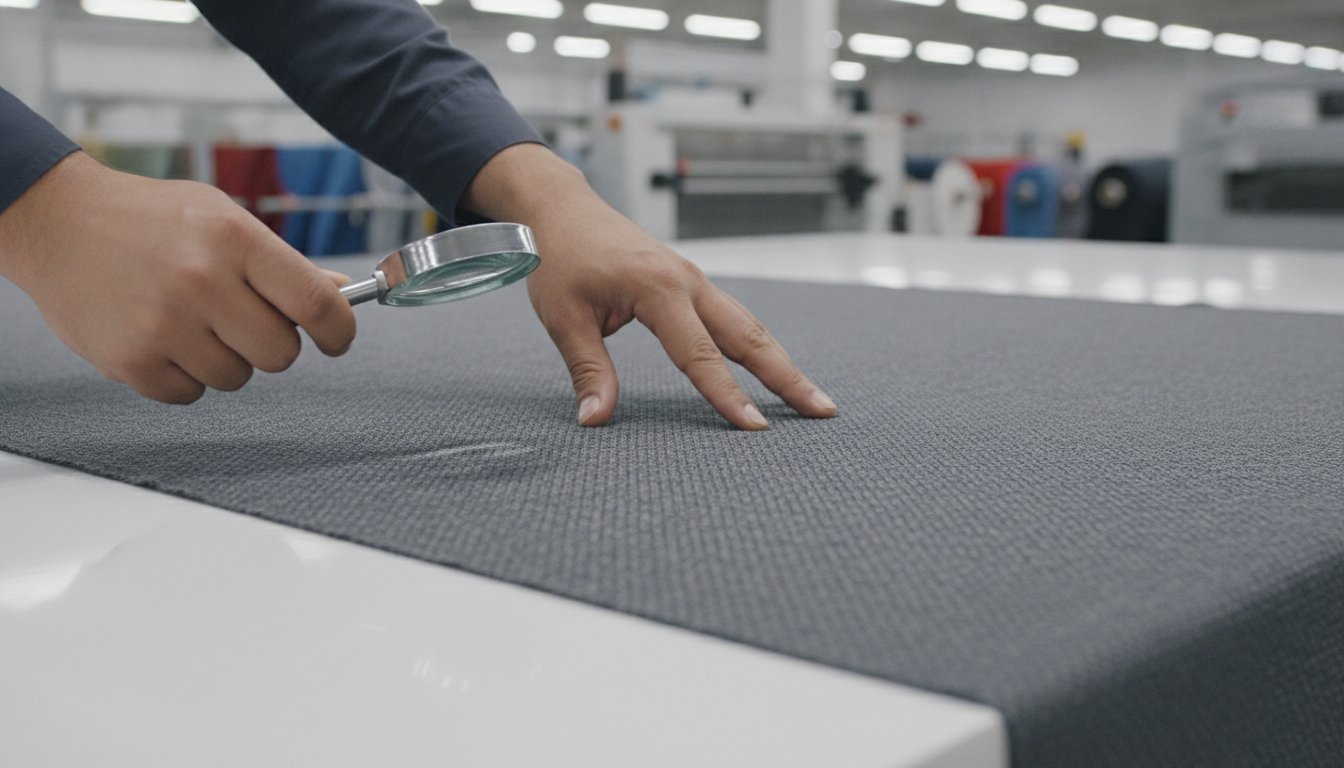

It’s the moment every importer dreads: opening a long-awaited shipment only to discover a container full of unsellable merchandise. This single event can trigger a cascade of costly returns, damaging customer reviews, and difficult disputes with your supplier. At the heart of this risk lies a single, critical challenge: a lack of a standardized approach to identifying and managing product defects. Without a clear system, you are left vulnerable to financial loss and significant brand damage.
This comprehensive guide is designed to eliminate that uncertainty. We will provide you with a clear, systematic framework to classify quality issues, from minor imperfections to critical failures. You will learn how to establish unambiguous standards with your suppliers and implement a reliable process to stop defective products from ever leaving the factory. By mastering this process, you can protect your investment, safeguard your brand’s reputation, and turn the uncertainty of international sourcing into a predictable, profitable operation.
Key Takeaways
- Define your product specifications with absolute clarity; any deviation is a defect that puts your entire shipment at risk.
- Learn to classify issues into Minor, Major, and Critical categories to make objective, data-driven decisions on accepting or rejecting an order.
- Move beyond simply finding product defects by identifying their root causes within your supply chain to prevent them from recurring.
- Implement a proactive quality control strategy to stop problems before they ship, protecting your investment and brand reputation.
What is a Product Defect in Manufacturing and Quality Control?
While legal teams might focus on liability, for importers and business owners, the definition is far more practical. A product defect is any non-conformance to your established and agreed-upon product specifications. It is a deviation from the benchmark you set with your supplier, impacting everything from the product's function and usability to its aesthetics and safety. Even a minor flaw, like a color that is one shade off or a logo that is slightly misaligned, can damage your brand's credibility.
This is why a pre-production approved 'Golden Sample' is critical. This sample serves as the physical, tangible standard that all mass-produced units must match. Any unit that fails to meet this standard contains a defect, putting your investment and reputation at risk.
The Business Impact of Product Defects
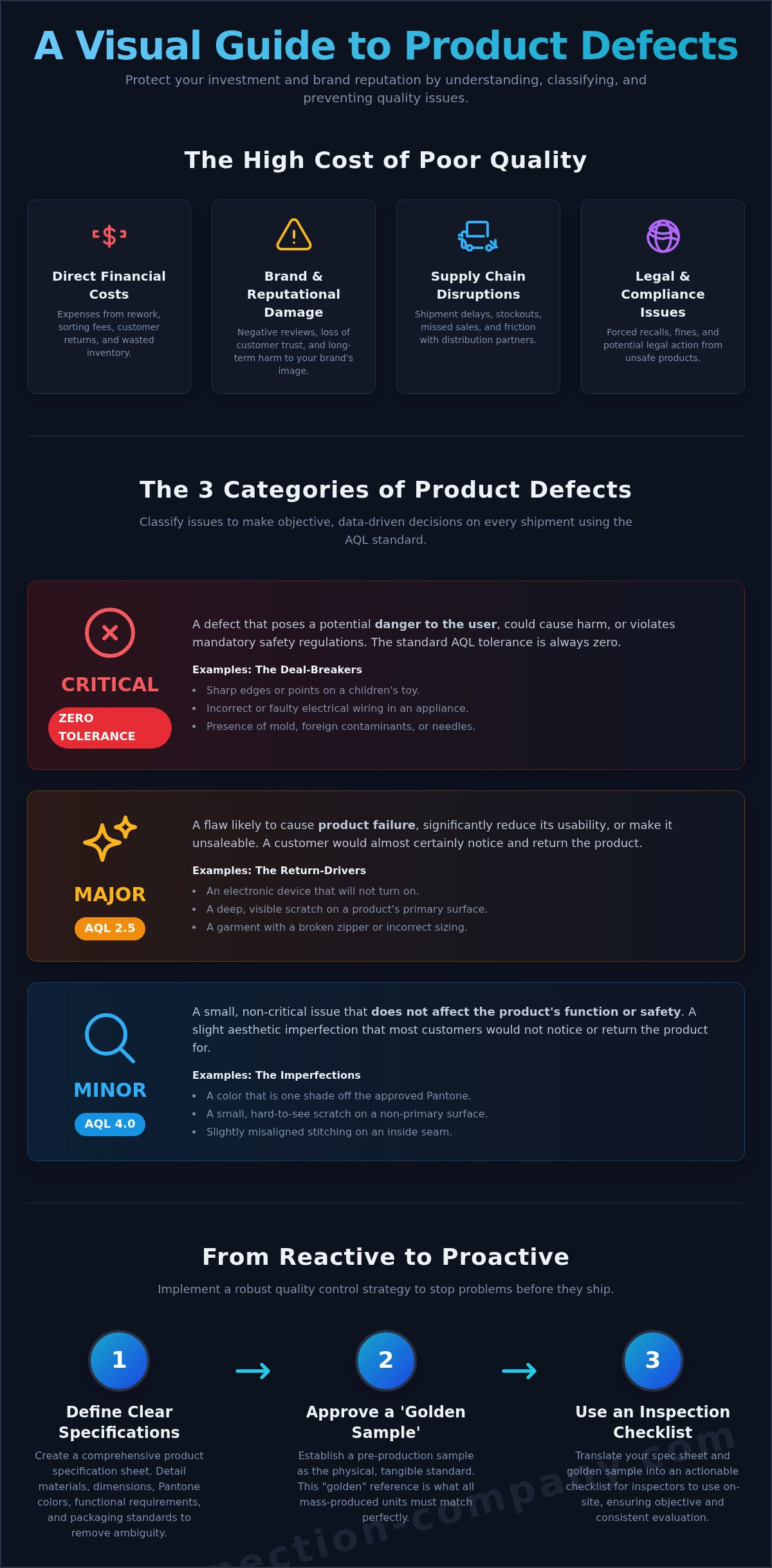
Failing to identify and manage product defects before shipment can have severe and cascading consequences for your business. The costs go far beyond the price of the faulty goods themselves. Key impacts include:
-
Direct Financial Costs: Expenses mount quickly from rework, sorting fees, customer returns, and completely wasted inventory that must be discarded.
-
Brand and Reputational Damage: A single wave of poor-quality products can lead to negative customer reviews, loss of trust, and long-term damage to your brand's image.
-
Supply Chain Disruptions: Defective batches can cause significant shipment delays, leading to stockouts, missed sales opportunities, and friction with distribution partners.
-
Legal and Compliance Issues: Products that fail to meet safety or regulatory standards in your target market can result in forced recalls, fines, and potential legal action.
Setting the Standard: Specifications and Checklists
Your first and most effective line of defense against defects is a comprehensive product specification sheet. This document removes ambiguity and provides a clear, objective set of requirements for your supplier. It should detail everything from materials, dimensions, and Pantone colors to functional requirements and packaging standards. This spec sheet is then translated into a quality inspection checklist, which provides our inspectors with actionable criteria to verify against during production.
Ultimately, the approved 'Golden Sample' embodies these specifications, giving inspectors a physical reference to compare against each unit. A clear standard, defined in writing and confirmed with a physical sample, is the foundation of effective quality control.
The 3 Categories of Product Defects: Minor, Major, and Critical
In quality control, not all flaws are created equal. To make objective decisions about a production run, inspectors classify issues using an industry-standard framework based on the AQL (Acceptable Quality Limit) system. This system categorizes product defects into three distinct levels: Minor, Major, and Critical.
Understanding this classification is essential for setting clear quality standards with your supplier. Your tolerance for each defect type directly defines your product's final quality level and your brand's reputation. Below, we provide clear definitions and examples for each category.
Critical Defects: The Deal-Breakers
A critical defect is the most severe type of issue, defined as a flaw that poses a potential danger to the user, could cause harm, or violates mandatory safety regulations. These are non-negotiable failures that can lead to product recalls and legal action. Government bodies, such as the U.S. Consumer Product Safety Commission, maintain public databases like SaferProducts.gov to track such hazardous items. Consequently, the standard AQL tolerance for critical defects is always zero; even one is grounds for rejecting an entire shipment.
-
Example: Sharp edges or points on a children's toy.
-
Example: Incorrect or faulty electrical wiring in an appliance.
-
Example: Presence of mold or foreign contaminants.
Major Defects: The Return-Drivers
A major defect is a flaw that is likely to cause product failure, significantly reduce its usability, or make it unsaleable. While not dangerous, these issues are serious enough that a customer would almost certainly notice and return the product. A high number of major defects will result in costly returns, negative reviews, and a loss of customer trust.
-
Example: An electronic device that will not turn on.
-
Example: A deep, visible scratch on the primary surface of a wooden table.
-
Example: A garment with a broken zipper or incorrect sizing.
Minor Defects: The Imperfections
Minor defects are small, non-critical issues that do not affect the product's function or safety. These are typically slight aesthetic imperfections or deviations from specifications that most customers would not notice or consider a reason for a return. While a few minor product defects are often acceptable, an excessive amount can indicate a larger quality control problem at the factory.
-
Example: A single loose thread on an interior seam of a shirt.
-
Example: A tiny paint blemish on the underside of a piece of furniture.
-
Example: A small, barely visible air bubble in a glass product.
Common Root Causes of Product Defects in Your Supply Chain
Identifying a defect is only the first step. To truly protect your business and prevent recurrence, you must understand the 'why' behind the failure. Most product defects are not isolated incidents but symptoms of deeper, systemic issues within your supply chain. Research into the root causes of supply chain failures highlights how problems in planning and execution can lead to critical breakdowns. By pinpointing these root causes, you can implement targeted, corrective actions with your supplier, moving from a reactive to a proactive quality control strategy. Many of these issues can be traced back to the pre-production stage, long before the first unit is assembled.
Unclear or Incomplete Product Specifications
This is the most common-and most preventable-cause of quality issues. When your factory has to guess or make assumptions about your requirements, inconsistencies are inevitable. Vague instructions, compounded by potential language barriers, create significant risk. To avoid this, your specification sheet must be a detailed, unambiguous document covering:
-
Specific Materials: Define exact grades, compositions, and origins.
-
Color Standards: Use universal codes like Pantone (PMS) to ensure consistency.
-
Dimensions & Tolerances: Specify acceptable ranges for all critical measurements.
-
Packaging Requirements: Detail everything from carton markings to protective materials.
Substandard Raw Materials or Components
The quality of your final product is entirely dependent on the quality of its inputs. Some suppliers may be tempted to substitute specified materials for cheaper alternatives to increase their margins-a practice known as 'quality fade.' Furthermore, poor storage or improper handling can degrade materials before they even reach the production line. Without a robust incoming material inspection process at the factory, these faulty components can lead to widespread, systemic failures that are costly to correct post-production.
Manufacturing and Human Error
Even with perfect specifications and materials, failures can occur on the factory floor. These errors are often symptoms of an inadequate Quality Management System (QMS). Common contributors include poorly trained workers, high staff turnover, and machinery that is incorrectly calibrated or poorly maintained. When factories are under pressure to meet tight deadlines, quality control checks are often the first corners to be cut, leading to rushed work and a higher incidence of product defects. Verifying your supplier's on-site processes is critical to mitigate this risk.
A professional factory audit can assess these root causes before production begins, saving you months of trouble. Learn more at the-inspection-company.com.
How to Proactively Manage and Prevent Product Defects
A reactive approach to quality control-waiting to discover issues when goods arrive at your warehouse-is a recipe for financial loss. The costs of shipping returns, negotiating refunds, and managing production delays can cripple your bottom line and damage your brand's reputation. The most effective way to protect your business is to implement a proactive quality assurance strategy that identifies and resolves issues before they ever leave the factory.
This involves establishing multiple checkpoints throughout the production process, managed by an objective partner who can provide unbiased results. Remember, one day of inspection can save you months of trouble.
Step 1: Thorough Supplier Vetting and Audits
The first step in preventing product defects happens before you even place an order. A comprehensive factory audit is essential to verify a potential supplier's capabilities. This on-site assessment evaluates their Quality Management System (QMS), production capacity, equipment, and social compliance. It ensures they have the documented processes and infrastructure to consistently produce goods to your standards, minimizing your risk from day one.
Step 2: Implement Product Inspections at Key Stages
Effective quality control is not a single event but a continuous process. Implementing inspections at critical production milestones gives you control over the final outcome.
-
During Production Inspection (DUPRO): Performed when 10-20% of your order is complete, this check catches deviations from your specifications early. It allows for corrective action mid-production, preventing an entire batch from being compromised.
-
Pre-Shipment Inspection (PSI): This is your final quality gate before the shipment is dispatched and you make your final payment. An independent inspector verifies that the finished goods meet your requirements for quality, quantity, packaging, and labeling.
A PSI gives you the ultimate leverage to demand rework on any identified issues before they become your problem.
Step 3: Act on Your Inspection Report
A detailed inspection report, complete with high-resolution photos and clear descriptions, serves as undeniable evidence of your shipment's condition. Use this objective data to make an informed decision: approve the shipment for release or reject it pending rework. By communicating the specific, documented issues to your supplier, you hold them accountable and ensure problems are fixed correctly. Don't leave your shipment to chance. Protect your investment. Get a free inspection quote today.
Safeguard Your Supply Chain from Product Defects
Managing quality effectively begins with a clear understanding of what you're up against. By classifying issues into minor, major, and critical categories and proactively addressing their root causes, you move from a reactive to a preventative quality control strategy. This shift is crucial, as unchecked product defects can lead to costly delays, damaged inventory, and a tarnished brand reputation. The most successful importers know that robust quality control is not an expense-it's an essential investment.
You don't have to manage this risk alone. The Inspection Company provides the on-the-ground expertise needed to protect your investment. With a network of over 700 inspectors and auditors across Asia, our ISO 9001 certified team acts as your eyes and ears in the factory. We deliver detailed inspection reports, complete with photos, within 24 hours, giving you the critical data needed to make informed decisions before shipment.
Stop problems before they ship. Get your free inspection quote today and take the definitive step toward a more secure and profitable supply chain.
Frequently Asked Questions
What is the difference between a product defect and a product flaw?
A product defect is a non-conformity that makes a product unsafe, unusable, or different from agreed-upon specifications. For example, a non-working electronic device or a garment with incorrect sizing. A product flaw, however, is typically a minor cosmetic issue, like a small scratch on a non-visible surface, that does not impact the product's function or safety. While both are undesirable, defects present a much greater risk to your business and customers.
What does AQL mean and how does it relate to product defects?
AQL stands for Acceptable Quality Limit. It is an industry-standard statistical method used during inspections to determine the maximum number of acceptable product defects in a production batch. Rather than checking 100% of units, a random sample is inspected, and the AQL defines how many defective units are permitted in that sample for the entire lot to "pass." It allows you to manage quality control efficiently while maintaining clear, objective standards with your supplier.
What should I do if my inspection report shows a high number of defects?
A high defect rate is a clear signal to halt the shipment. Immediately contact your supplier with the detailed inspection report. Your primary options are to request a 100% rework of the defective items or a complete re-production of the order. You can also negotiate a sorting process to separate good units from bad ones, often at the supplier's expense. An independent inspection gives you the leverage to enforce these actions before making the final payment.
Is it possible to have a production run with zero defects?
While a "zero defect" production is the ideal, it is rarely achievable or cost-effective in mass manufacturing. Striving for absolute perfection can dramatically increase production costs and lead times. The professional approach is to define an Acceptable Quality Limit (AQL) that balances quality with commercial viability. This sets a realistic, measurable tolerance for minor imperfections while ensuring no critical defects reach your customers, protecting both your brand and your budget.
How do I communicate my quality standards clearly to my Asian supplier?
Clear communication is essential to avoid misunderstandings. Provide your supplier with a comprehensive Quality Control Checklist and a detailed Product Specification Sheet. This document should include technical drawings, material requirements, color codes (e.g., Pantone), and approved "golden samples." Use clear images to illustrate both acceptable quality and examples of unacceptable defects. This written and visual documentation serves as a binding reference for your supplier and our inspectors, leaving no room for interpretation.
What is the typical cost of a pre-shipment inspection?
The cost of a professional pre-shipment inspection in Asia typically ranges from $250 to $350 USD per inspector-day. This all-inclusive fee generally covers one inspector's full day of work, travel, and the delivery of a detailed report within 24 hours. When you consider the potential cost of shipping a container full of defective goods-including returns, rework, and brand damage-this small investment provides invaluable security. One day of inspection can save you months of trouble.