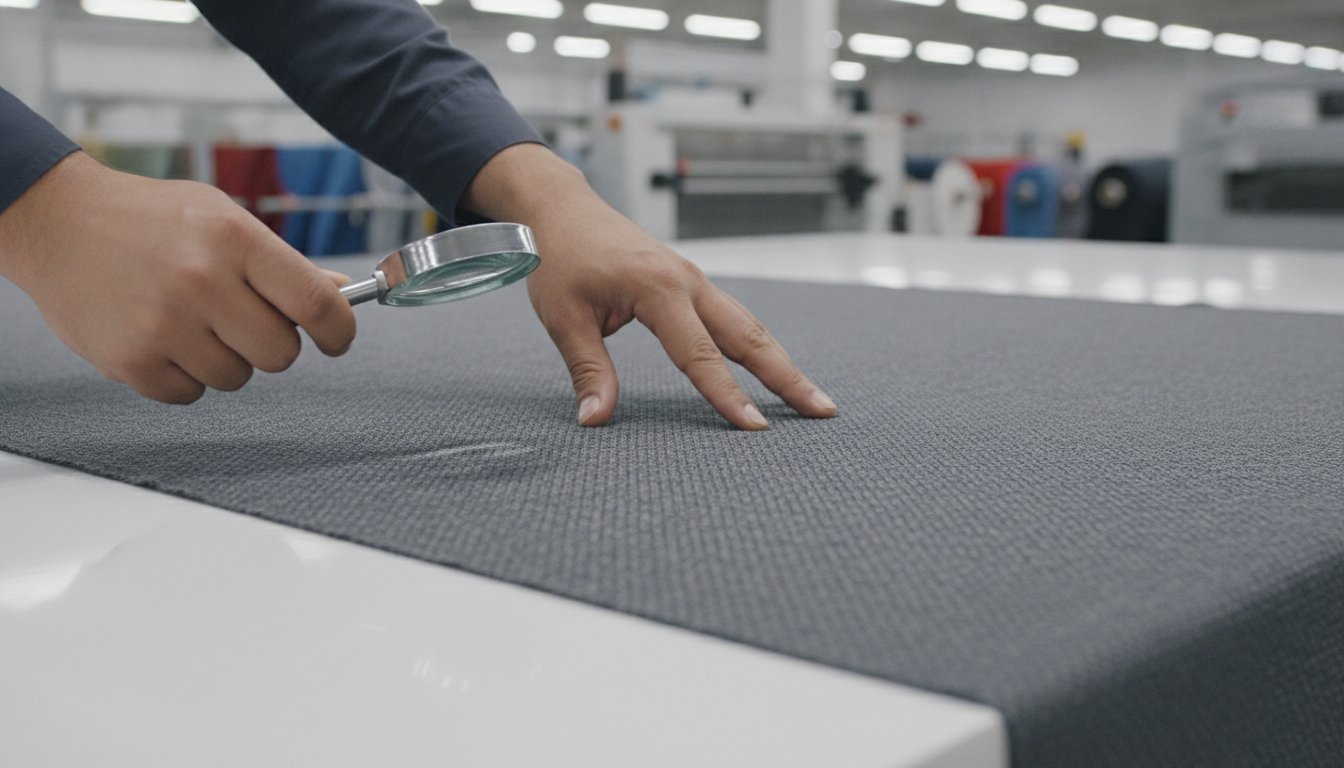

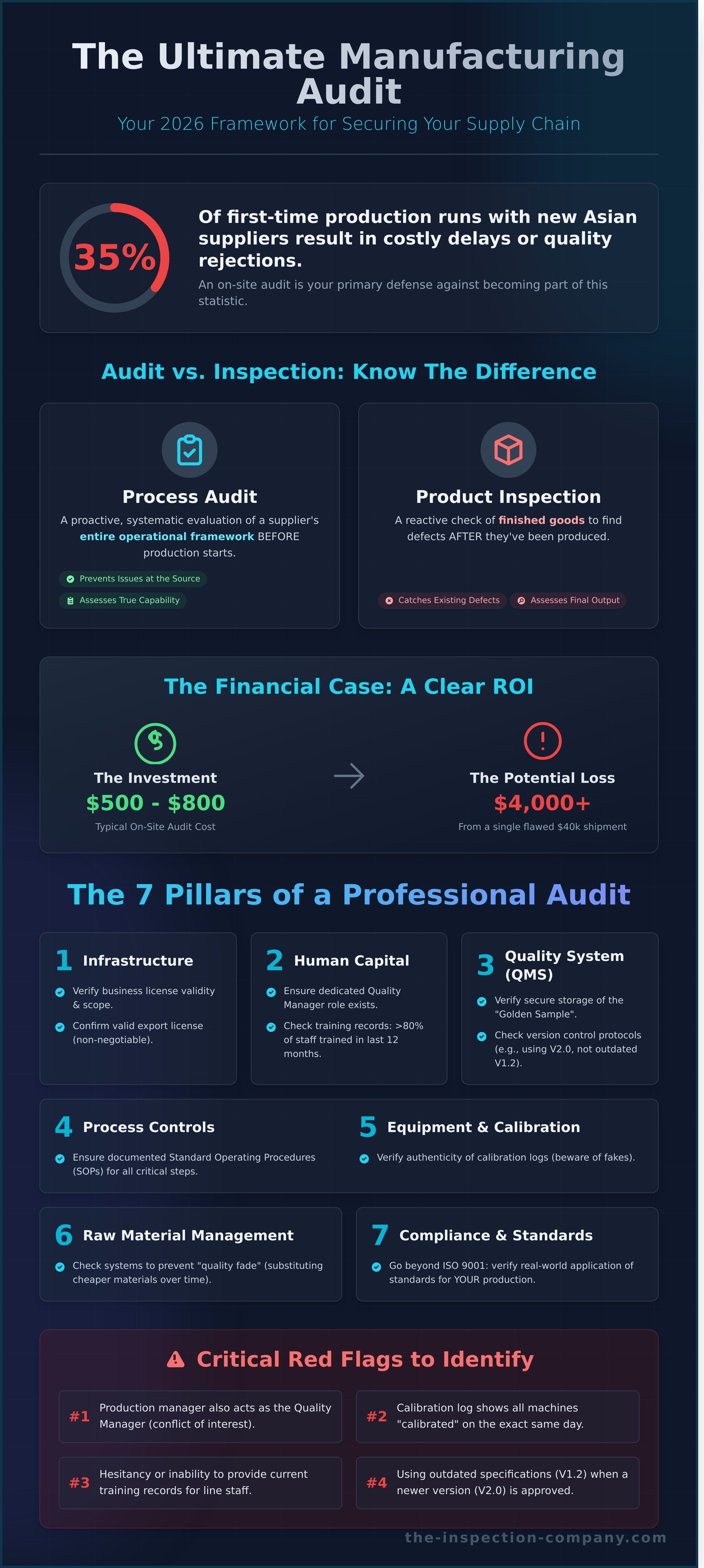
A 2024 report by the Global Sourcing Association revealed that over 35% of first-time production runs with new Asian suppliers result in costly delays or quality rejections. That's a statistic that confirms every importer's worst fear: signing a contract only to receive a shipment of sub-standard products. The anxiety over a supplier's true capabilities, often hidden behind polished websites and staged virtual tours, is a serious business risk that can cost you tens of thousands of dollars.
This is where you stop hoping for the best and start ensuring it. We've condensed over 25 years of on-the-ground experience into a professional-grade framework that gives you complete control over your supplier vetting process. This article provides the ultimate manufacturing audit checklist for 2026, equipping you to identify critical red flags, verify a factory's real capacity, and secure your supply chain before a single dollar is wasted.
Key Takeaways
- Understand how a systematic factory audit serves as your primary defense against costly production errors and shipment delays.
- Master the 7 core pillars of a professional manufacturing audit checklist to thoroughly assess a supplier's true capabilities and quality systems.
- Learn the critical difference between auditing a process and inspecting a product to proactively stop quality issues at the source.
- Identify common red flags and deceptive tactics that factories may use to hide major operational risks during an on-site evaluation.
What is a Manufacturing Audit and Why is a Checklist Critical?
A manufacturing audit is not a simple product check. It’s a systematic, on-site evaluation of a supplier’s entire operational framework, from their Quality Management System (QMS) to their real-world production capacity. Think of it as a comprehensive health check for your factory partner. This process, a specific type of Quality audit, verifies that a supplier has the processes, equipment, and personnel to meet your quality standards consistently. Without it, you’re essentially trusting a sales pitch instead of verifiable facts.
This is where a standardized manufacturing audit checklist becomes your shield. It transforms a subjective visit into an objective, data-driven assessment. This document ensures every critical area is examined with the same rigor, every time, regardless of the auditor or factory. It’s the single most effective tool to prevent inconsistent quality, production delays, and catastrophic supply chain disruptions. Don't confuse this with a one-time product inspection, which only checks finished goods. An audit assesses the factory's capability to produce those goods correctly in the first place. The truth is simple: one day of professional auditing can save months of costly legal and logistical trouble.
The ROI of a Rigorous Audit Framework
The financial argument for a pre-production audit is undeniable. Consider a $40,000 shipment of consumer goods. If a 10% critical defect rate is found upon arrival, you face an immediate $4,000 product loss, plus thousands more in return shipping, rework, and reputational damage. An on-site factory audit, typically costing between $500 and $800, identifies the systemic flaws that cause these defects, stopping the problem at its source. For sellers on platforms like Amazon and Shopify, where a product's star rating can fall by a full point from just a handful of negative reviews, this proactive quality control is essential for protecting your brand and sales velocity.
European Standards in Asian Manufacturing
Sourcing from Asia often creates an 'expectations gap'. What a Western buyer considers a 'standard' material or finish can be interpreted differently by an overseas factory. A detailed audit bridges this gap by translating your requirements into verifiable checkpoints. This is why global brands rely on independent third-party auditors like The Inspection Company. Our European management and on-the-ground expertise ensure your precise standards are understood and implemented. While ISO 9001 compliance is a good start, it only confirms a QMS exists; it doesn't guarantee it's being followed for your production. An audit verifies real-world application, making certification a baseline, not a ceiling.
The 7 Pillars of a Professional Manufacturing Audit Checklist
A simple factory tour won't protect your investment. To truly assess a potential supplier, you need a structured approach that examines every facet of their operation. A superficial check exposes you to costly production errors, shipment delays, and reputational damage. A comprehensive manufacturing audit checklist, however, is built on seven distinct pillars that reveal a factory’s true capabilities and risks. Neglecting even one of these areas can lead to critical failures down the line.
These pillars go beyond a simple "pass/fail" score. They provide a detailed, 360-degree view of your supplier’s professionalism, reliability, and capacity to deliver on their promises. Let's break down what our professional auditors investigate on-site.
Pillar 1-3: Infrastructure, QMS, and Human Capital
The foundation of any reliable supplier rests on their physical plant, their quality systems, and their people. We start by verifying the basics: Is the business license valid and does it match the factory's stated scope? For exports from China or Vietnam, confirming they hold a valid export license is a non-negotiable first step. We then assess their human resources, reviewing organizational charts to ensure a dedicated Quality Manager is in place, not just a production manager wearing a second hat. Training records for at least 80% of the production line staff must be current within the last 12 months. Finally, we inspect their Quality Management System (QMS) in action, specifically how they manage the "Golden Sample." We check if the approved master sample is securely stored and if their version control protocol prevents the use of outdated V1.2 specifications when the V2.0 final version has already been approved.
Pillar 4-7: Process, Equipment, and Compliance
A factory's daily operations reveal its commitment to quality. We scrutinize production process controls, ensuring every critical step is governed by a documented Standard Operating Procedure (SOP). We then move to equipment, a common point of failure. It isn't enough to see a calibration log; we verify its authenticity. A log showing all 25 machines were "calibrated" on the same day last week is a significant red flag. We also assess raw material management to prevent "quality fade," where a supplier slowly substitutes cheaper materials. This includes checking if they perform specified tests, like a Rockwell hardness test on incoming steel shipments. Finally, we evaluate compliance. A factory's approach to social and environmental standards often reflects its overall operational discipline, a key component of an efficient and effective company audit. This includes basic checks on labor rights and safety (see our guide on Social Compliance Audits) and readiness for standards like RoHS. Verifying these pillars requires on-the-ground expertise; our factory audit services provide the detailed verification you need to protect your investment.
Process Audit vs. Product Inspection: Knowing the Difference
Many importers confuse a manufacturing audit with a product inspection. The distinction is critical to protecting your business. An inspection checks the 'what'-the finished goods. An audit investigates the 'how'-the systems, processes, and capabilities of the factory producing those goods. A process audit evaluates the factory's quality management system (QMS), production controls, and staff training. It answers the question: "Is this factory capable of consistently producing our product to specification?"
Relying only on a final product inspection is a reactive strategy. It's often too late. A Pre-Shipment Inspection (PSI) that finds a 30% defect rate on 10,000 units confirms a disaster, it doesn't prevent one. You're left with a terrible choice: ship faulty products or absorb a massive financial loss and delay. A proactive audit identifies the root causes of potential defects before mass production even begins. It stops problems at the source.
The most effective quality control strategy combines both. A factory audit establishes a baseline of the supplier's capabilities. Then, During Production (DuPro) and Pre-Shipment Inspections (PSI) serve as verification checkpoints. Data from a thorough audit can even help predict future quality outcomes. If an audit reveals a factory has poor internal controls for incoming raw materials, you can anticipate a higher potential defect rate and schedule more frequent inspections using a tighter Acceptable Quality Limit (AQL) sampling plan.
When to Conduct a Manufacturing Audit
A manufacturing audit isn't a one-time event. It's a strategic tool used at key moments in a supplier relationship to mitigate risk. Deploy one at these critical junctures:
- New Supplier Vetting: Before placing your first large order, an audit is non-negotiable. This 'First Article' phase audit verifies the supplier's claims and ensures they have the documented processes to handle your production.
- Annual Re-evaluations: For strategic, long-term partners, an annual audit ensures standards haven't slipped. It catches gradual declines in machine maintenance or staff training that can lead to future quality issues.
- Trigger-Based Audits: After a major quality failure or product recall, an immediate, in-depth audit is essential. It identifies the systemic breakdown that caused the failure, ensuring it isn't repeated.
Choosing the Right Tool for the Job
Understanding the proper application of an audit can be the difference between profit and loss. Consider the case of an Amazon FBA seller whose 5,000-unit shipment of stainless steel water bottles was rejected in early 2023 due to leaking caps. A pre-production factory audit, costing around $600, would have identified the supplier's inadequate pressure testing equipment and lack of a documented seal-testing procedure. This simple process check would have prevented over $40,000 in lost inventory and freight costs.
While virtual audits gained popularity between 2020-2022, their limitations are now clear. You can't remotely verify machine calibration certificates or assess the actual working conditions on the factory floor. As global travel normalizes post-2025, relying on virtual audits for anything other than low-risk follow-ups is an unacceptable gamble. An on-site presence is the only way to get a true picture of a factory's capabilities. The key is knowing when to deploy which tool. To learn more, see our detailed guide on Factory Audit vs. Inspection: Understanding the Difference.
Spotting Red Flags: How to Use Your Checklist Like a Pro
A prepared factory manager treats an audit like a stage performance. They know you're coming, and they've rehearsed their lines. This is the 'smoke and mirrors' effect, where temporary fixes and polished documents can hide deep-rooted operational risks. A detailed manufacturing audit checklist is your script, but a professional auditor knows how to spot when the actors are improvising. It's not just about what you see; it's about what they don't want you to see.
Common 'cheats' are alarmingly frequent. In a Q4 2023 audit of a textile supplier in Vietnam, our team found immaculate maintenance logs for a series of weaving machines. However, a quick conversation with a floor operator revealed the logs were filled out that morning, and two of the machines had been borrowed from a neighboring factory just for the audit. This isn't an isolated incident. These deceptions are designed to pass the test, not to prove capability. This is why unannounced walkthroughs and direct interviews with floor-level staff are non-negotiable. Asking an operator to explain a quality control step can reveal more in 30 seconds than an hour reviewing a manager's PowerPoint presentation.
Top Red Flags to Watch For
Your eyes on the factory floor are your most valuable tool. Over 90% of critical failures we identify are linked to physical evidence, not paperwork. Look for these immediate warning signs:
- Mismatched Capacity: A 10,000 sq. ft. workshop with 25 workers cannot produce 500,000 complex electronic units per month. Be wary of claims that defy simple math. This often indicates heavy, undisclosed subcontracting, which erases your quality control.
- Lack of 'Reject' Bins: The perfect factory doesn't exist. A facility claiming a 0% defect rate is hiding its problems. A healthy production line has clearly marked and managed bins for scrap and rework. An absence of these suggests defects are being hidden or, worse, shipped to customers. A typical, well-managed factory maintains a scrap rate between 1-3%.
- Poor Housekeeping (5S Failures): Cluttered aisles, disorganized tool stations, and dirty floors are not just untidy. Our 2023 audit data shows that factories with a poor 5S rating have a 45% higher incidence of mixed parts and assembly errors, leading to costly product failures.
- Questionable Documents: Always verify certifications. An ISO 9001 certificate that expired six months ago or a lab report that looks digitally altered are serious breaches of trust. Cross-reference certificate numbers with the issuing body's public database.
The Corrective Action Plan (CAP) Process
Discovering a red flag isn't the end; it's the beginning of a critical business conversation. Your audit findings provide the objective data needed to create a Corrective Action Plan (CAP). This isn't about placing blame. It's about mitigating risk. Present the non-conformity with photographic evidence and negotiate a realistic timeline for resolution. For example, "We found machine calibration records were missing for the last two quarters. We require a full recalibration by a certified third party by October 30th."
You must also define your 'Hard Stop' criteria. These are deal-breakers. Evidence of child labor, faked life-safety tests, or systemic environmental violations are not negotiable. They represent a fundamental misalignment of ethics and quality, requiring immediate termination of the supplier relationship. For all other issues, a follow-up audit within 60-90 days is essential to verify the CAP was implemented effectively and permanently. A promise of a fix is not a fix.
Don't let easily spotted red flags turn into six-figure supply chain disasters. Engage our experts to conduct a comprehensive factory audit that protects your investment before it's too late.
Leveraging The Inspection Company for Your 2026 Audit Strategy
A checklist is a powerful tool, but its effectiveness depends entirely on the expertise of the team executing it. Relying solely on a factory's internal quality control introduces inherent bias and risk. For a truly objective assessment, you need an independent partner. The Inspection Company (TIC) provides that critical, impartial eye in over 700 factories across Asia. Our data from 2023 shows that an independent audit identifies up to 30% more critical non-conformities compared to a supplier's self-reported QC documents.
What sets us apart is our unique structure: European management combined with deep local expertise. This model ensures that your quality and ethical standards are understood and enforced with Western accountability, while our on-the-ground inspectors navigate the local business culture and language with precision. This synergy eliminates the communication gaps that often lead to costly production errors and delays. You get clear, unambiguous results without compromise.
We believe in transparency and speed. After an audit is complete, you won't wait days or weeks for crucial information. You receive a detailed, comprehensive audit report directly in your inbox within 24 hours. These reports are filled with high-resolution photos, videos, and objective data measured against your specifications. This allows you to make informed, go/no-go decisions on your production run immediately. It's our promise to stop problems before your shipment sails, protecting your investment and your brand's reputation.
Our Global Footprint in Asian Hubs
Our network of professional auditors extends across Asia's most vital manufacturing hubs, including China, Vietnam, and India. We don't use a one-size-fits-all approach; we develop a tailored manufacturing audit checklist specific to your product category. This ensures the most relevant standards are applied, whether you're producing textiles, consumer electronics, or industrial hardlines. For e-commerce sellers, our auditors are trained to verify Amazon FBA requirements, checking everything from carton markings to FNSKU label compliance to prevent costly rejections at fulfillment centers.
Book Your Manufacturing Audit Today
Securing your supply chain is a straightforward, 3-step process with us: Request, Coordination, and Reporting. With over 25 years of dedicated quality control experience, we have refined this process to be as efficient as possible for our clients. Our long-standing presence in the region makes us the leading third-party inspection company for businesses sourcing from Asia. Don't let preventable defects erode your profits.
Avoid costly surprises-get your instant inspection quote now.
Secure Your 2026 Supply Chain with a Professional Audit
As we head into 2026, a robust supplier audit isn't just an advantage; it's a necessity for mitigating risk. You now know the critical difference between a process audit and a product inspection, and you can identify the seven pillars of a truly effective evaluation. This knowledge transforms your manufacturing audit checklist from a simple document into a powerful tool for spotting red flags before they become costly problems. But a checklist is only as good as the expert verifying it on the ground.
Don't leave your supply chain vulnerable. The Inspection Company leverages over 25 years of quality control experience to protect your business. Our team of 700+ professional inspectors across Asia operates under strict ISO 9001 certified standards, and as a Sedex member, we ensure your partners meet global compliance. Secure your supply chain-book a professional factory audit today. Make your next import your most secure one yet.
Frequently Asked Questions
What is the most important item on a manufacturing audit checklist?
The Quality Management System (QMS) is the single most important item. A robust QMS, often aligned with ISO 9001 standards, dictates how a factory handles everything from raw material intake to final product inspection. Without a documented and consistently followed QMS, production quality becomes unpredictable, increasing your risk of receiving defective goods. A well-implemented system can reduce critical defects by over 45%, protecting your investment and brand reputation before shipment.
How long does a typical factory audit take to complete?
A standard technical or quality audit is completed in one full 8-hour working day on-site. This allows our auditors to thoroughly review production lines, quality control processes, and essential documentation. More comprehensive audits, such as in-depth social compliance or C-TPAT security audits, may require two to three days to complete. This ensures every critical aspect of the supplier's operation is verified, leaving no room for costly surprises.
Can I use the same checklist for different types of products?
No, using a generic checklist for different product categories is a significant risk. A checklist must be tailored to the specific product and its manufacturing processes. For example, an electronics audit must verify anti-static measures (ESD), which are irrelevant for furniture. Similarly, a textile audit requires checks for needle detection and fabric color consistency, points not found on a checklist for industrial machinery. Customization is essential for effective risk management.
What is the difference between a manufacturing audit and an ISO 9001 audit?
A manufacturing audit evaluates a factory's real-world production capabilities, including equipment, capacity, and on-the-ground quality control. An ISO 9001 audit, in contrast, is a formal process that verifies a factory's Quality Management System strictly against the requirements of the ISO 9001:2015 standard. While a factory can have strong production lines without being ISO certified, the certification provides documented proof of a commitment to internationally recognized quality processes.
How much does a professional manufacturing audit cost in Asia?
The all-inclusive cost for a professional one-day manufacturing audit in key Asian hubs like China, Vietnam, or India ranges from $300 to $650 USD. This price typically covers the auditor's full day on-site, travel expenses, and the creation of a comprehensive report delivered within 24 hours. This single investment is minimal compared to the thousands of dollars at risk from partnering with an unqualified supplier.
What happens if a factory fails the audit checklist?
When a factory fails an audit, we provide a comprehensive report detailing every critical, major, and minor non-conformity. You shouldn't place orders until the supplier provides a formal Corrective Action Plan (CAP) addressing these failures. We recommend scheduling a follow-up audit within 30-60 days to verify that the promised improvements have been implemented effectively, ensuring the factory meets your standards before you commit to production.
Is a remote or virtual audit sufficient for new suppliers?
No, a remote audit is not a reliable substitute for an on-site visit when evaluating a new supplier. Virtual audits can't physically verify machinery conditions, confirm the authenticity of documents, or accurately assess real-time factory floor management. Over 70% of what an auditor evaluates requires physical presence. While remote checks can be useful for minor follow-ups with established partners, they present an unacceptable risk for initial supplier qualification.
How often should I audit my primary manufacturers?
We recommend a full audit of your primary manufacturers every 12 to 18 months. Factory conditions aren't static; management, equipment, and key personnel can change, introducing new risks to your supply chain. For products in high-risk categories, such as children's toys or medical equipment, conducting an annual audit is the professional standard. Regular use of a manufacturing audit checklist ensures your supplier's standards haven't slipped over time.