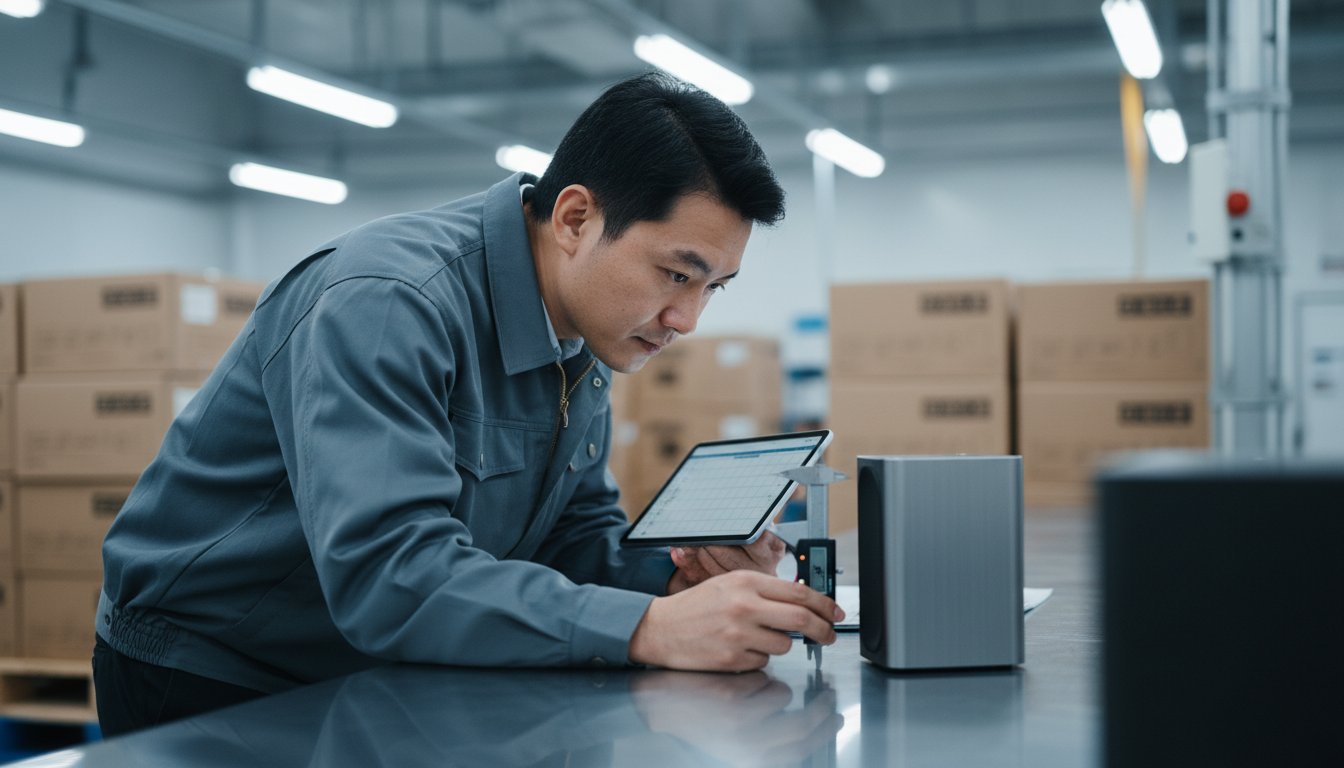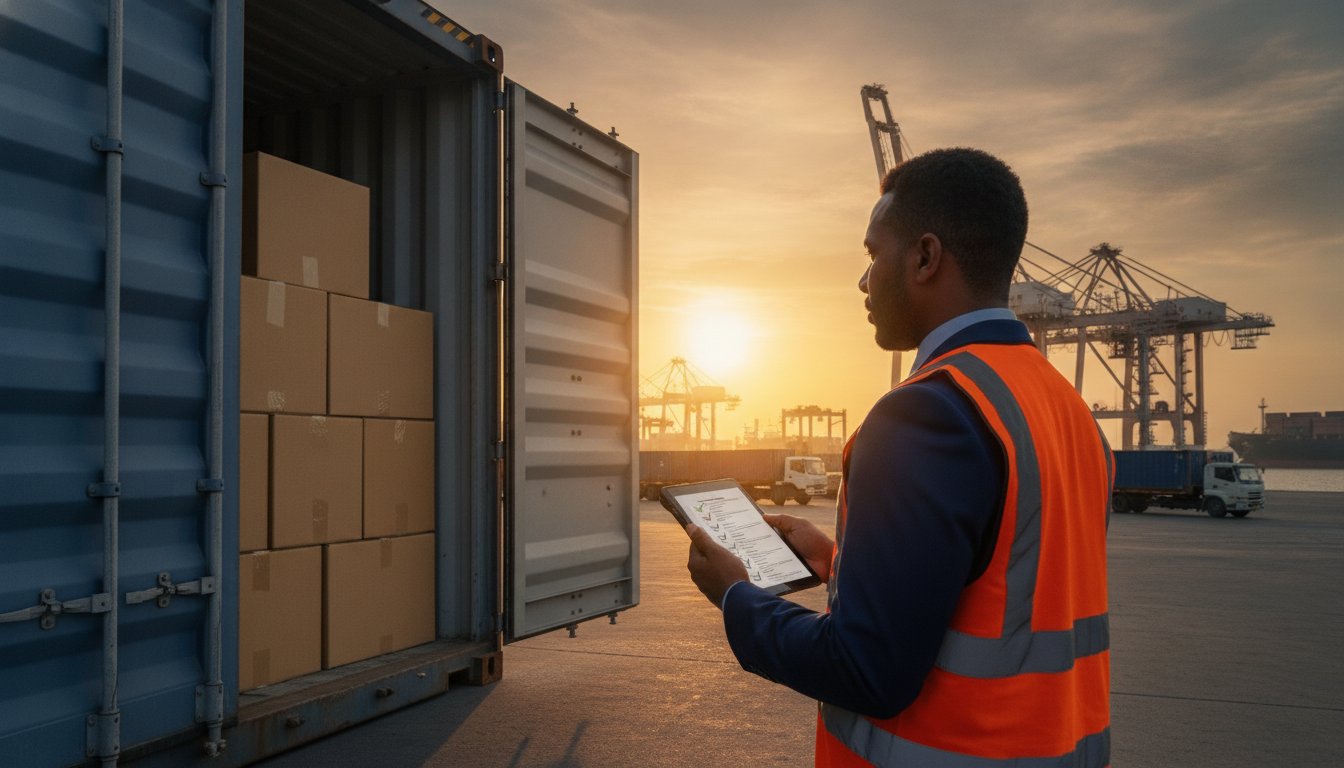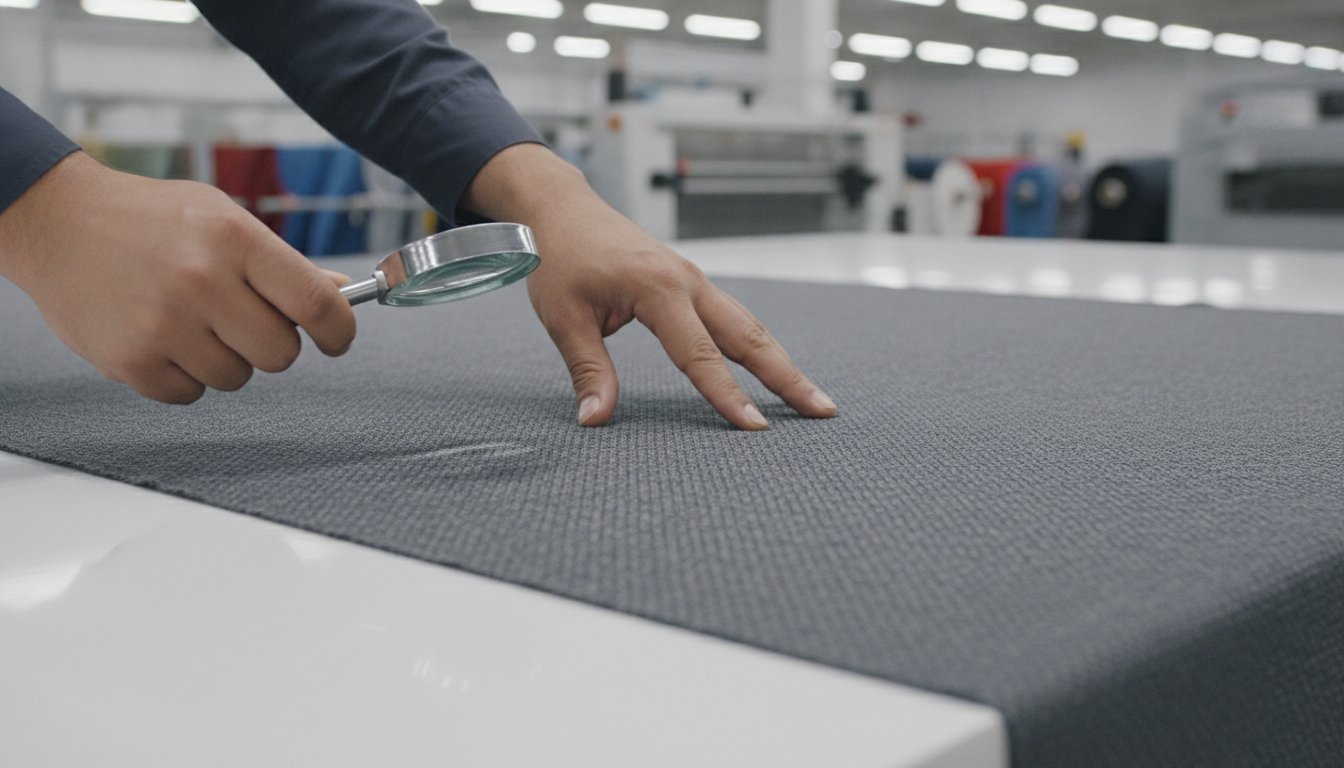

Imagine your shipment arrives at the port on November 12, 2025, but when you open the container, 35% of the units are non-functional. By this point, your supplier in Ningbo has already received the final 70% balance payment, and you're facing a total loss on your inventory. Hiring a professional inspection company is the only way to prevent these costly surprises before your goods leave the factory floor. You understand that sourcing from Asia is vital for maintaining a 20% profit margin, yet the fear of receiving sub-standard goods or facing communication barriers remains a constant stress. One day of inspection can save months of trouble.
You're right to demand better than "good enough" when your reputation is on the line. This guide explains how to mitigate supply chain risk and ensure product quality by choosing the right partner for your business. We'll show you how to secure zero-defect shipments and protect your bottom line before the cargo sails. We'll examine the specific criteria for choosing a partner with the European management standards and the 25 years of experience required to verify supplier compliance effectively in 2026.
Key Takeaways
- Understand the role of an independent quality advocate and why a specialized third-party partner is vital for mitigating international sourcing risks.
- Identify exactly when to intervene in the production cycle to prevent defective products from ever leaving the factory floor.
- Demystify AQL standards to make data-driven decisions about sampling sizes and quality thresholds for your specific order volume.
- Evaluate the critical differences between low-cost local agencies and a professional inspection company that provides European management and ethical oversight.
- Learn how to secure your supply chain by combining decades of on-the-ground experience with transparent, technology-driven reporting.
What is an Inspection Company in the Context of Global Sourcing?
For an importer sourcing goods from overseas, an inspection company acts as the final line of defense against financial loss. While a homeowner might hire an inspector to check for termites or foundation cracks, a global sourcing inspection is entirely different. It's a professional third-party service that puts independent eyes on the factory floor to verify that your order meets every technical specification before you send the final payment. This role is about risk mitigation. It's about ensuring that the 5,000 units you ordered match the golden sample you approved months ago.
The role of a third-party inspection (TPI) provider is to act as an independent quality advocate. They don't work for the factory, and they don't have an interest in the shipment's speed. Their only goal is accuracy. By 2026, the standard for quality control has shifted from simple spot-checks to comprehensive, data-driven supply chain oversight. Leading importers now use real-time data feeds from their TPI partners to predict defect trends. Statistics from 2024 show that 68% of high-volume retailers now require digital inspection reports that integrate directly into their ERP systems to maintain transparency.
This level of oversight is part of the broader Testing, inspection and certification (TIC) industry. This sector provides the essential framework for global trade, ensuring that products crossing borders are safe, compliant, and functional. The core value proposition is simple: avoid costly surprises. One day of professional inspection can save months of legal trouble and thousands of dollars in wasted shipping costs. If you find a defect after the container arrives at your warehouse, it's often too late to get a refund or a replacement.
The Difference Between Internal QC and Third-Party Inspection
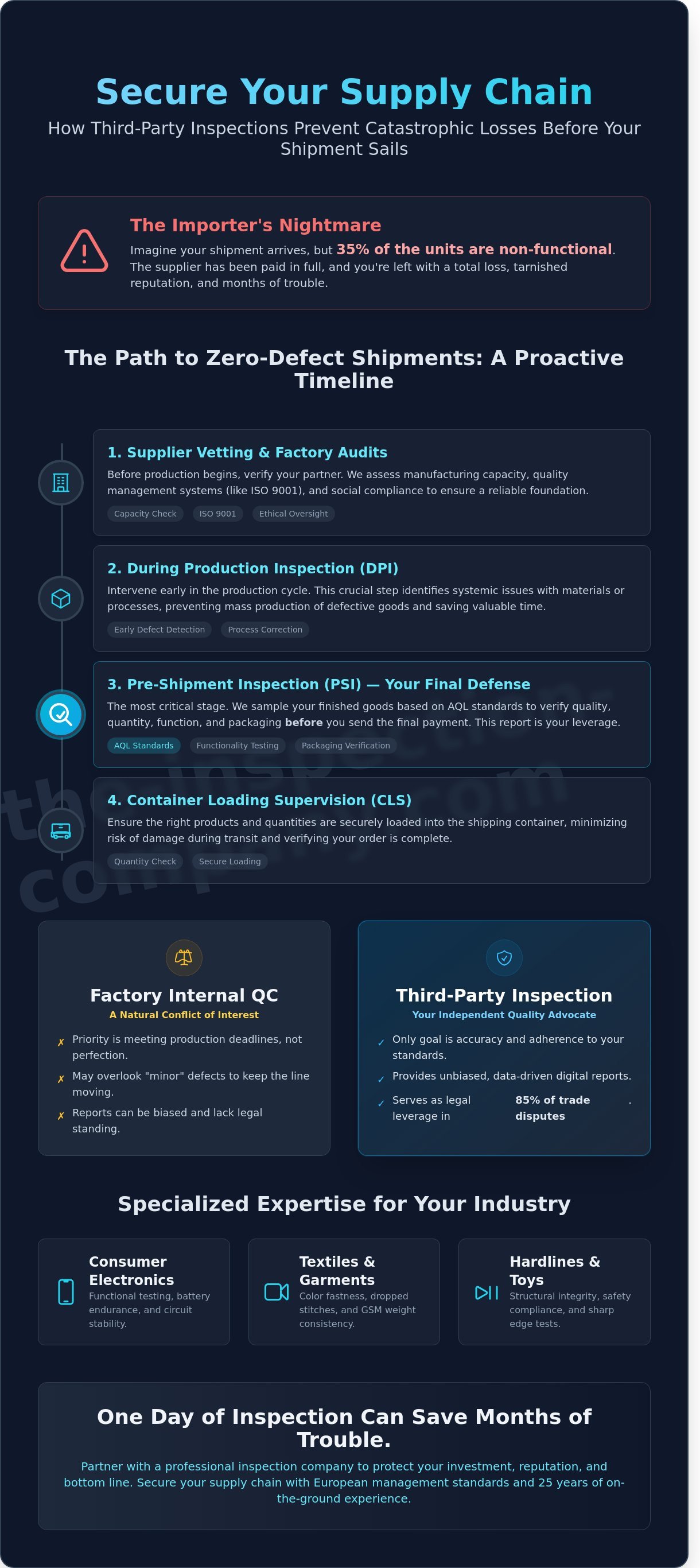
You can't rely solely on a factory's internal quality reports. A factory's internal QC team faces a natural conflict of interest because their priority is often meeting production deadlines and shipping schedules. They might overlook minor defects to keep the line moving. An inspection company provides the "independent eyes" necessary to catch these issues. Furthermore, a TPI report is a formal, unbiased document. In 85% of international trade disputes, a third-party report serves as the primary legal leverage needed to force a factory to rework defective goods at their own expense.
Key Industries Served by Manufacturing Inspection Companies
Different products require different expertise. In consumer electronics, the focus is on functional testing, such as battery cycle endurance and circuit stability. For textiles and garments, the "defects in fabric" challenge is paramount; inspectors check for holes, dropped stitches, and GSM weight consistency. Hardline goods, like toys or furniture, require strict adherence to mandatory safety compliance. This includes torque tests for small parts and sharp edge assessments. With over 25 years of experience in Asian quality management, professional TPI providers understand that a "pass" in one industry might be a "fail" in another based on specific safety standards.
- Consumer Electronics: High-stakes testing for internal components and lithium-ion safety.
- Textiles: Checking for color fastness, seam strength, and correct sizing labels.
- Hardlines: Verifying structural integrity and chemical compliance for coatings.
Core Services: From Factory Audits to Pre-Shipment Inspections
Managing a global supply chain requires a proactive timeline. You can't afford to wait until goods arrive at your warehouse to discover a 12% defect rate. Quality control isn't a single event; it's a strategic intervention that starts before the first machine turns on. An expert inspection company provides the oversight needed to mitigate risks at every milestone, moving from the macro-level of factory reliability to the micro-level of individual product specifications. One day of inspection can save months of trouble; it's the difference between a successful product launch and a total financial loss.
Supplier Vetting and Factory Audits
You can't build a high-quality product on a shaky foundation. In 2026, 85% of leading global brands require comprehensive social compliance audits to protect their reputation and meet ESG targets. We evaluate manufacturing capacity, quality management systems like ISO 9001, and ethical practices through Sedex or SA8000 frameworks. This process verifies the legitimacy of suppliers on platforms like Alibaba or Global Sources. We ensure the "factory" isn't just a small trading company fronting as a massive manufacturer. We look at their equipment maintenance logs, staff turnover rates, and past production history to confirm they can actually handle your 10,000-unit order.
Product-Level Inspections: PPI, DuPro, and PSI
The synergy between auditing a supplier and inspecting the product ensures that both the "who" and the "what" meet your standards. We break this down into three critical phases:
- Pre-Production Inspection (PPI): We check raw materials and components before the line starts. If the 5,000 meters of fabric are the wrong GSM, the entire batch is flawed from the start.
- During Production (DuPro): Conducted when 20% to 50% of the order is finished. This catches systemic errors early, allowing the factory to adjust its process without wasting the entire production run.
- Pre-Shipment Inspection (PSI): This remains the most critical checkpoint. It's the final gatekeeper for quality and quantity. Our inspectors verify that goods meet global product standards and your specific AQL (Acceptable Quality Limit) requirements. This is your last chance to stop a shipment of wrong or defective products before the balance payment is made.
Specialized Amazon FBA Inspection Services
Amazon's 2024 updated packaging requirements have made compliance more difficult for international sellers. A single mislabeled pallet can lead to a 100% rejection at the fulfillment center, damaging your seller account health. Our specialized FBA services focus on the details that matter to Jeff Bezos's algorithms. We perform 3-foot carton drop tests to ensure durability during transit and use 2D barcode scanners to verify every FNSKU label. By catching these errors at the source, you avoid the "rejected at warehouse" scenarios that cost thousands in return shipping and storage fees. Choosing the right inspection company means your inventory is ready for sale the moment it touches the dock.
If you're ready to secure your next shipment, you can book a professional inspection to ensure your goods meet every requirement before they leave the factory floor.
Evaluating Quality: How Professional Inspectors Use AQL Standards
AQL is the statistical tool that determines whether a batch is "Passed" or "Failed" based on a specific sample size. While the technical tables often look like an engineering riddle, they're actually a logic-based system for managing financial risk. Professional inspectors rely on the ISO 2859-1 standard to ensure that the number of items checked provides a 95% confidence level in the results. If you're importing 10,000 units of consumer electronics, checking every box is physically impossible and cost-prohibitive. Instead, an inspection company uses the AQL table to pull a representative sample, typically 200 or 315 units, depending on your chosen inspection level and the complexity of the product.
Your risk appetite dictates these numbers. A "Level III" inspection is more rigorous and involves a larger sample size for high-value goods, while "Level I" is faster but carries higher risk for low-cost promotional items. Once the samples are pulled, every defect found is sorted into three strict categories based on its impact on the end user:
- Critical: These are absolute deal-breakers with a 0% tolerance. If an inspector finds a single safety hazard, like a needle left in a garment or exposed wiring in a lamp, the entire batch fails. There's no negotiation on these points because they lead to lawsuits and total product recalls.
- Major: These involve functional failures that make the product unsellable. A 2.5% limit is the industry standard here. If a coffee maker's power button sticks or a laptop screen has dead pixels, it's a major defect. These issues lead to high return rates and permanent brand damage.
- Minor: These are cosmetic deviations with a more lenient 4.0% limit. A slight color variation on a logo or a small scratch on the underside of a chair falls into this category. They don't stop the product from working, but they represent a lack of factory discipline that you should monitor over time.
Setting Your Quality Standard
You must define your tolerance for error before the technician arrives at the factory gates at 9:00 AM. Don't leave quality to chance. Provide a "Golden Sample" that the inspection company uses as the physical benchmark for color, texture, and weight. Your custom checklist should include at least 15 specific points, such as a 1.2-meter carton drop test to ensure packaging survives sea freight or a barcode scannability check. If the factory's output doesn't match your approved sample 100%, it's documented as a deviation immediately.
The Inspection Report: Turning Data into Decisions
A professional digital report arrives within 24 hours of the site visit, providing a transparent view of the factory floor. You'll receive a Draft Report on the same day, giving you a raw look at the initial findings. The Final Report includes high-resolution photo evidence of every defect found and results from on-site testing like the Hi-Pot test for electrical safety. Use this data to make the final ship or no-ship decision. If the major defect count is 8 and your limit was 7, you have the leverage to demand a 100% re-work before you release the final 70% payment balance.
Selection Criteria: European Management vs. Local Agencies
Choosing the right partner determines if your cargo arrives as expected or as a total loss. Many importers opt for low-cost local freelancers to save $50 or $100 per man-day. This is a dangerous gamble. Unmanaged freelancers often lack the rigorous accountability of a professional inspection company. Without a central management structure, there's no recourse if a report is falsified or a critical defect is missed. A 2023 industry survey revealed that 12% of unmanaged inspections resulted in quality disputes after the goods arrived at the destination. Professional bodies holding ISO 17020 accreditation operate under a different standard. This certification ensures the inspection body is impartial and technically competent. It isn't just a badge; it's a guarantee of systematic quality that protects your capital.
The difference in communication is stark. Local agencies often provide "check-the-box" reports that offer little insight into the root cause of a defect. European-managed firms focus on clarity and actionable data. You get a comprehensive 20 to 30 page report with high-resolution photos and specific measurements. This level of detail allows you to make an informed "Pass" or "Fail" decision within 24 hours of the site visit. Speed matters in international trade. If your report is delayed by three days, you've already lost your shipping window. We prioritize accountability through a clear chain of command where Western standards meet local expertise.
Integrity and Anti-Bribery Protocols
The practice of "red envelopes" or bribery remains a persistent challenge in Asian manufacturing hubs. A local freelancer working alone is vulnerable to factory pressure or financial incentives to ignore "minor" defects. We combat this through strict Western-managed ethics policies. A key tactic involves inspector rotation. Our inspection company never sends the same person to a factory more than three times in a row. This prevents the cozy relationships that lead to collusion. By maintaining European management standards on the ground, we ensure that the person checking your goods answers to a strict code of conduct rather than the factory manager. In 2024, our internal audits caught attempted bribery in 4.5% of factory visits, all of which were stopped by our multi-layered reporting system.
Logistics and Geographic Coverage
Scalability is another major differentiator. A network of 700+ inspectors across major Asian hubs like Shenzhen, Ningbo, and Ho Chi Minh City provides a level of responsiveness a small agency can't match. We maintain a 48-hour lead time for bookings, allowing you to react quickly to production shifts. Cost transparency is equally vital. Many local agents quote a low base fee but add travel expenses, meals, and hotel stays later. Our all-inclusive daily rates eliminate these surprises. You pay one flat fee, whether the factory is in a central city or a remote province. This predictability is essential for maintaining your profit margins. You don't have to worry about hidden surcharges or fluctuating travel costs when budgeting for your quality control.
Stop risking your shipments with unverified freelancers and start working with a partner that understands Western quality expectations. Book a professional inspection today to secure your supply chain.
Partnering with The Inspection Company: Secure Your Supply Chain
One day of inspection saves months of trouble. It's a simple truth that separates successful importers from those facing bankruptcy or brand-damaging recalls. The Inspection Company (TIS) brings over 25 years of field experience to your supply chain, acting as your eyes and ears on the factory floor. Since its founding, the company has operated from its Hong Kong headquarters to provide a necessary buffer against manufacturing errors. This isn't just about checking boxes; it's about applying a sophisticated layer of modern technology to traditional quality control. Choosing the right inspection company is the final, most critical step in securing your investment before the goods leave the port.
The TIS model focuses on risk mitigation by identifying defects where they happen. In 2023, data showed that 92% of clients who integrated professional inspections reported a significant reduction in defective shipments within their first year. By catching errors at the source, you avoid the logistical nightmare of returning goods across oceans. TIS blends this deep industry history with a digital-first approach that provides transparency through every stage of the production cycle.
The TIS Advantage: European Standards, Asian Presence
Our management team is 100% European. This structure eliminates the communication gaps and cultural misunderstandings that often lead to costly surprises during production. You get clear, concise English reports that focus on hard facts rather than vague descriptions. TIS delivers these comprehensive digital reports within 24 hours of the on-site visit. This speed is vital for fast-moving retailers and e-commerce giants who can't afford a single day of downtime. We customize every inspection protocol to fit your specific product category, ensuring that 100% of your requirements are checked against the actual physical goods.
- Regional Expertise: Our inspectors are strategically located across Asia's primary manufacturing hubs.
- Fast Decision Making: The 24-hour report guarantee allows you to approve or halt shipments in real-time.
- Custom Solutions: We tailor checklists for electronics, textiles, hardlines, and industrial components.
Getting Started: Your First 24 Hours with TIS
The transition to a professional inspection company shouldn't be a difficult process. Your first 24 hours with TIS start with an instant quote based on your product type and factory location. Once you confirm the booking, our coordinators contact your supplier immediately to arrange the visit. We handle the scheduling so you don't have to navigate time zones or language barriers. By the second day, your inspection is often already booked and the inspector is preparing the necessary equipment. This seamless workflow is designed to fit into your existing supplier management process without adding administrative burden.
To maximize your security for your 2026 procurement strategy, you should Schedule a Factory Audit before signing any new contracts or paying large deposits. This proactive step ensures your supplier has the actual capacity and certifications to meet your production goals. Integrating TIS into your workflow means you're no longer gambling with your capital. We stop problems before your shipment sails, which is the most reliable way to maintain a clean record with your customers and avoid the financial drain of mass defects. It's the logical conclusion for any business that values its reputation and its bottom line.
Secure Your 2026 Supply Chain Today
Navigating global trade in 2026 requires more than just finding a supplier; it demands a rigorous quality strategy. Success depends on your ability to implement AQL standards and distinguish between local agencies and professional firms with international oversight. One day of oversight can save months of financial trouble. By prioritizing factory audits and pre-shipment checks, you're not just buying products; you're protecting your capital. Choosing the right inspection company is the final step in eliminating the uncertainty that often plagues international sourcing.
The Inspection Company leverages over 25 years of European management experience to safeguard your interests. Our team is ISO 9001 certified and a proud Sedex member, ensuring every audit meets global ethical and quality benchmarks. We deliver detailed digital reports within 24 hours of the visit, so you can make informed decisions in real time. It's time to take control of your manufacturing process and eliminate the risks of defective shipments. Your business deserves the security that comes from meticulous, independent verification.
Avoid costly surprises; book your professional inspection with The Inspection Company today
Frequently Asked Questions
What is the typical cost of hiring an inspection company in Asia?
The typical cost for hiring an inspection company in Asia ranges from $188 to $300 USD per man-day, depending on the factory location and product complexity. This flat fee covers the inspector's travel, the full day of onsite testing, and the final report. It's a small price to pay when you consider that one day of inspection can save months of trouble and thousands of dollars in lost cargo.
How long does it take to receive the inspection report?
You'll receive your detailed quality report within 24 hours of the inspector finishing their work at the factory. Our digital systems allow for same-day delivery in 95% of cases, ensuring you have the data needed to make a "ship or no-ship" decision immediately. This speed prevents delays in your supply chain and ensures your products reach the port on schedule without any costly surprises.
Can an inspection company help if my products fail the quality check?
If your products fail the quality check, the inspection company provides the objective evidence needed to demand repairs or replacements from the supplier before you pay the final balance. We document every defect with high-resolution photos and categorize them as critical, major, or minor. You can then use this 25-page report to negotiate a rework of the 15% of goods that didn't meet your standards.
Is a factory audit different from a product inspection?
A factory audit evaluates the manufacturer's capability and reliability, while a product inspection focuses on the physical goods themselves. Audits happen before you place an order to check ISO 9001 compliance and production capacity. Product inspections, like a PSI, happen after production to ensure the 5,000 units you ordered actually match your specifications. Both services are vital for total risk mitigation and avoiding defective shipments.
What is the AQL standard and how does it affect my order?
The Acceptance Quality Limit (AQL) is a statistical sampling standard, specifically ISO 2859-1, that determines the maximum number of defects allowed before a shipment fails. For example, an AQL of 2.5 means if more than 10 major defects are found in a sample of 200 units, the entire lot is rejected. This mathematical approach ensures you don't pay for 100% inspection while maintaining a 98% confidence level in your quality.
Do I need an inspection for every single shipment?
You should inspect every single shipment to prevent "quality fade," where a supplier slowly lowers standards over time to save their own costs. Even if the first three orders were perfect, the fourth could have a 12% defect rate due to a change in raw material suppliers. Consistent oversight is the only way to avoid costly surprises and protect your brand's reputation in the long term.
Can an inspection company verify Amazon FBA labelling requirements?
Our inspection company verifies all Amazon FBA labeling requirements, including FNSKU barcodes, carton labels, and "Sold as Set" stickers. We check that barcodes are scannable using 2D scanners and ensure the 1.2-inch margin requirements are met. Failing these checks can lead to Amazon rejecting your shipment or charging you $0.30 per unit for relabeling, which quickly adds up on a 5,000-unit order.
How do I know if an inspection company is legitimate and ethical?
You can verify an inspection company is legitimate by checking for ISO 9001 certification and their membership in the TIC Council. Ethical firms, like those with European management, implement strict anti-bribery policies where inspectors sign an ethics code for every visit. We've operated for over 25 years and provide transparent, independent data. This ensures your inspector isn't accepting "red envelopes" to hide defects from your view.