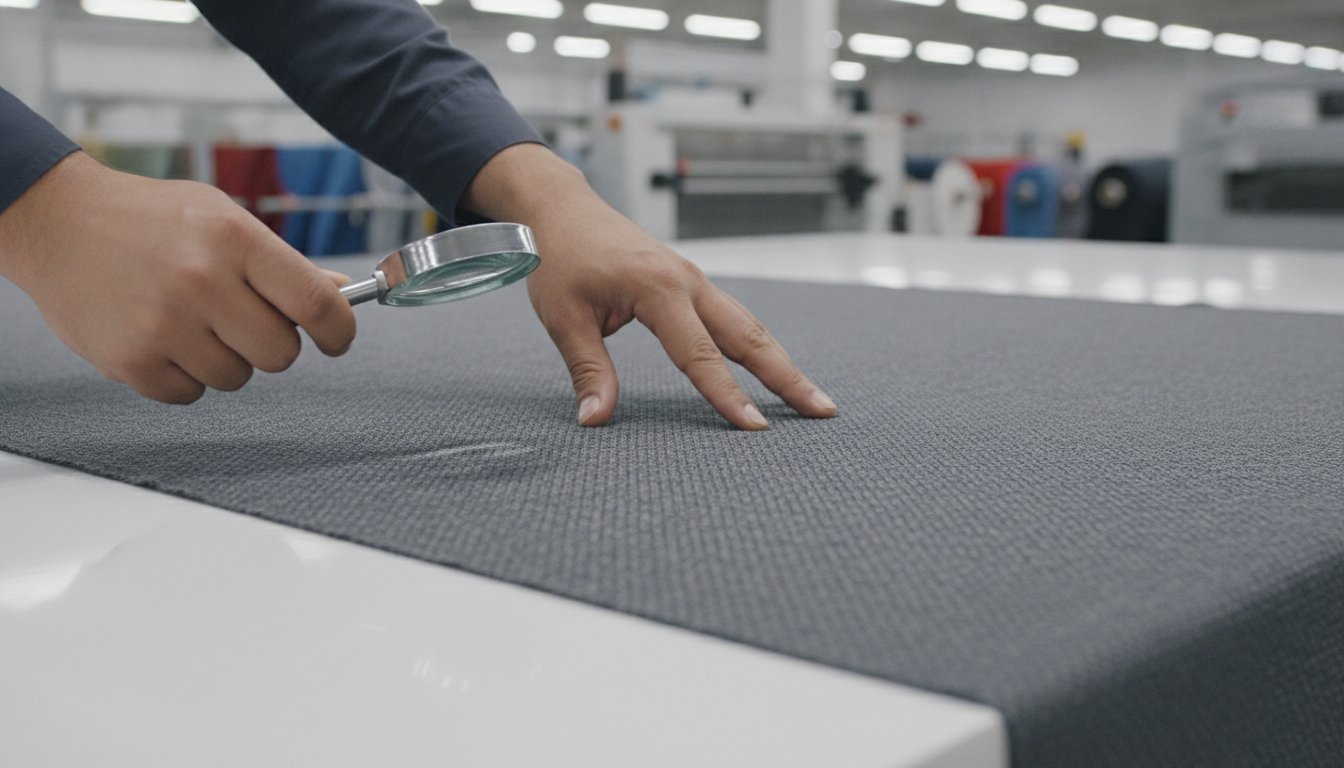

What if the most expensive mistake in your supply chain isn't the manufacturing, but the final 60 minutes before the container doors close? You've likely spent months perfecting your product and negotiating with suppliers, yet one loose pallet or a hidden container leak can turn your entire investment into a total loss. It's a common nightmare to pay for 1,000 units only to receive 850 upon arrival, or to find your stock ruined by mould because of a pinhole leak. We understand that one day of inspection can save months of trouble. This guide provides a professional container loading supervision checklist for 2026. It's designed to eliminate shipping errors, prevent damage, and ensure every SKU is accounted for before it leaves the factory. You'll master the process of verifying container integrity, supervising palletization, and securing the photographic evidence required for insurance claims. We'll break down the specific steps our inspectors use to stop problems before your shipment sails.
Key Takeaways
- Learn why Container Loading Supervision (CLS) acts as your final line of defense against shipping errors and financial loss before your cargo departs.
- Master the industry-standard 7-point inspection technique to guarantee the structural integrity and seaworthiness of every shipping container.
- Implement a professional container loading supervision checklist to eliminate quantity discrepancies and ensure packing matches your specifications exactly.
- Follow a step-by-step guide to documenting the entire loading process through high-quality visual evidence that protects your business interests.
- Understand the hidden dangers of DIY oversight and how European-managed expertise in Asia prevents costly surprises before your shipment sails.
What is Container Loading Supervision (CLS) and Why It Matters
Container Loading Supervision (CLS) is the final quality control gate in your supply chain. It involves an independent inspector staying on-site to monitor the entire loading process from start to finish. This service is the last line of defence before you release the final payment and your goods leave the factory floor. While many importers rely solely on a Pre-Shipment Inspection (PSI), that only confirms the quality of the goods at a specific moment. It doesn't guarantee that those exact products actually make it into the container.
The distinction between PSI and CLS is critical for risk management. A PSI checks if the products meet your specifications; CLS ensures the factory doesn't engage in "carton swapping." This is a known issue where a supplier replaces approved, inspected stock with lower-quality rejects or "accidentally" leaves out 10% of the order once the initial inspector leaves. By having a professional presence during the loading phase, you ensure that the quantity and quality you paid for are what the carrier receives. It's a simple step that stops short-shipping and fraud before the vessel sails.
The Financial Impact of Loading Errors
Shipping air is an expensive mistake that drains your margins. If a 40-foot container is only 85% full because of poor stacking, you're effectively wasting $720 based on average 2024 trans-Pacific freight rates of $4,800. Beyond volume loss, poor loading is the primary reason insurance providers like Allianz report that 30% of transit damage claims are rejected. Insurers often cite "insufficient packing or negligent loading" as grounds for non-payment. Container loading supervision is a mandatory risk-mitigation tool for 2026 global trade that protects your capital and ensures cargo integrity from the factory to your warehouse.
Common Risks a Checklist Eliminates
Using a comprehensive container loading supervision checklist prevents several operational nightmares that can halt your distribution. Our inspectors focus on three primary risk areas:
- Incorrect SKU Distribution: Factories often mix up pallets, leading to the wrong ratios of sizes or colors. This can result in $2,500 in unplanned "sorting fees" at your 3PL or distribution center.
- Structural Container Defects: We check for "light leaks" and holes that lead to moisture damage or pest intrusion. A single hole can result in a 100% loss of soft goods due to mold during a 30-day sea voyage.
- Weight Distribution Failures: Improperly balanced containers cause maritime safety issues and lead to heavy fines at the port of entry. We ensure the weight is spread evenly to meet international shipping standards.
Don't leave your shipment to chance. A structured container loading supervision checklist ensures that the shipping environment is clean, dry, and secure, preventing costly surprises when the doors finally open at your destination.
The 7-Point Container Inspection Technique
A shipping container isn't just a metal box; it's the primary barrier between your investment and the harsh environment of the Pacific or Atlantic. Structural integrity is just as critical as the quality of the products inside. A single hairline fracture can lead to thousands of dollars in water damage during a 30-day voyage. Professional inspectors use a 7-point technique to ensure every unit is seaworthy before a single carton is loaded. This process is a non-negotiable part of any container loading supervision checklist in 2026.
Inspectors carry three essential tools: a high-lumen flashlight, a small hammer, and a measuring tape. They use the hammer to tap the side walls; a dull thud instead of a clear ring often reveals "hidden" repairs or double walls that might hide structural weaknesses. You're looking for consistency in the metal's response. If the sound changes, it's a red flag for a patch or a false wall.
Exterior and Interior Structural Checks
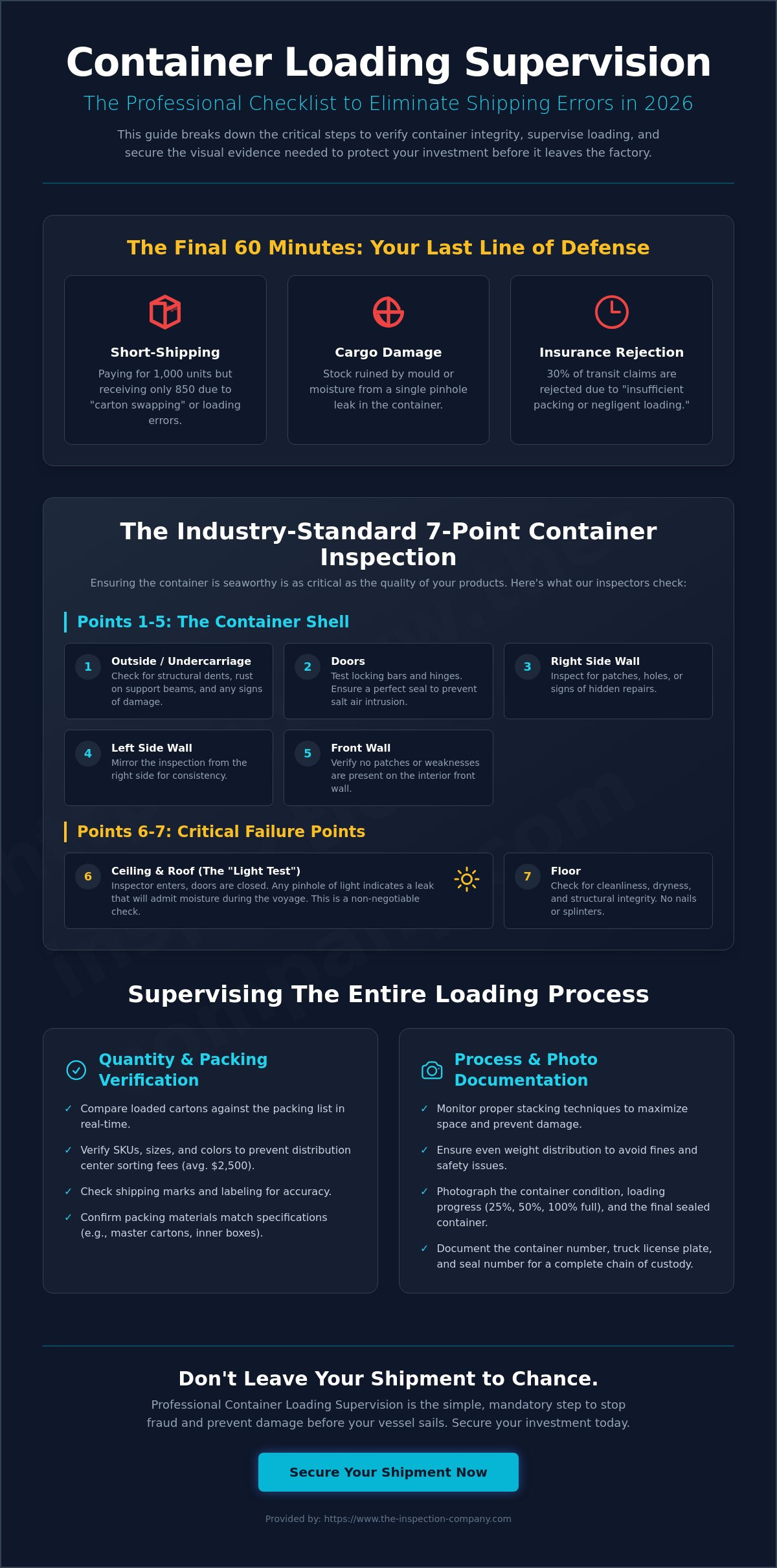
The first five points focus on the shell. 1. The outside and undercarriage must be free of structural dents or rusted support beams. 2. Inside and outside doors require a physical test of the locking bars and hinges. If a door doesn't seal perfectly, salt air will penetrate the cargo. 3. The right side, 4. the left side, and 5. the front wall must be checked for patches. A patch that isn't welded properly is a failure point. Data from 2025 shows that 12% of rejected containers fail specifically due to poor-quality patches that would have leaked under high pressure.
Roof, Floor, and the 'Light Test'
The final two points are often where the most costly surprises hide. 6. The ceiling and roof inspection involves the "light test." An inspector enters the container and has the doors closed. Any pinhole of light, even as small as 0.5mm, indicates a leak that will admit moisture. 7. The floor must be dry and clean. A "sniff test" is mandatory here. If the floor smells of chemicals or mildew, it will ruin textiles or high-end consumer electronics through odor transfer. You can book an expert inspection to ensure these technical details are handled by professionals who know exactly what to look for.
Checking for moisture levels in the floorboards is another critical step. If the moisture content exceeds 15%, the risk of mold growth during transit increases by 40%. This is why we stop problems before your shipment sails. It's much cheaper to reject a container at the factory gates than to deal with a moldy shipment at the destination port.
Quantity and Packing Verification Checklist
A secure container means nothing if the goods inside are incorrect or damaged. This stage of the container loading supervision checklist focuses on the physical inventory sitting on the factory floor. We don't just trust the paperwork; we verify every detail. In 2024, data from our inspections showed that 12% of shipments had quantity discrepancies before our intervention. With over 25 years of experience in quality management, we've seen how one day of inspection can save months of trouble by catching these errors before they leave the port.
Inspectors must perform a 100% carton count of the total shipment. This ensures the physical quantity matches the packing list and your original purchase order exactly. We also verify that the factory uses 5-ply double-wall corrugated cartons. Standard single-wall boxes often fail under the 2,000kg of pressure found at the bottom of a stacked container. Our goal is to avoid costly surprises that occur when sub-standard packaging collapses during the six-week journey across the ocean.
Random selection is a mandatory part of our process. Our inspectors choose cartons from the middle and back of the pile, not just the ones closest to the door. This prevents the "golden sample" trap where factories only present the best-packed goods at the front. If a factory refuses random access, it's an immediate red flag that we report to you in real-time. This level of transparency is why a container loading supervision checklist is vital for risk mitigation.
SKU and Barcode Accuracy
Errors in SKU ratios lead to stockouts or overstocking at your warehouse. We verify the exact breakdown of sizes, colors, and models against the PO. Our team uses handheld scanners to check barcodes. If a barcode doesn't scan or links to the wrong SKU, the shipment stops. Legible shipping marks are also mandatory. They must be positioned on at least two sides of each carton to ensure visibility during transit and sorting. We ensure your logistics chain remains efficient by stopping errors at the source.
Carton Condition and Palletization
Shipping from humid climates often leads to damp cartons that lose structural integrity. We check for soft cardboard, crushed corners, or signs of tampering. For palletized goods, we supervise the wrapping and strapping process. A standard 1.2m x 1.0m pallet must be stable and wrapped with at least three layers of stretch film. Heavy items must stay at the bottom. Placing a 50kg engine part on top of a 5kg electronics box is a guaranteed way to lose your entire profit margin to crushing damage.
Supervising the Loading Process: A Step-by-Step Checklist
The day of loading is your final opportunity to prevent logistics nightmares. Once the container leaves the factory gates, your control over the cargo effectively ends. A professional container loading supervision checklist ensures that the exact quantity ordered is packed securely and that the container itself is fit for a transoceanic journey. It's about more than just watching boxes; it's about verifying that the shipping environment won't damage your investment.
Phases of Active Supervision
Our inspectors follow a strict chronological workflow to maintain total transparency. Before a single carton moves, we perform an 8-point container check to look for holes, light leaks, or lingering odors from previous shipments. We record the container number and the ISO 17712 high-security seal number immediately upon arrival to ensure the equipment matches your booking details.
- Pre-loading: Documenting the empty container's interior and exterior condition, including the floor and locking bars.
- During loading: Capturing high-resolution photos at 25%, 50%, 75%, and 100% capacity. This proves the goods were stacked according to your requirements and weren't crushed by heavier items.
- Post-loading: Witnessing the door closure and the immediate application of the seal. We take a close-up photo of the locked seal to prevent any unauthorized access before it reaches the port.
Red Flags and Corrective Actions
Discrepancies often appear in the final hours of a production cycle. If the factory's packing list shows 1,200 units but the inspector's tally stops at 1,140, we halt the process. This 5% discrepancy represents a direct financial loss and potential customs issues at the destination. We don't accept verbal promises that the missing items are "somewhere in the back."
Environmental risks are equally critical during the supervision process. If we identify pallets with a moisture content above 15% or those emitting a musty odor, they're rejected immediately. Loading "wet" pallets into a sealed metal box for a 30-day sea voyage is a recipe for mold that can ruin an entire $50,000 shipment. If the seal number doesn't match the shipping documents exactly, we issue a "stop-loading" order until the paperwork is corrected. This level of detail is why 92% of our clients report a significant reduction in insurance claims after implementing professional supervision.
Stop problems before your shipment sails. Book a professional container loading supervision to secure your supply chain today.
Why Professional Supervision Beats a DIY Checklist
A DIY container loading supervision checklist is a vital starting point, but its effectiveness depends entirely on the person executing it. Relying on factory-provided photos is a significant risk that often leads to expensive disputes. Suppliers frequently provide "hero shots" that highlight the best-looking cartons while ignoring damaged goods or improper weight distribution at the back of the container. Data from 2024 shows that 18% of international shipping claims involve damage that was hidden during the supplier's self-reporting process. Independent oversight ensures you see the full reality of your shipment, not just a curated version of it.
Professional supervision provides a 24-hour digital report featuring timestamped evidence and high-resolution imagery. This document acts as your primary defense against insurance companies and freight forwarders if a claim arises. By integrating professional loading oversight into your broader quality control strategy, you ensure the high standards achieved during production aren't compromised in the final hour. It's a small investment that protects a much larger capital outlay.
The Inspection Company Advantage
- Broad Asian Coverage: We have over 700 qualified inspectors stationed across Asia, allowing us to respond to loading requests on short notice.
- European Standards: Our European management team enforces strict Western quality protocols on-site, ensuring that nothing is overlooked by local factory staff.
- Specialized Expertise: We utilize specific checklists tailored for Amazon FBA and retail-ready shipments, focusing on labeling, pallet stability, and dunnage requirements that prevent warehouse rejections.
Next Steps: Securing Your Next Shipment
Protecting your cargo shouldn't be a complex process. You can book a Container Loading Inspection in under 5 minutes through our centralized platform. Once our inspector completes the task, you'll receive a detailed report that serves as your final gatekeeper. Don't release the final payment to your supplier until you have verified the container's contents and sealing. This protocol keeps the leverage in your hands and ensures the goods you paid for are the goods that actually arrive at your warehouse.
Secure Your Supply Chain for 2026 and Beyond
Shipping goods from Asia in 2026 requires more than just a hope that your supplier followed every instruction. A comprehensive container loading supervision checklist acts as your final defense against damaged cargo and expensive logistical errors. By verifying the 7-point container inspection and confirming exact quantities before the doors are sealed, you eliminate the risk of receiving a shipment that fails to meet your standards. One day of professional inspection can save you months of financial trouble and supply chain delays.
The Inspection Company provides the meticulous oversight you need through our European management team based directly in Asia. Our ISO 9001 certified quality systems ensure every detail of the loading process is documented. We provide transparency with detailed reports delivered within 24 hours of the inspection. Don't leave your investment to chance when you can have a seasoned expert on the ground to stop problems before your shipment sails. It's the most effective way to avoid costly surprises and maintain your reputation with customers.
Secure your shipment today with a professional Container Loading Inspection
Take full control of your international trade and move forward with total confidence.
Frequently Asked Questions
What is a container loading supervision checklist?
A container loading supervision checklist is a technical document used to verify that your goods are handled and stowed according to specific safety and quality standards. This container loading supervision checklist guides the inspector through a 7-point container integrity check and a carton count verification. It ensures the factory loads the correct 100% of your order while checking for holes that cause water damage during the 30-day sea transit.
How long does a container loading inspection usually take?
A standard container loading inspection usually takes between 4 and 6 hours to complete for a single 40-foot container. This timeframe allows our team to inspect the container's structural condition and monitor the entire loading process from the first carton to the final seal. If the factory staff works slowly or if we find 1 or more defects in the container's roof, the process can extend by 3 hours.
Can I use a loading checklist for LCL (Less than Container Load) shipments?
You should use a modified checklist for LCL shipments to protect your goods from damage caused by other shippers' cargo. In LCL scenarios, 15% of damage claims arise from improper stacking or contamination from adjacent goods. A specialized checklist ensures your pallets are positioned correctly and aren't crushed by heavier items loaded later in the consolidation process. It's a vital step to avoid costly surprises at the destination.
What are the most common defects found during loading supervision?
The most common defects include container holes, wet flooring, and broken locking mechanisms, which affect 8% of inspected units. Inspectors also frequently find incorrect pallet stacking that exceeds weight limits by 10% or more. Identifying these issues before the vessel departs prevents water damage and stops your shipment from being rejected at the destination port. We stop these problems before your shipment sails to maintain your supply chain integrity.
Is a container seal number check enough to ensure security?
No, a seal number check is just one part of a 7-point container inspection required to meet C-TPAT security standards. While the seal proves the doors weren't opened, it doesn't confirm if the container has a false wall or hidden compartments. Our inspectors verify the seal's integrity and match the number against the Bill of Lading to prevent 100% of unauthorized tampering. This meticulous approach provides the security your business requires.
What happens if the inspector finds a discrepancy in the quantity?
If an inspector finds a quantity discrepancy, they immediately halt the loading process and issue a "Pending" or "Fail" result in the report. For instance, if the packing list shows 500 cartons but only 485 are present, the factory must locate the missing 3% of stock before the container is sealed. This stops you from paying for goods that never left the warehouse. One day of inspection saves months of trouble.
Why should I hire a third-party inspection company instead of using factory staff?
Hiring a third-party company provides an unbiased, independent assessment that factory staff cannot offer due to inherent conflicts of interest. Factory workers often overlook 12% of loading errors to meet production deadlines or hide mistakes. Our European-managed teams follow a strict container loading supervision checklist to ensure 100% transparency. We act as your eyes and ears on the ground, protecting your investment from expensive shipping errors.
How much does a professional container loading supervision service cost?
Professional container loading supervision typically costs between $250 and $350 per man-day in major Asian manufacturing hubs. This flat fee covers the inspector's travel, the full day of onsite monitoring, and a detailed photographic report delivered within 24 hours. Investing this small amount prevents potential losses that often exceed $10,000 in damaged inventory or port rejection fees. It's a reliable, transparent way to manage your international trade risks effectively.