

What if a single oversight in your supplier's chemical disposal could trigger a fine of up to 2% of your annual turnover under the 2023 German Supply Chain Act? It's a sobering thought for any importer who relies on overseas production. You've likely felt the growing pressure of the Corporate Sustainability Reporting Directive (CSRD) and the constant anxiety that a sudden factory shutdown could leave your shelves empty for months. It's clear that relying on a supplier's word isn't enough when your reputation and bottom line are at stake.
This guide explains how a professional environmental audit for factories serves as your primary defense against these costly surprises. You'll learn how to secure your supply chain and avoid regulatory fines by mastering environmental audits for your overseas partners. We'll provide a clear framework for evaluating factory performance, a list of five critical red flags to watch for, and a roadmap for compliance with the latest international trade laws. It's time to gain total visibility into your manufacturing footprint before the next shipment sails.
Key Takeaways
- Understand the critical transition from voluntary CSR to mandatory ESG reporting to ensure your supply chain remains compliant by 2026.
- Learn how a professional environmental audit for factories utilizes surprise site tours and document reviews to uncover hidden risks on the manufacturing floor.
- Identify common "Potemkin Factory" tactics and verify the authenticity of environmental permits to avoid costly regulatory fines and shipment delays.
- Navigate the complex hierarchy of international and local compliance standards tailored to your specific industry, from textiles to electronics.
- Discover why combining European management oversight with an extensive local inspector network is the most reliable way to secure your overseas operations.
What is an Environmental Audit for Factories in 2026?
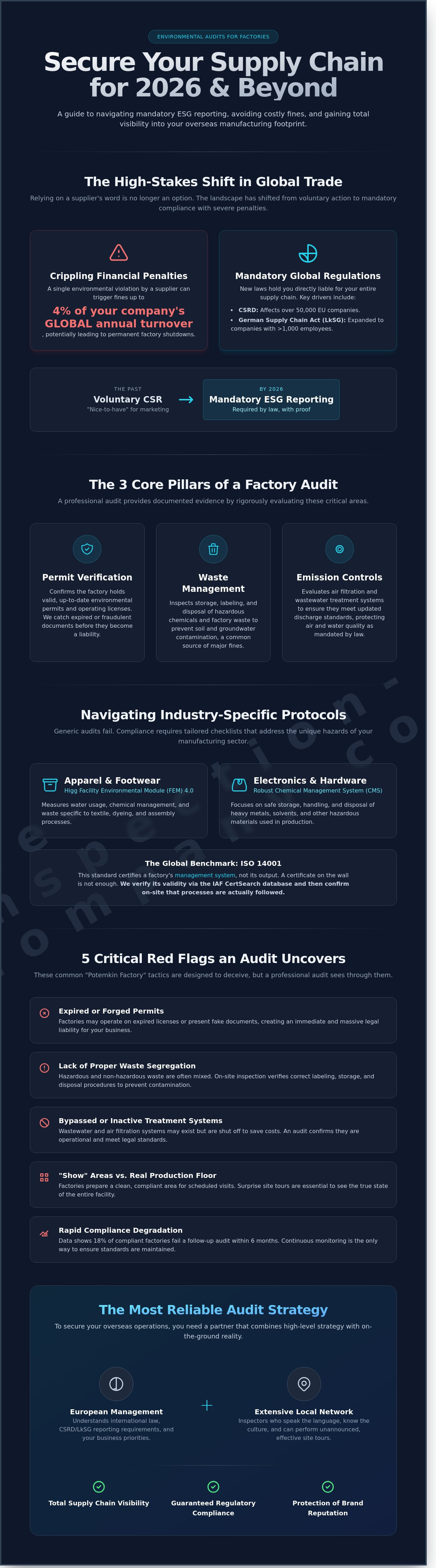
An environmental audit for factories is no longer a "nice-to-have" checklist for a marketing brochure. It's a rigorous, systematic evaluation of a facility's impact on the planet and its strict adherence to local and international laws. By 2026, the transition from voluntary Corporate Social Responsibility (CSR) to mandatory Environmental, Social, and Governance (ESG) reporting is complete. You can't just hope your supplier is compliant; you have to prove it through documented evidence.
Importers now face direct legal liability for their suppliers’ ecological failures. If your manufacturer in Vietnam or China dumps toxic waste, your company pays the price in European or American courts. These aren't just minor administrative fees. In 2026, a single environmental fine can exceed 4% of a company's global annual turnover. These penalties often lead to immediate and permanent factory shutdowns. We stop these problems before your goods leave the dock.
The Core Objectives of a Factory Environmental Audit
A professional audit focuses on three critical pillars to mitigate your risk:
- Permit Verification: We confirm the factory holds valid 2026 environmental permits and operating licenses. Many facilities operate on expired papers, which is a massive liability.
- Waste Management: We inspect the storage, labeling, and disposal of hazardous chemicals and waste to prevent soil and groundwater contamination.
- Emission Controls: We evaluate air filtration and wastewater treatment systems to ensure they meet the 2025 updated discharge standards.
Regulatory Drivers: CSRD and the Supply Chain Act
The Corporate Sustainability Reporting Directive (CSRD) now requires over 50,000 EU companies to report on their supply chain's footprint. Simultaneously, the German Supply Chain Due Diligence Act (LkSG) expanded its reach in 2024 to include companies with over 1,000 employees, creating a global ripple effect for any business selling in the Eurozone. "Ignorance of the law" isn't a valid defense in 2026. If you didn't conduct an environmental audit for factories in your network, you're choosing to accept unlimited risk. One day of inspection saves months of legal trouble and protects your brand's reputation.
Key Standards and Protocols for Environmental Compliance
Compliance isn't a static target. It's a moving baseline governed by a hierarchy of international frameworks and local legislation. While international standards provide a high-level roadmap, local laws like China's 2015 Environmental Protection Law or Vietnam's 2020 Law on Environmental Protection carry the actual legal penalties. An environmental audit for factories must address both levels to ensure your supply chain stays operational and avoids heavy fines.
Standardized reporting is the only way to achieve true stakeholder transparency. Without a uniform protocol, data from different suppliers becomes impossible to compare. This lack of clarity creates 100% of the risk when investors or regulators demand proof of sustainability. You can't rely on a "passed" status from 12 months ago. Data from 2023 shows that 18% of factories that met standards in their initial audit failed a follow-up six months later due to rapid production increases or changes in chemical suppliers. Continuous monitoring is the only way to mitigate these risks.
ISO 14001: The Global Benchmark
ISO 14001 isn't a guarantee of zero pollution; it's a certification of a factory's management system. It proves the facility has a framework to identify and control its environmental impact. However, a certificate on a wall doesn't always equal on-site reality. You must verify claims through the IAF CertSearch database to ensure the accreditation is valid and hasn't expired. We often find that while a system exists on paper, the actual environmental audit for factories reveals gaps in how staff execute those processes daily. Working with an independent partner helps you avoid costly surprises by verifying these management claims on the factory floor.
Industry-Specific Protocols: Higg Index and Beyond
Generic audits often miss the specific hazards of specialized manufacturing. Different sectors require tailored checklists to be effective:
- Apparel and Footwear: The Higg Facility Environmental Module (FEM) 4.0 is the standard here. It measures water use, waste management, and chemical use specifically for textile production.
- Electronics and Hardware: These facilities require a robust Chemical Management System (CMS). Audits focus on the storage and disposal of heavy metals and hazardous solvents used in PCB assembly.
- General Manufacturing: Focus shifts to energy efficiency and air emissions, particularly if the plant operates heavy machinery or industrial boilers.
A tailored audit checklist ensures that 100% of the high-risk areas for your specific product category are inspected, preventing the "blind spots" that lead to environmental disasters and brand damage.
The Audit Process: What Happens on the Factory Floor?
An effective environmental audit for factories isn't a scheduled social call. It's a rigorous, often unannounced, deep dive into operational reality. Surprise audits now account for over 68% of industry requests because they prevent "window dressing" by suppliers. Our European management team oversees every Asian report to ensure Western compliance standards are met without compromise. We focus on risk mitigation to stop problems before your shipment sails.
Step 1: The Document and Permit Review
Auditors start by scrutinizing the paper trail. They verify Environmental Impact Assessments (EIA) and valid discharge permits to ensure the facility operates legally. We analyze 12 months of utility bills to spot production anomalies. If energy consumption doesn't match reported output, it often signals hidden shifts or unreported machinery. Hazardous waste contracts must be with licensed third parties, and we cross-check these against government databases to prevent illegal dumping risks.
Step 2: The Physical Site Inspection
The site tour identifies physical risks that paperwork can't hide. We check chemical storage areas for secondary containment. This prevents soil contamination if a primary drum leaks. Auditors test Wastewater Treatment Plants (WWTP) to ensure they're operational, not just turned on for the visit. We look for illegal bypass pipes or unauthorized emission points that skip filtration systems. Tracking waste from the production line to the final disposal gate is a non-negotiable part of a professional environmental audit for factories.
Step 3: Interviews and Final Reporting
Interviews provide the final layer of truth. Workers are asked about chemical handling and waste disposal protocols away from management. When worker testimony contradicts records, it's a major red flag. Discrepancies lead to a Corrective Action Plan (CAP) with strict 30-day or 90-day deadlines for remediation. We provide a 24-hour report turnaround. Speed is critical for importers who need to make "go" or "no-go" decisions on a shipment. This transparent data allows you to manage your supply chain with total confidence.
- Data Accuracy: We use digital meters for noise and air quality checks.
- Transparency: Photos of every non-compliance point are included in the final report.
- Accountability: Every CAP includes a named person responsible at the factory level.
Common Red Flags and How to Mitigate Them
The "Potemkin Factory" remains a persistent threat for importers sourcing from Asia. This term describes suppliers who create a perfect facade during scheduled visits while hiding systemic violations behind closed doors. A thorough environmental audit for factories must look past freshly painted walls to find the truth. In 2023, industrial data indicated that 12% of facilities in major manufacturing hubs presented forged or expired environmental permits. These documents often appear legitimate at first glance, yet they lack the verifiable government registration numbers required for legal operation.
Top 5 Environmental Red Flags for Importers
- Production vs. Waste Disparity: If a facility produces 50,000 units monthly but records less than 10kg of chemical waste, they're likely bypassing legal disposal channels.
- The "Too Clean" Syndrome: Wastewater treatment systems that look unused, lack biological sludge, or show no signs of recent maintenance suggest they're only activated for visitors.
- Unlabeled Hazardous Materials: 35% of failed audits involve chemical containers without proper GHS labeling or secondary containment.
- Missing EIA Documentation: Any facility expansion after 2021 requires a new Environmental Impact Assessment; check the dates carefully.
- The "Midnight Dumping" Risk: This occurs when factories bypass filtration systems after business hours to save on electricity and chemical costs, often through hidden "ghost pipes."
Risk Mitigation Strategies
You can't manage what you don't measure accurately. Relying on factory-provided photos isn't enough to secure your supply chain. Implementing unannounced "spot-check" audits is the most effective way to catch "midnight dumping" in action. By arriving without prior notice, our inspectors see the facility in its natural operating state. It's also vital to link factory payments to specific environmental compliance milestones. If a supplier fails to provide valid waste disposal receipts from a licensed contractor, withhold the final 30% of the invoice until they comply.
Using an independent, third-party partner like The Inspection Company removes local bias and potential conflicts of interest. Our European management team ensures that international standards are applied strictly on-site. We provide a transparent, evidence-based view of the factory floor, identifying risks before they become legal liabilities. One day of inspection can save months of trouble and protect your brand from a PR disaster. Don't leave your compliance to chance.
Protect your brand reputation and ensure compliance. Book a professional environmental audit for factories to identify hidden risks before they impact your business.
Choosing the Right Partner for Your Environmental Audits
Selecting a partner for an environmental audit for factories isn't just about checking boxes; it's about securing insurance for your brand's reputation. Data shows that importers can lose up to 20% of their annual revenue due to supply chain disruptions caused by regulatory non-compliance. The Inspection Company bridges the gap between Western compliance expectations and Asian manufacturing realities. With European management overseeing all operations, we ensure that every environmental audit for factories meets the rigorous standards required by the EU Green Deal and global ESG frameworks.
Our network of 700+ inspectors covers every major manufacturing hub in China, Vietnam, India, and Thailand. This local presence means our teams are often on-site within 48 hours of a request. We don't treat environmental checks as isolated events. Instead, we integrate these audits with Pre-Shipment Inspections (PSI) and First Article Inspections (FAI). This holistic approach catches sustainability risks and quality defects simultaneously. One day of inspection saves months of trouble; it's the most cost-effective way to manage a remote supply chain.
The TIC Advantage: Local Presence, Global Standards
We operate across Asia's primary industrial zones using ISO 9001 certified processes to ensure consistent audit quality. Our auditors speak the local language and possess deep knowledge of regional environmental laws. You won't wait weeks for feedback. We deliver detailed reports featuring clear photographic evidence and objective scoring within 24 hours of the site visit. This speed allows you to make critical decisions without stalling your production timeline.
Next Steps: Securing Your 2026 Supply Chain
Preparing for the 2026 fiscal year requires moving beyond basic quality checks. You need a transparent view of your supplier's ecological footprint right now. Transitioning from quality-only inspections to full factory audits is a straightforward process. Our 3-step request system makes it easy: you submit the factory details, we provide a transparent quote, and our team coordinates the booking directly with the vendor. Protect your brand and avoid costly surprises, book an audit today to ensure your manufacturing partners are ready for the next era of global trade.
Future-Proof Your Supply Chain Against Environmental Risks
Navigating the complex regulatory landscape of 2026 requires more than just trust; it demands verified data. A professional environmental audit for factories serves as your primary defense against costly non-compliance penalties and brand damage. By identifying red flags in waste management and energy consumption early, you ensure your partners meet international standards like ISO 14001. This oversight isn't just a hurdle. It's a strategic investment that protects your bottom line from unexpected legal delays and shipment rejections.
The Inspection Company leverages over 25 years of quality control experience to safeguard your interests across Asia. Our team includes more than 700 inspectors who operate under European management and strict ISO 9001 certification protocols. We focus on delivering transparent, fact-based reports that give you total control over your production. One day of inspection prevents months of logistical trouble and financial loss. You deserve the peace of mind that comes from working with a seasoned veteran in the field who understands the high stakes of international trade.
Avoid costly surprises: Schedule your factory environmental audit now
Take the next step toward building a resilient, compliant, and sustainable business model that thrives in any market condition.
Frequently Asked Questions
Is an environmental audit mandatory for factories in Asia?
Mandatory status depends on the specific country and industry. In China, the 2015 Environmental Protection Law requires 100% of high-impact factories to undergo regular assessments. If your supplier handles chemicals or heavy metals, local authorities will demand proof of compliance. Most Western retailers now make an environmental audit for factories a non-negotiable part of their 2026 procurement contracts to mitigate legal risks.
How long does a typical factory environmental audit take?
A standard on-site audit typically takes 1 to 2 business days to complete. This timeframe covers the physical inspection of waste management systems, water treatment facilities, and a thorough review of past emissions records. Larger facilities with over 500 employees or complex chemical processes might require a 3 day assessment. You'll receive a detailed report within 48 hours of the auditor leaving the premises.
What is the difference between a social audit and an environmental audit?
A social audit focuses on labor rights and worker safety, while an environmental audit evaluates a factory's impact on the ecosystem. Social assessments check for child labor or 60 hour work week violations. Environmental audits measure things like Carbon Dioxide emissions and hazardous waste disposal. Both are essential for risk mitigation, but they require different technical expertise to identify hidden liabilities that could disrupt your business.
Can a factory fail an environmental audit, and what happens then?
Yes, a factory fails if they violate local laws or exceed 0% tolerance thresholds for toxic discharge. If a Critical Non-Compliance is found, the supplier must implement a Corrective Action Plan (CAP) within 30 days. We recommend pausing all shipments until the factory proves they've fixed the issue. Failure to rectify these problems often leads to permanent blacklisting by major international buyers who can't risk brand damage.
How much does an environmental audit for a factory cost in 2026?
In 2026, a professional environmental audit for factories typically costs between $600 and $950 per man-day. This price includes the auditor's travel, the on-site inspection, and the final technical report. While cheaper options exist, they often miss critical risks that lead to $50,000 fines later. Investing in a high-quality audit is a small price to pay to avoid costly surprises before your goods leave the port.
What are the main environmental risks when sourcing from China or Vietnam?
The primary risks include illegal wastewater discharge and the lack of valid Pollutant Discharge Permits. In Vietnam, Decree 45/2022 imposes fines up to $85,000 for factories that bypass water treatment protocols. China's Blue Sky inspections have resulted in 30,000 factory closures since 2017. If your supplier doesn't have updated permits, your entire supply chain could stop overnight due to a sudden government shutdown or legal seizure.
How often should I conduct an environmental audit on my suppliers?
You should schedule an environmental audit every 12 months to ensure ongoing compliance. High-risk suppliers, such as textile dye houses or battery manufacturers, require more frequent checks every 6 months. Regular monitoring prevents compliance drift where a factory stops following protocols once the initial contract is signed. Keeping a consistent audit schedule is the only way to protect your brand's reputation from sudden and damaging environmental scandals.