

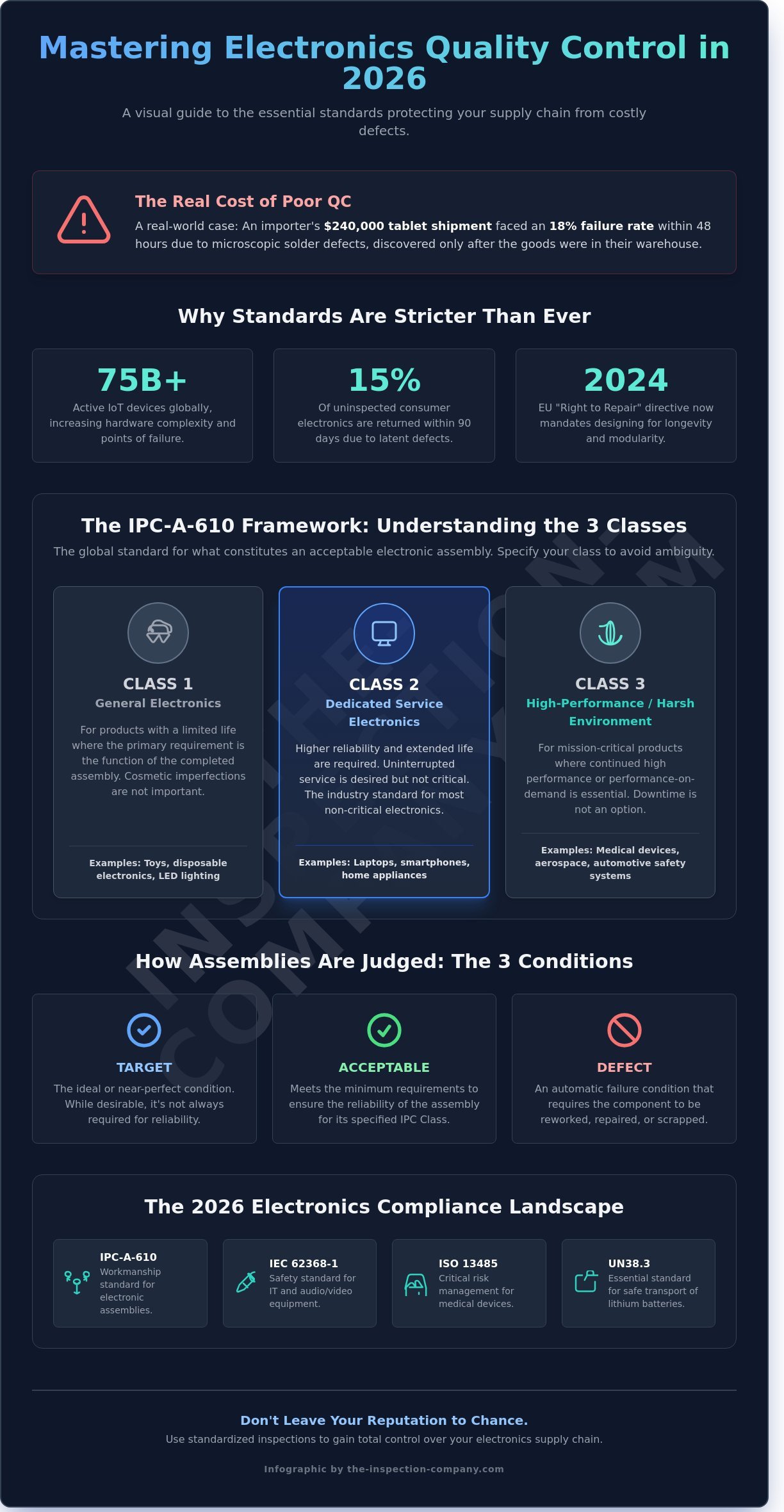
In November 2025, a mid-sized electronics importer discovered that 18% of their latest tablet batch failed within 48 hours because of microscopic solder defects. By the time they realized the error, the $240,000 shipment was already in their warehouse, leaving them with no recourse and a mounting pile of customer returns. It's a nightmare scenario that highlights why staying ahead of electronics quality control standards is the only way to protect your bottom line in 2026.
You likely understand that sourcing from Asia involves inherent risks, especially when complex PCBA and strict regulatory recalls like RoHS or CE are involved. We're here to help you mitigate those risks. This guide will show you how to master the essential inspection protocols required to secure your supply chain and avoid shipment rejections before they leave the factory floor. We will clarify the confusion between IPC manufacturing classes and safety certifications like UL, providing a clear checklist to ensure your brand reputation remains intact.
Key Takeaways
- Understand how the rising complexity of IoT and AI hardware in 2026 necessitates stricter technical requirements to maintain device reliability.
- Learn to apply the IPC-A-610 framework to accurately categorize assembly conditions and prevent defective units from entering your inventory.
- Master the distinction between manufacturing criteria and legal compliance to ensure your electronics quality control standards satisfy both workmanship and regulatory mandates.
- Implement a 5-step inspection protocol that utilizes Acceptable Quality Limits (AQL) to identify critical visual defects before your shipment sails.
- Discover how professional risk mitigation and European management standards can protect your supply chain from the financial impact of poor quality.
Table of Contents
What are Electronics Quality Control Standards?
Electronics quality control standards represent the harmonized technical requirements and workmanship criteria that dictate if a device is safe, reliable, and functional. These aren't just suggestions; they're the benchmarks used during Quality Control to verify that your supplier is actually delivering what you paid for. In 2026, these standards have become more rigid because the hardware we use is more integrated than ever before. With over 75 billion IoT devices active globally, the margin for error has disappeared. If a single component fails to meet electronics quality control standards, your entire product line faces a recall. We've seen that 15% of uninspected consumer electronics are returned within 90 days due to latent defects. These are errors that don't appear until the product has been used for several months. By then, your shipment has already sailed, and the financial damage is done.
International bodies provide the framework for these inspections. The IPC (Association Connecting Electronics Industries) sets the workmanship standards for printed circuit boards, while the IEC (International Electrotechnical Commission) focuses on safety and performance. ISO (International Organization for Standardization) provides the process-based framework, such as ISO 9001, to ensure the manufacturer's management system is capable of producing consistent results. One day of inspection based on these standards can save months of trouble and thousands of dollars in lost revenue.
The Core Objective: Reliability vs. Quality
Quality is the state of the product at the moment of inspection. It's about meeting the specification today. Reliability is how long that product stays functional in the field under stress. A tablet might pass a basic power-on test at the factory, but if the thermal management is poor, it'll fail in 12 weeks. Professional inspection companies focus on both metrics to prevent costly surprises. We stop problems before your shipment sails by checking for the hidden flaws that impact long-term reliability.
The Evolution of Standards in 2026
The 2026 landscape introduces new regulatory hurdles that didn't exist two years ago. The European Union's 2024 "Right to Repair" directive now forces manufacturers to design for longevity and modularity. Additionally, the IPC-1792 standard for cybersecurity in the manufacturing supply chain is now a mandatory requirement for many IoT suppliers. Battery safety standards have also tightened. Lithium-ion components must now undergo more rigorous stress tests to prevent thermal runaway incidents that were common in older designs. These electronics quality control standards ensure that your product isn't just functional, but also compliant with current global laws.
-
IPC-A-610: The most widely used inspection standard for the acceptability of electronic assemblies.
-
IEC 62368-1: The safety standard for audio, video, and information technology equipment.
-
ISO 13485: Critical for electronics used in medical devices, focusing on risk management.
-
UN38.3: The essential standard for the safe transport of lithium batteries.
Following these protocols isn't optional for serious importers. When you're buying from Asia, you're dealing with high-stakes operations. Sub-standard components or poor soldering techniques lead to failures that destroy brand trust. We use a calm, fact-based approach to identify these risks at the factory level. By applying strict workmanship criteria, we ensure that your devices function as intended from the moment they're unboxed until the end of their expected lifecycle. Don't leave your reputation to chance; use standardized inspections to gain total control over your supply chain.
The IPC Standard Framework: Understanding the 3 Classes
IPC-A-610 is the most widely recognized document for electronics assembly globally. It's titled "Acceptability of Electronic Assemblies" and acts as the definitive visual guide for what constitutes a high-quality solder joint or component placement. When you're managing electronics quality control standards, this framework is your primary tool for communication with a factory. It defines three distinct criteria for every inspection point: Target, Acceptable, and Defect. A "Target" condition is the ideal, near-perfect state, while "Acceptable" meets the minimum requirements to ensure reliability. Anything labeled a "Defect" is an automatic rejection that requires rework or scrapping.
You shouldn't leave the quality of your PCBAs to the factory's discretion. Every importer must specify the desired IPC Class in their Purchase Order (PO) to avoid ambiguity. Without this specification, a supplier might default to the lowest threshold to save time and materials. During a Pre-Shipment Inspection (PSI), third-party inspectors use these IPC standards to grade the shipment. They examine the boards under magnification, comparing physical results against the IPC-A-610 visual benchmarks. This process identifies issues like cold solder joints or component misalignment before the goods leave the factory floor, preventing a total loss on your investment.
IPC Class 1: General Electronic Products
Class 1 focuses almost entirely on functionality. Aesthetics don't matter here; as long as the device turns on and performs its basic task, it passes. This class is reserved for products with a short life-cycle, such as cheap promotional toys or basic disposable electronics. It's the lowest threshold for workmanship. You should use Class 1 when your margins are razor-thin and the product's failure wouldn't cause a safety hazard. It's a strategic way to reduce manufacturing costs, provided you understand that cosmetic imperfections will be frequent across the batch.
IPC Class 2: Dedicated Service Electronic Products
Class 2 is the standard for approximately 80% of the electronics market, including laptops, home appliances, and consumer smartphones. The focus here is on continued performance and an extended life-cycle. While uninterrupted service is preferred, it's not absolutely critical for life-safety. For Amazon FBA sellers and retail importers, Class 2 is the gold standard. It strikes a balance between high reliability and manageable production costs. It ensures that your customers receive a durable product that won't fail within the first few months of use, protecting your brand's reputation.
IPC Class 3: High-Performance/Harsh Environment Electronics
Class 3 is reserved for critical systems where downtime isn't an option. This includes medical life-support devices, aerospace equipment, and military hardware. These products must function on demand, often in harsh environments. Manufacturing to Class 3 standards often carries a 30% price premium because the inspection and testing phases are significantly more rigorous. If you're developing high-stakes hardware, you need to know how Factory Audits verify a supplier's ability to meet Class 3 requirements before you sign a contract. The level of precision required for Class 3 means only the top 10% of specialized factories can consistently meet these electronics quality control standards.
Don't let a factory decide your quality levels for you. It's much safer to book a professional inspection to ensure your goods meet the IPC Class you paid for before they ship.
Regulatory Compliance vs. Manufacturing Standards
Don't confuse how a product is built with where it can be legally sold. Manufacturing standards like IPC-A-610 focus on the physical integrity of the device, such as solder joint quality and component placement. Regulatory compliance, however, dictates whether your product is allowed to enter a specific market. An electronics item can be perfectly assembled and fully functional, yet remain illegal to sell if it lacks the correct certifications. Following electronics quality management best practices ensures you bridge the gap between technical excellence and legal market access.
Manufacturing excellence doesn't guarantee safety. If your factory uses lead-based solder in an IPC-compliant process, you've created a high-quality product that's banned in the European Union under RoHS regulations. This distinction is critical for your electronics quality control standards. You must verify that your bill of materials (BOM) aligns with the environmental and safety laws of your destination country before mass production begins.
Component swapping is a major risk that often occurs after you've approved a "golden sample." Suppliers sometimes replace specified, high-quality components with cheaper, non-compliant alternatives to increase their margins. A 2023 industry analysis found that unauthorized component substitution affects approximately 15% of electronics shipments from unmonitored factories. A supplier might swap a certified Japanese capacitor for a generic version to save just $0.05 per unit. This small change can void your UL certification and lead to premature product failure or fire hazards.
Pre-Shipment Inspections (PSI) act as your final defense. These inspections verify that all required labels, such as the CE mark or FCC ID, are permanently affixed to the product and packaging. Our inspectors check that the physical product matches the approved technical file. We don't just look at the device; we verify that the user manual includes the mandatory safety warnings required by law.
Global Safety and Environmental Standards
RoHS and REACH are the primary environmental benchmarks. RoHS 3 restricts 10 specific hazardous substances, including lead, mercury, and certain phthalates. If a lab test finds these in your PCB, you face heavy fines and mandatory recalls. For market access, the CE marking is mandatory in the EU, while the FCC mark is required for electronics sold in the USA to manage electromagnetic interference. You must also prepare for the 2026 updates to IEC 62368-1. This standard is the hazard-based safety benchmark for audio, video, and information technology equipment, replacing older legacy standards.
Verifying Compliance on the Factory Floor
Falling into the "paperwork trap" is a common mistake for importers. You can't rely solely on PDF certificates provided by a factory. Many of these documents are expired, forged, or belong to a different product line. Effective electronics quality control standards require on-site verification. Our inspectors physically check for safety markings and compare them against the official registration databases. When risk is high, we supplement on-site checks with chemical lab testing. Using an XRF scanner during an inspection provides an immediate screening for restricted heavy metals, giving you the data needed to stop a non-compliant shipment before it leaves the port.
The Electronics Inspection Protocol: 5 Critical Steps
Shipping electronic goods without a rigorous, on-site inspection protocol is a financial gamble that often leads to disaster. Data from 2023 indicates that importers who skip professional oversight face a 12% higher return rate due to preventable manufacturing errors. To protect your margins and brand reputation, you must implement a standardized protocol that aligns with international electronics quality control standards. We stop problems before your shipment sails by following these five essential stages.
The protocol begins with preparation, where we define the sampling plan based on your product's specific complexity. We then move to a detailed visual inspection. Our inspectors look for solder bridging, which accounts for 35% of PCBA failures, as well as component misalignment and housing defects. Functional testing follows, covering power-on sequences, firmware verification, and battery cycle checks to ensure the device performs as promised. Safety testing is non-negotiable; we perform Hi-pot tests at 1500V, earth continuity checks, and strain relief tests for power cords. We conclude with packaging and labelling, verifying FBA labels, barcodes, and "Made in China" country of origin markings to prevent costly customs seizures.
The AQL Method for Electronics
Determining how many units to check is a science. We use ISO 2859-1 tables to select a statistically significant sample. For a batch of 3,000 units, an "Inspection Level II" typically requires checking 125 items. This provides a "Pass" or "Fail" result based on your specific limits. You can learn more in our guide, AQL Explained: The Ultimate Guide to Quality Sampling . We categorize defects strictly: a failed Wi-Fi connection is a Major defect that triggers a rejection, while a 0.5mm scratch on the plastic housing is a Minor defect that is recorded for your review.
Advanced On-Site Testing for 2026
Standard checks aren't enough for high-end consumer tech in 2026. Modern electronics quality control standards now demand advanced diagnostic tools to identify hidden risks. We use thermal imaging to find "hot spots" on a PCBA that signal future component failure. We also verify firmware versions against your MD5 checksum to prevent the factory from shipping buggy software. Finally, 1.5-meter drop tests and vibration tests simulate the rigors of international shipping, ensuring your product reaches the customer intact without internal components shaking loose.
Safety remains the highest priority for any electrical shipment. Beyond the Hi-pot test, we verify that all internal wiring is secured and that the housing meets the required IP rating if the device is intended for outdoor use. We also audit all retail packaging for compliance with local regulations, ensuring that safety warnings and technical specifications are accurate and legible. One day of inspection can save you months of trouble and thousands of dollars in lost revenue.
Don't leave your product quality to chance. To secure your supply chain and avoid costly surprises, book a professional electronics inspection before your next shipment leaves the factory.
Why Partner with The Inspection Company for Electronics QC?
Managing a global supply chain requires more than just a reliable factory; it demands a partner who understands the high stakes of electronics quality control standards. The Inspection Company bridges the gap between Western quality expectations and Asian manufacturing realities. We combine European management protocols with deep local expertise to ensure your specifications aren't lost in translation. With over 25 years of experience mitigating risks for electronics importers, we've developed a system that prioritizes transparency and technical precision.
Our role is to act as your eyes and ears on the factory floor. We provide independent, objective verification that stops defects before your shipment sails. You don't have to wait days to understand the state of your order. We deliver detailed digital reports within 24 hours of the inspection. These documents include high-resolution photos and video evidence of the testing process. This immediate feedback allows you to make informed "ship or no-ship" decisions based on hard data rather than supplier promises.
Reliability in electronics isn't accidental. It's the result of rigorous checking at every stage. We focus on four core pillars to protect your brand:
-
Objectivity: We have no financial ties to factories, ensuring 100% unbiased reporting.
-
Speed: Our digital infrastructure ensures you get results while the goods are still accessible.
-
Expertise: We use specialized equipment to test everything from voltage stability to shell durability.
-
Accountability: Our European management team oversees every local operation to maintain global service levels.
Risk Mitigation in the Heart of Asia
Our network includes over 700 certified inspectors strategically located across China, Vietnam, India, and other major manufacturing hubs. This massive footprint means we're usually only a few hours away from your supplier. When dealing with complex electronics, we don't send generalists. We deploy specialized teams trained specifically in PCBA integrity and consumer technology. They know exactly where a circuit board is likely to fail or which soldering points require the most scrutiny to meet international electronics quality control standards.
The financial logic of professional QC is undeniable. One day of on-site inspection often saves months of administrative trouble, legal disputes, and lost customer trust. For most importers, the cost of a professional inspection represents less than 0.8% of the total shipment value. Compare this to the 100% loss incurred if a batch is rejected by customs or returned by retailers due to safety failures. We identify the 2% of critical defects that could bankrupt a product launch before those units ever leave the warehouse.
Ready to Secure Your Supply Chain?
Timing is everything in the fast moving tech sector. You can book a professional inspection through our online platform in under 48 hours. We don't rely on generic checklists that ignore the nuances of your hardware. Instead, our engineers help you develop tailored inspection plans based on your specific product's technical requirements and safety certifications. Whether you're shipping 500 high-end medical devices or 50,000 consumer power banks, we scale our approach to fit your volume. Avoid costly surprises-get your instant inspection quote now and take control of your manufacturing quality today.
Securing Your Supply Chain for 2026 and Beyond
Navigating the complexities of electronics quality control standards requires more than a simple checklist. Importers must distinguish between basic regulatory compliance and the rigorous IPC Class 3 manufacturing requirements to ensure long-term product viability. A single day of professional inspection often prevents months of financial trouble; relying on factory promises is a high-stakes gamble that leads to defective shipments and permanent brand damage. You shouldn't leave your reputation to chance when global supply chains are this volatile.
The Inspection Company brings over 25 years of European management experience directly to your factory floor. With our ISO 9001 certified quality management system and a network of 700+ inspectors stationed across Asia, we provide the transparency you need to scale safely. We identify critical defects and protocol deviations before they leave the port. This proactive approach ensures your components meet every technical specification before you've paid the final invoice. It's the most effective way to maintain control over your production quality from thousands of miles away.
Avoid costly surprises before shipment; book your electronics inspection today. Your business deserves the certainty that only expert oversight can provide.
Frequently Asked Questions
What are the most common defects found in electronics quality control?
Functional failures, soldering issues, and cosmetic flaws are the most frequent issues encountered during inspections. Industry data from 2023 shows that 35% of defects relate to poor soldering or "cold joints," while another 22% involve component misalignment. These errors lead to high return rates and damage your brand's reputation. Implementing rigorous electronics quality control standards helps you identify these problems before the goods leave the factory floor.
Is IPC-A-610 mandatory for all electronics manufacturing?
IPC-A-610 isn't legally mandatory by government law, but it's the universal industry standard for PCB assembly quality. Over 90% of Tier 1 electronics importers require Class 2 or Class 3 compliance in their purchase agreements to ensure reliability. Without this standard, you lack a technical basis to reject boards with poor workmanship or internal delamination. It's the primary benchmark we use to verify soldering integrity during a visual inspection.
How much does a professional electronics inspection cost in Asia?
A professional electronics inspection in Asia typically costs between $250 and $350 per man-day. This flat rate covers the inspector's time on-site at the factory in hubs like Shenzhen or Ho Chi Minh City. It's a small investment compared to the $15,000 average cost of a single container recall. Using professional electronics quality control standards ensures your money prevents losses instead of just documenting them after they occur.
Can an inspection company verify RoHS compliance on-site?
Inspection companies can't fully verify RoHS compliance on-site because it requires specialized XRF spectrometers or lab chemical analysis. Our inspectors check for RoHS markings on 100% of packaging and review the factory's 2024 REACH and RoHS declarations for authenticity. However, a definitive test requires sending samples to an ISO 17025 accredited laboratory for a 5-day analysis to confirm the absence of restricted substances like lead or mercury.
What is the difference between an electronics factory audit and a product inspection?
A factory audit evaluates the supplier's long-term manufacturing capability, while a product inspection checks the quality of a specific batch of goods. An ISO 9001 audit takes 1 day to assess the 20 quality management systems a factory has in place. In contrast, a Pre-Shipment Inspection (PSI) uses AQL sampling tables like ISO 2859-1 to find physical defects in a specific order of 1,000 units or more.
How do I handle a failed inspection report for my electronics order?
You should immediately hold your final payment and demand a formal corrective action plan from the manufacturer. Statistics show that 18% of first-time electronics inspections fail due to critical or major defects. You must require the factory to rework the entire batch and schedule a re-inspection at their expense. Don't release the shipment until the critical defect count drops to zero and all functional tests pass.
What are the 2026 requirements for lithium battery shipping and inspection?
By 2026, the EU Battery Regulation requires all lithium batteries to include a digital "Battery Passport" for full lifecycle transparency. This regulation mandates that batteries over 2kWh must feature QR codes linking to specific carbon footprint data. During an inspection, we verify UN 38.3 test reports and ensure all packaging meets the revised IATA 2026 Dangerous Goods Regulations for safe air transport and handling.
Does an inspection company check the software or firmware of a device?
Yes, our inspectors perform functional tests to verify that the correct firmware version is installed on your devices. We check the "About" menu or use a serial connection to confirm the version number matches your 2025 technical specification. Following strict quality protocols, we test basic UI responsiveness and connectivity on a sample size of 5 to 13 units depending on the AQL level you've selected.