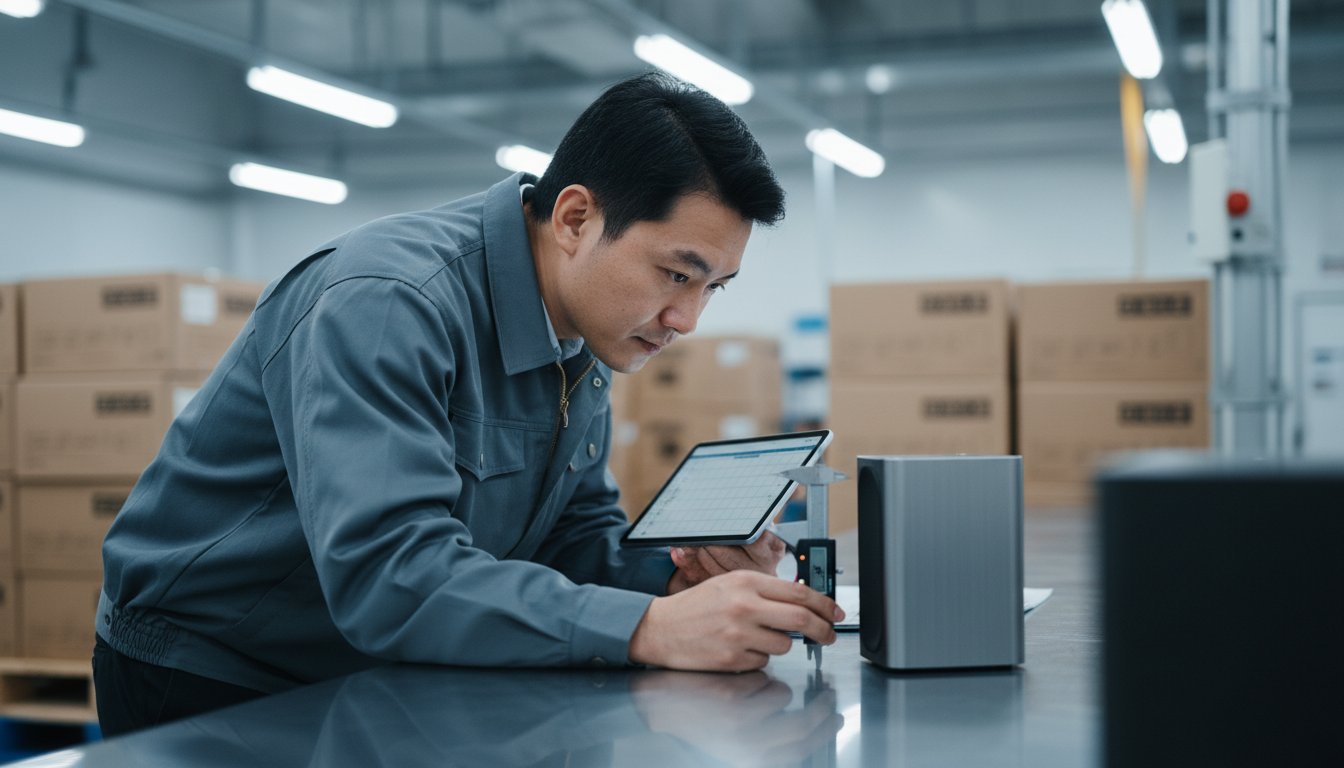

The time between placing an order and the final quality check is often a black box for importers. This uncertainty breeds risk: the risk of delays, inconsistent quality, and the nightmare of unboxing a finished shipment only to find a critical defect across every unit. Feeling powerless once production starts is a common, and potentially costly, position for any business to be in.
But what if you could gain crucial visibility right in the middle of the manufacturing process? A professional during production inspection service provides exactly that-your eyes and ears on the factory floor, identifying problems while they are still small and correctable. It’s the most effective way to avoid discovering a major issue when it’s already too late to fix it without significant financial loss.
In this ultimate guide for 2026, we explain exactly what this inspection is, when you need it, and how it acts as a critical course-correction tool. You’ll learn how to use the inspection report to fix issues before they escalate, giving you the control to protect your business from costly manufacturing errors and ensure your production stays on track.
Key Takeaways
- Learn how to identify and correct manufacturing defects early in the production cycle, preventing them from impacting your entire order.
- Pinpoint the specific risk factors that make a DUPRO a non-negotiable investment for protecting your business and securing your shipment.
- Understand what a professional during production inspection service actually checks on-site to ensure your products meet critical quality standards.
- Discover how to use your inspection report as a powerful tool to enforce corrective actions with your supplier, saving you from costly errors.
What is a During Production Inspection (DUPRO)?
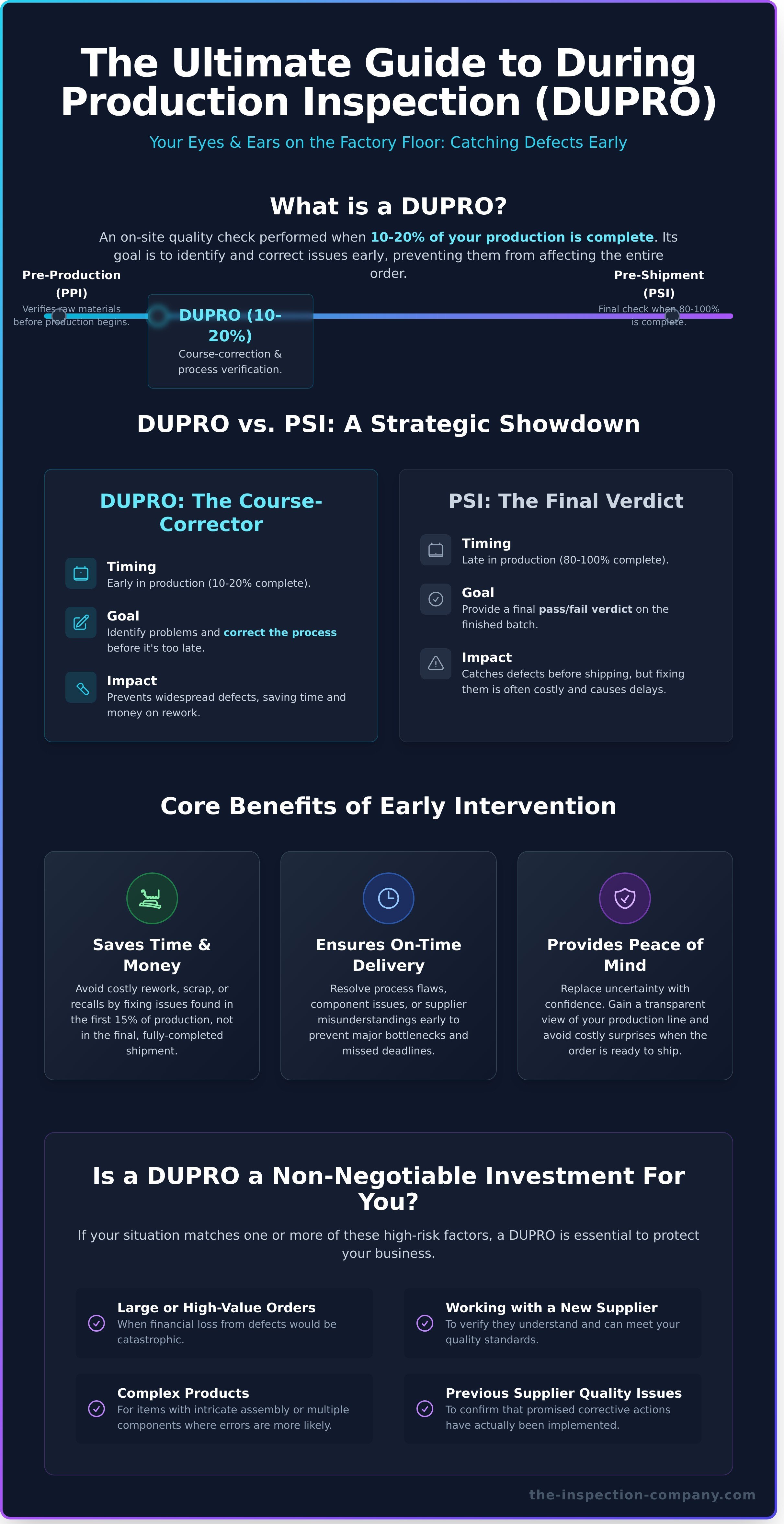
A During Production Inspection, commonly known as DUPRO, is an on-site quality control check performed when 10-20% of your production run is complete. Its primary purpose is to identify quality deviations and manufacturing defects early in the process, before they affect your entire order. This type of in-process check is a fundamental component of quality control in modern Inspection in manufacturing, allowing for real-time adjustments rather than post-production crisis management.
Think of it like checking the ingredients and recipe midway through baking a cake, not just tasting the final product. A professional during production inspection service gives you the critical opportunity to intervene and correct issues, ensuring the rest of the production run meets your exact specifications. This inspection is strategically positioned between a Pre-Production Inspection (PPI), which verifies raw materials, and a Pre-Shipment Inspection (PSI), which is the final check before your goods leave the factory.
DUPRO vs. Pre-Shipment Inspection (PSI): A Quick Comparison
While both are essential for quality assurance, DUPRO and PSI serve distinct functions at different stages of the production cycle. Understanding the difference is key to mitigating risk effectively.
- Timing: A DUPRO is conducted early, at 10-20% completion. A PSI occurs when production is 80-100% complete and packed for shipping.
- Goal: DUPRO is designed for course-correction. It verifies that initial production is on track. A PSI is a final pass/fail verdict on the entire batch.
- Impact: DUPRO prevents widespread defects from multiplying across the whole order. A PSI catches existing defects before they are shipped, which can be too late to fix without costly delays.
The Core Benefits of Early Intervention
Implementing a DUPRO provides invaluable advantages that protect your investment and brand reputation. The power of early intervention cannot be overstated.
- Saves Time and Money: Identifying a problem after producing only 15% of an order is far less damaging than discovering it in a fully completed shipment. This avoids the high costs of large-scale rework, scrap, or even a complete product recall.
- Ensures Production Stays on Schedule: By spotting process flaws or supplier misunderstandings early, you can resolve bottlenecks before they cause significant production delays and missed deadlines.
- Provides Peace of Mind: A DUPRO offers a transparent view into your production line, giving you control over your supply chain. It replaces uncertainty with confidence, ensuring there are no costly surprises when your order is ready to ship.
When is a DUPRO a Non-Negotiable Investment?
While a Pre-Shipment Inspection (PSI) is a standard final check, a During Production Inspection (DUPRO) is a strategic intervention. Not every order requires this level of oversight, but for certain high-stakes situations, a during production inspection service is the most effective tool for mitigating significant financial and reputational risk. It allows you to identify and rectify problems on the factory floor before they compromise your entire order.
Use this guide to determine if your production run falls into a high-risk category where a DUPRO is an essential investment.
High-Risk Scenarios Demanding a DUPRO
If your situation matches one or more of these points, the risk of proceeding without a mid-production check is dangerously high. A DUPRO provides the critical oversight needed to protect your investment.
- Large or High-Value Orders: When a total or partial loss of the order would be financially catastrophic, you cannot afford to wait until the end of production to discover systemic defects.
- Working with a New Supplier: A first-time production run is filled with unknowns. A DUPRO verifies that the supplier understands your quality standards and has implemented them correctly from the start.
- Complex Products: Items with multiple components, intricate assembly steps, or specialized functions have more opportunities for error. An early inspection can catch assembly mistakes or component failures before they are replicated across thousands of units.
- Previous Quality Issues with a Supplier: If a returning supplier has failed to meet standards in the past, a DUPRO is non-negotiable. It is the only way to confirm that corrective actions have been successfully implemented and are not just empty promises.
Products with Strict Quality or Compliance Requirements
For certain product categories, quality is not subjective-it is defined by precise technical standards, regulatory compliance, and consumer safety. In these cases, catching deviations early is paramount.
- Technical and Electronic Goods: For products like machinery, electronics, or medical devices, functional integrity is everything. While many top-tier manufacturers consult with programs like the NIST Manufacturing Extension Partnership to improve their internal processes, an independent during production inspection service is crucial to verify that critical components and assembly standards are being met in real-time.
- Garments and Textiles: Issues like color consistency across dye lots, fabric defects, or incorrect stitching can render an entire shipment unsellable. A DUPRO identifies these problems when only a fraction of the order is complete, allowing for immediate correction.
- Products Requiring Certification: If your product must meet specific certifications (e.g., RoHS, REACH, FDA), an early inspection can verify that the correct, compliant raw materials are being used. Discovering a non-compliant material after production is complete is a costly disaster.
Ultimately, viewing a DUPRO as a mere expense is a critical mistake. It is an investment in proactive risk management-a necessary step to avoid costly surprises, protect your brand, and ensure your final product meets the standards you and your customers expect.
The Inspector's Playbook: What's Checked During a DUPRO?
When our inspector arrives on-site, they are not simply taking a casual look. They operate from a detailed playbook co-created by you and our quality experts. This plan is built on two core pillars: your detailed product specifications and the internationally recognized AQL (Acceptance Quality Limit) standard. This ensures an objective, data-driven assessment, not a subjective opinion.
A during production inspection service is a critical snapshot in time. It reveals the reality of your production run, providing the intelligence you need to make corrective decisions before minor issues become costly, shipment-delaying problems. Here is a walkthrough of what our inspector evaluates.
Verifying Raw Materials and Components
The quality of the final product begins with the quality of its parts. An inspector meticulously verifies that the materials and components being used are the exact ones you approved. This early check is designed to stop problems at the source. It includes:
- Confirming materials match the approved "golden sample" and technical specifications.
- Identifying any sub-standard components that could lead to product failure.
- Checking for proper storage and handling to prevent damage from factors like moisture or contamination.
Assessing Semi-Finished and Finished Products
This is where we see how your product is truly coming together. Using the AQL standard, the inspector pulls a random sample of both partially assembled and fully completed goods from the line. This sample provides a statistically significant representation of the entire batch. Checks include:
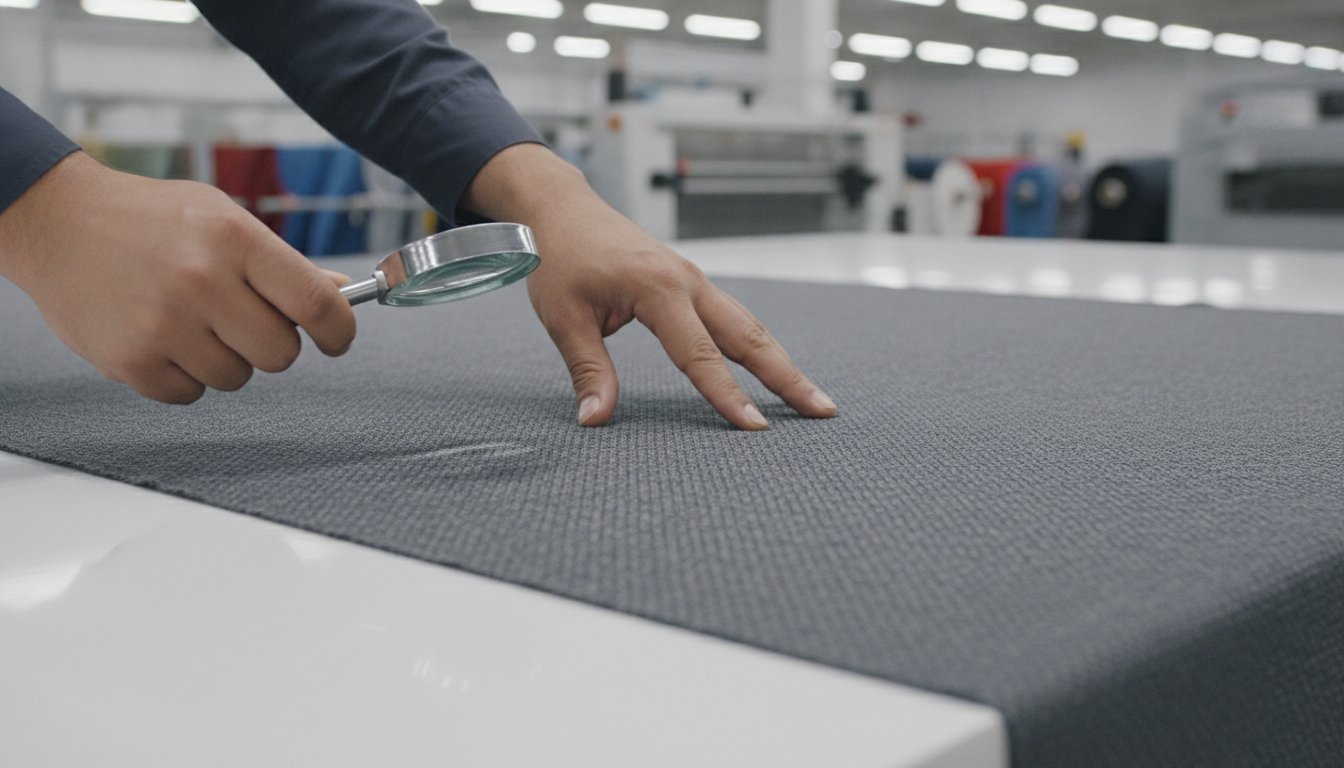
- Visual and Workmanship Checks: Identifying cosmetic defects like scratches, color deviations, poor stitching, or improper finishing.
- Functional and Safety Tests: Verifying the product works as intended, such as testing electronics, checking moving parts, or performing basic safety assessments.
- Measurements and Specifications: Ensuring all dimensions, weights, and technical parameters match your specification sheet precisely.
Monitoring the Production Line and Schedule
A reliable during production inspection service goes beyond the product itself to assess the factory’s process. An efficient, well-managed production line is less likely to produce defects. Our inspector evaluates the factory's internal quality control systems, identifies potential bottlenecks, and confirms that the production quantity aligns with the schedule you were given. This provides crucial insight into whether your supplier can meet both your quality standards and your delivery deadline.
From Defect to Correction: Acting on Your DUPRO Report
A report from your during production inspection service is more than a summary of findings; it is a critical tool for action. Receiving this report initiates a vital communication flow: our inspector provides objective data to you, and you use that data to drive improvements with your supplier. The goal is not to assign blame but to collaboratively solve problems before they escalate, protecting your entire production run from costly errors.
Understanding Your Inspection Report
To act effectively, you must first understand the data. Your report will categorize defects to help you prioritize: Critical (unsafe or non-compliant), Major (likely to cause product failure or customer returns), and Minor (slight aesthetic issues). Analyze the high-resolution photos provided; they offer crucial context that words alone cannot convey. Pay close attention to the inspector's overall summary, which provides a professional assessment of the production's status and recommends a "Pass," "Fail," or "Pending" result.
Implementing a Corrective Action Plan (CAP)
When your report indicates issues, a formal Corrective Action Plan (CAP) is the most effective way to manage the response. This structured approach ensures problems are not just patched over but are systematically resolved. A professional DUPRO inspection empowers you with the evidence needed to demand this level of accountability from your factory.
Follow these essential steps:
- Step 1: Communicate Immediately. Forward the complete, unaltered inspection report to your primary contact at the factory. Time is critical while goods are still on the line.
- Step 2: Identify the Root Cause. Do not accept a simple promise to "fix it." Ask your supplier to investigate and explain why the defect occurred. Was it a machine error, a material issue, or a training gap?
- Step 3: Demand a Solution. Require a written plan detailing how they will correct existing defective units and, more importantly, what process changes they will implement to prevent recurrence in the rest of the batch.
- Step 4: Verify the Fix. Based on the severity of the defects, decide if a follow-up inspection is necessary to confirm the corrective actions have been successfully implemented before production continues.
Always maintain a firm but professional tone with your supplier. Frame the conversation around mutual goals: delivering a high-quality product and maintaining a successful long-term partnership. Clear, fact-based communication is the key to turning a potential production disaster into a valuable quality improvement. For expert assistance in managing supplier communications and quality control, contact The Inspection Company today.
Why The Inspection Company is Your Partner on the Ground
Understanding the principles of a during production inspection service is the first step. The next is implementation-a challenge when you are thousands of miles away. This is where a reliable partner becomes your most critical asset. With over 25 years of experience, The Inspection Company transforms quality control theory into a practical, on-the-ground advantage for your business. We provide the control and confidence you need to manage your production cycle and avoid costly surprises before your shipment sails.
Our role extends beyond simple verification. We act as an integrated part of your supply chain team, providing the data and insights necessary to maintain quality standards throughout manufacturing. An effective inspection is not just a checkpoint; it's an active risk management tool that prevents small errors from escalating into large-scale financial losses and production delays.
Fast, Detailed Reporting You Can Act On
When production is underway, every hour counts. A minor issue can become a major defect if not addressed immediately. We guarantee a comprehensive inspection report-complete with high-resolution photos and clear commentary-delivered to you within 24 hours. This speed is critical, allowing you to make informed decisions and instruct your supplier on corrective actions while there is still time. Our secure online dashboard provides transparent, 24/7 access to all bookings and reports.
Experienced Inspectors, European Management
Our unique strength is our structure: local, highly-trained inspectors guided by European management. This ensures you receive the benefit of on-the-ground expertise and an unwavering commitment to international quality standards. Our inspectors are your trusted ‘eyes and ears’ on the factory floor, trained not just to identify problems but to document them with precision. Trust us to protect your investment and brand reputation. Get a Free Quote for Your During Production Inspection Today.
Secure Your Supply Chain with Proactive Quality Control
In today's competitive market, waiting until the final stage to verify quality is a risk you cannot afford. As we've detailed, a During Production Inspection (DUPRO) is your essential mid-process safeguard, empowering you to catch and correct defects early. This proactive approach not only prevents costly rework and shipping delays but also ensures your final product meets the exact standards your customers expect.
Partnering with a professional during production inspection service transforms this crucial task into a seamless, reliable process. With over 700 inspectors across Asia and a commitment to ISO 9001 certified quality, we deliver the on-the-ground intelligence you need-including detailed reports with photos-within 24 hours. Don't leave your brand's reputation to chance.
Secure your production quality. Book your During Production Inspection now. Take the definitive step toward a more predictable and profitable supply chain today.
Frequently Asked Questions
What is the ideal percentage of production completion to schedule a DUPRO?
The ideal time to schedule a During Production (DUPRO) inspection is when 20-50% of your order is complete. This timing is critical. It ensures enough finished units are available for a valid statistical sampling, providing a clear picture of quality. At the same time, it is early enough in the production cycle to implement corrective actions without causing significant delays or cost overruns. Intervening at this stage is key to preventing systemic issues from affecting the entire batch.
How much does a during production inspection service typically cost?
The cost for a during production inspection service typically ranges from $250 to $350 USD per man-day. This all-inclusive price generally covers the inspector's full day of work, travel expenses, and the preparation of a detailed inspection report with photos and findings. The final cost can vary based on the factory's location and the complexity of the product being inspected. This investment is minimal compared to the potential cost of rectifying widespread defects discovered after shipment.
What happens if the factory fails the DUPRO inspection?
If a factory fails a DUPRO inspection, you receive a detailed report outlining all identified defects and non-conformities. This allows you to immediately present the evidence to your supplier and demand corrective actions. Common steps include requiring the factory to rework the defective items and addressing the root cause of the problem. A failed inspection provides the leverage needed to enforce your quality standards before the entire production run is compromised, saving you from costly disputes later.
Can a DUPRO guarantee that my entire shipment will be defect-free?
No inspection can guarantee a 100% defect-free shipment, as inspections are based on statistical sampling (AQL). However, a DUPRO inspection significantly reduces the risk of widespread quality issues by catching problems early. It provides a critical snapshot of your production quality and process control. For maximum security and to verify that issues found during the DUPRO were corrected, we strongly recommend complementing it with a Final Pre-Shipment Inspection (PSI) before the goods are dispatched.
Do I need to provide a checklist for the inspector?
While we have standard inspection protocols, providing your own detailed checklist is highly recommended for the best results. A comprehensive checklist should include your product specifications, quality standards, known potential defects, and specific packaging requirements. This document ensures our inspector focuses on the criteria that are most critical to your business and your customers. The more detailed your information, the more targeted and effective the inspection will be, preventing misunderstandings and ensuring your standards are met.
What's the difference between a DUPRO and a full-time production monitoring service?
A during production inspection service (DUPRO) is a one-day inspection that provides a snapshot of your production at a specific stage. In contrast, full-time production monitoring places an inspector at the factory for an extended period, often daily. DUPRO is ideal for most standard orders to verify quality mid-process. Production monitoring is reserved for highly complex, high-value, or time-sensitive orders where constant oversight is necessary to manage risks and ensure strict adherence to deadlines.
How quickly can you arrange an inspection in China or Vietnam?
We can typically arrange for an inspector to be on-site at a factory in major manufacturing hubs across China and Vietnam within 48 to 72 hours. To expedite the process, please provide us with the factory's contact information, address, and your product details as soon as possible. Our efficient booking and coordination process is designed to provide you with a fast and reliable response, ensuring your production schedule faces minimal disruption while securing your quality standards.