
If a single shipment arrives with a 12% defect rate tomorrow, does your bottom line have the $50,000 cushion required to absorb the loss? For most global importers, de-risking your international supply chain isn't just a strategic goal for the boardroom; it's a daily survival requirement for 2026. You already know that relying on a single factory or a verbal agreement is no longer enough to protect your capital. Between shifting trade barriers and the rising cost of social compliance violations, the margin for error has completely vanished.
This operational guide provides the exact steps to identify hidden vulnerabilities and secure your sourcing against quality failures and sudden disruptions. We believe one day of inspection can save months of trouble. We'll show you how to implement verified supplier audits, establish a functional "Plan B" for logistics, and ensure every shipment meets your specifications before it leaves the port. By the end of this article, you'll have a clear roadmap to achieve predictable product quality, verified compliance, and significantly reduced financial exposure.
Key Takeaways
- Understand why the global shift to "just-in-case" logistics makes de-risking your international supply chain the most critical operational priority for 2026.
- Learn how to conduct a comprehensive self-audit and implement "Risk Mapping" to expose hidden vulnerabilities across every component of your product.
- Discover how to navigate the "China + 1" strategy effectively while avoiding the dangerous "location trap" that often leads to quality failures.
- Master a proven 5-step framework for vetting suppliers and catching production errors early through proactive factory audits and DuPro inspections.
- Recognize why independent, third-party oversight is the ultimate tool to avoid costly surprises and secure your global sourcing operations.
The Landscape of Supply Chain Risk in 2026
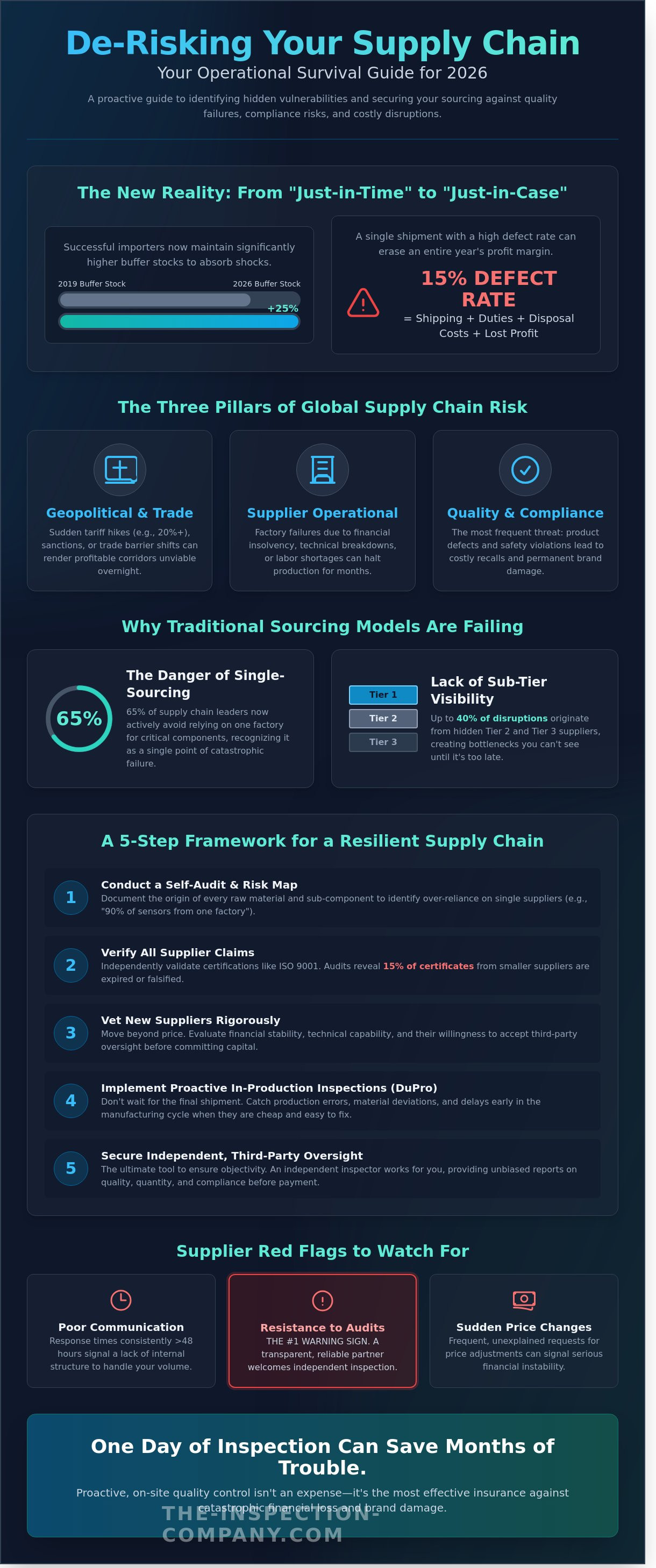
De-risking your international supply chain is no longer an optional strategy for high-growth companies; it's a fundamental requirement for survival. In 2026, de-risking means the proactive identification and mitigation of vulnerabilities before they manifest as financial losses. The era of "just-in-time" manufacturing has ended, replaced by "just-in-case" models where businesses prioritize resilience over razor-thin inventory margins. Most successful importers now maintain 25% higher buffer stocks than they did in 2019 to insulate themselves from sudden disruptions.
Effective supply chain risk management requires a dual approach. Strategic de-risking involves high-level decisions like shifting production from one country to another to avoid geopolitical friction. Operational de-risking focuses on the ground level, ensuring that every factory adheres to strict quality standards through professional quality control services. We stop problems before your shipment sails because the cost of inaction is too high. A single shipment with a 15% defect rate doesn't just delay sales; it can erase an entire year’s profit margin once you factor in shipping, duties, and disposal costs.
The Three Main Categories of Global Risk
Geopolitical and trade risks dominate the headlines in 2026. Sudden 20% tariff hikes or trade sanctions can make a previously profitable corridor unviable overnight. Supplier operational risks are equally dangerous. Financial insolvency or technical failures at a factory can halt your production for months. Finally, quality and compliance risks remain the most frequent threat. Product defects and safety violations lead to costly recalls and permanent brand damage. One day of inspection can save months of trouble and protect your bottom line from these predictable failures.
Why Traditional Sourcing Models are Failing
Single-sourcing is a dangerous gamble in a volatile global economy. Relying on one factory for critical components creates a single point of failure that 65% of supply chain leaders now actively avoid. Most businesses also suffer from a lack of visibility into Tier 2 and Tier 3 suppliers. These hidden links in the chain often create bottlenecks that you won't see until it's too late. While the shift toward "friend-shoring" has improved political stability, it has created new challenges in quality consistency. Moving production to a new, politically friendly region doesn't guarantee that the local workforce understands your technical specifications. Without rigorous on-site oversight, de-risking your international supply chain remains an incomplete process. You can't manage what you don't measure on the factory floor.
Identifying Hidden Vulnerabilities in Your International Supply Chain
Effective de-risking your international supply chain requires more than a cursory glance at your Tier 1 partners. You need to look deeper into the sub-tiers where 40% of disruptions typically originate. A robust self-audit starts with Risk Mapping. This process involves documenting the origin of every raw material and sub-component. If a single factory in one province provides 90% of your specialized sensors, you've identified a critical vulnerability. As businesses learn to De-Risk Supply Chains, they realize that visibility into the "N-tier" is no longer optional for 2026 operations.
Social compliance and independent verification are equally vital. Don't take a supplier's word for their ISO 9001 or Sedex status. In 2024, audits revealed that 15% of certificates presented by smaller manufacturers were either expired or falsified. Verifying these documents independently through a third party protects your brand from the legal and reputational fallout of labor violations or quality failures. One day of inspection can save months of trouble later in the cycle.
The Red Flags of an Unreliable Supplier
Watch for inconsistent communication. If a supplier takes more than 48 hours to respond during peak production, they likely lack the internal structure to handle your volume. Resistance to third-party on-site audits is the most significant warning sign. A transparent partner welcomes an independent inspection because they have nothing to hide. Sudden, frequent requests for price adjustments or changes to payment terms often signal underlying liquidity issues that could lead to "ghosting" mid-production.
Mapping Your Critical Path
Analyzing your critical path means identifying where your timeline is most fragile. You must assess three specific areas to ensure de-risking your international supply chain is successful:
- Single Points of Failure: Identify components with no alternative source. In 2025, 22% of electronics delays were traced back to a single specialized chip manufacturer with no backup.
- Geographic Concentration: If 100% of your assembly happens in one specific region, a local power crisis or political shift can halt your entire business. Aim for a 70/30 split across different regions to maintain flow.
- Lead Time Buffers: Evaluate transit routes. Relying on a 30 day window for sea freight without a 10 day contingency is a recipe for stockouts.
Stopping problems before your shipment sails is the only way to maintain control. By identifying these vulnerabilities now, you transform your supply chain from a liability into a competitive advantage. It's about moving from reactive fire-fighting to proactive quality management.
Strategic Relocation vs. Operational Oversight: Finding the Balance
By 2026, the "China + 1" strategy has transitioned from a defensive hedge to a standard operational requirement. While China remains the world's primary manufacturing hub, accounting for roughly 28% of global output, 65% of Western importers now diversify their production across secondary hubs like Vietnam, India, or Mexico. This diversification is a primary tactic for de-risking your international supply chain. However, a dangerous "location trap" exists. Many businesses move production to a new country and assume the geographical shift solves their problems. It doesn't. Relocation without rigorous quality protocols simply trades geopolitical risk for operational failure.
China offers a manufacturing maturity developed over 40 years. Its infrastructure, component ecosystems, and skilled labor pools are difficult to replicate. In contrast, emerging markets often struggle with fragmented sub-supplier networks. If you move assembly to Vietnam but still source 80% of your components from Shenzhen, you haven't fully de-risked; you've just added a logistical layer. True security comes from oversight, not just a change of address. You must prioritize boots-on-the-ground management to ensure that a new factory in India meets the same rigorous standards as an established partner in Ningbo.
The Challenges of New Market Entry
Entering a new territory brings immediate friction. In 2025, data indicated that new factory partnerships in emerging markets saw a 12% higher defect rate during the first six months compared to established vendors. You'll likely face infrastructure gaps, such as inconsistent power grids or congested port facilities, which can add 10 to 14 days to your lead times. Navigating local regulations and cultural business nuances also creates a steep learning curve. These "soft" risks often manifest as "hard" financial losses if you don't account for them during the transition phase.
Maintaining Consistency Across Multi-Country Sourcing
Diversification increases complexity. When your production is split across multiple borders, maintaining brand consistency becomes a significant hurdle. You cannot rely on the factory's internal reports to judge performance. To succeed, you must standardize your quality checklists across every global site. Centralized reporting is essential to compare supplier KPIs objectively and identify which partners are underperforming. Utilizing independent quality inspection services is the only reliable method to ensure parity across your network. It's the most effective way of de-risking your international supply chain because it provides a single, professional standard of truth. We stop problems before your shipment sails, ensuring that "Made in Vietnam" meets the exact same specifications as "Made in China." One day of inspection can save months of financial trouble and protect your reputation from costly surprises.
A 5-Step Framework for De-Risking Your International Supply Chain
Success in global trade isn't about luck; it's about control. Implementing a structured process for de-risking your international supply chain ensures you don't pay for mistakes made thousands of miles away. This 5-step framework provides the visibility you need to stop problems before your shipment sails. One day of inspection can save months of trouble.
Step 1 & 2: Vetting and Early Intervention
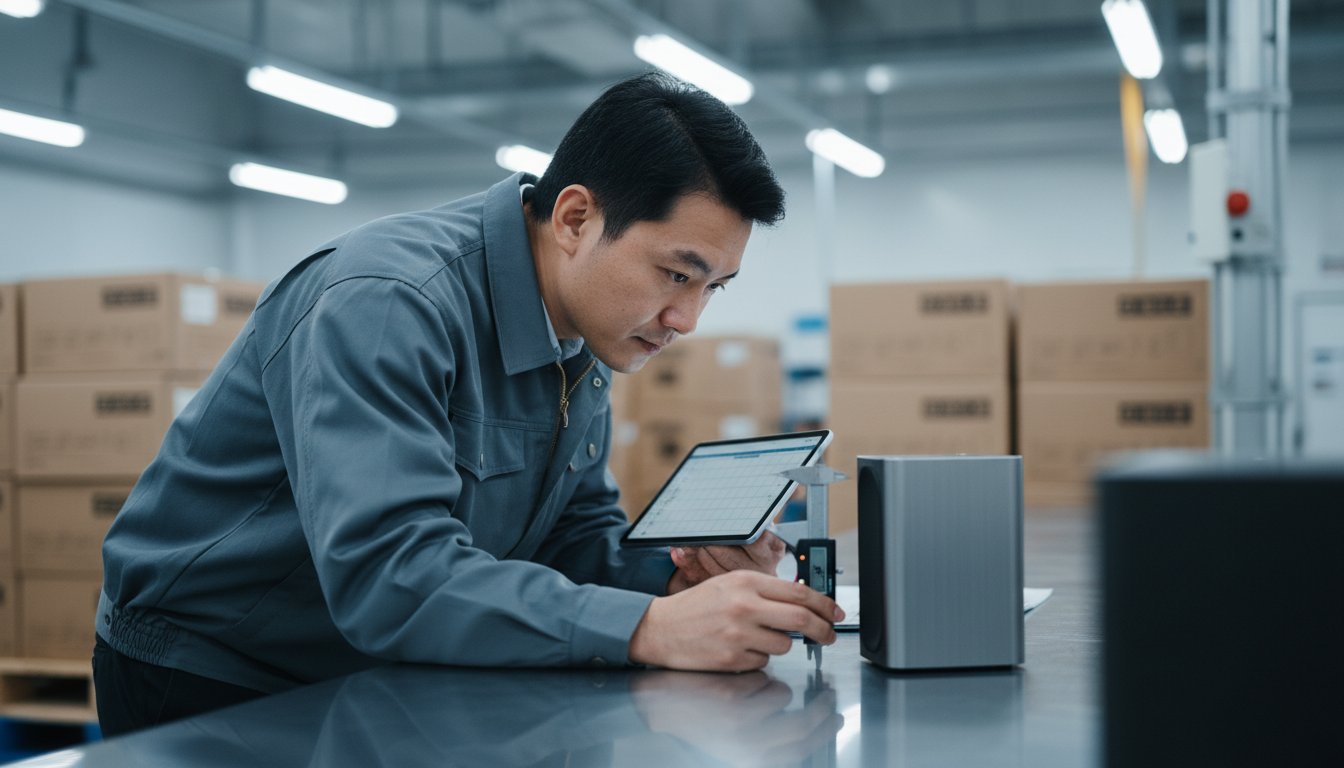
Before any deposit is paid, a comprehensive factory audit is essential. This isn't a simple walkthrough. A professional audit assesses technical capacity, machinery maintenance, and social compliance standards like ISO 9001 or Sedex. You need to know if the factory can actually produce your order at the required quality level. Once production begins, don't wait until the end to check for errors.
- Catch defects early: Identifying a systemic error when only 20% of the order is finished is 10x cheaper than finding it at 100% completion.
- First Article Inspection (FAI): For new product launches, an FAI verifies that the factory's initial output matches your technical drawings exactly before mass production scales up.
- During Production (DuPro): These inspections allow for real-time corrections, preventing a total loss of materials and time.
Step 3, 4 & 5: Final Verification and Data
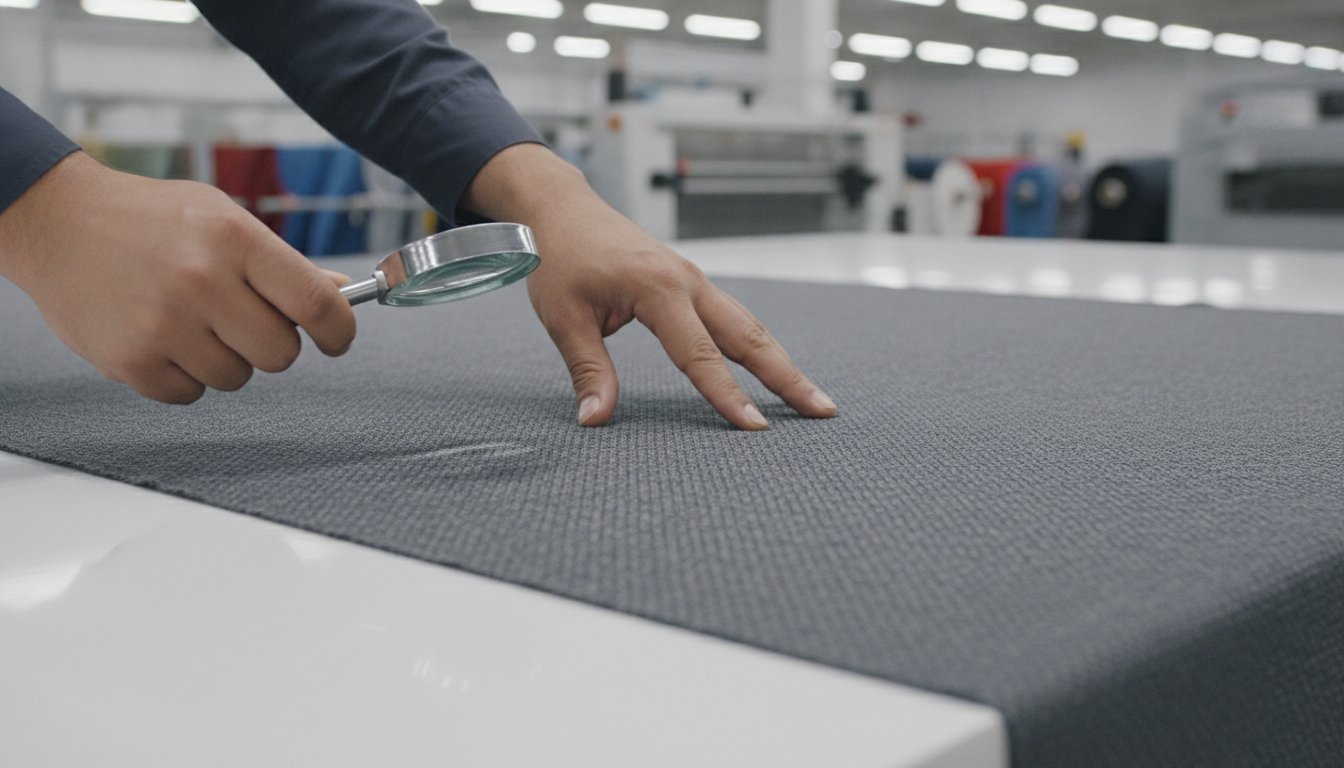
The final stages of de-risking your international supply chain focus on verification and logistics security. The Pre-Shipment Inspection (PSI) is your last chance to stop defective goods. Using AQL (Acceptable Quality Level) sampling, typically following the ISO 2859-1 standard, inspectors provide a statistically sound "Go/No-Go" decision based on your specific tolerance for minor, major, and critical defects.
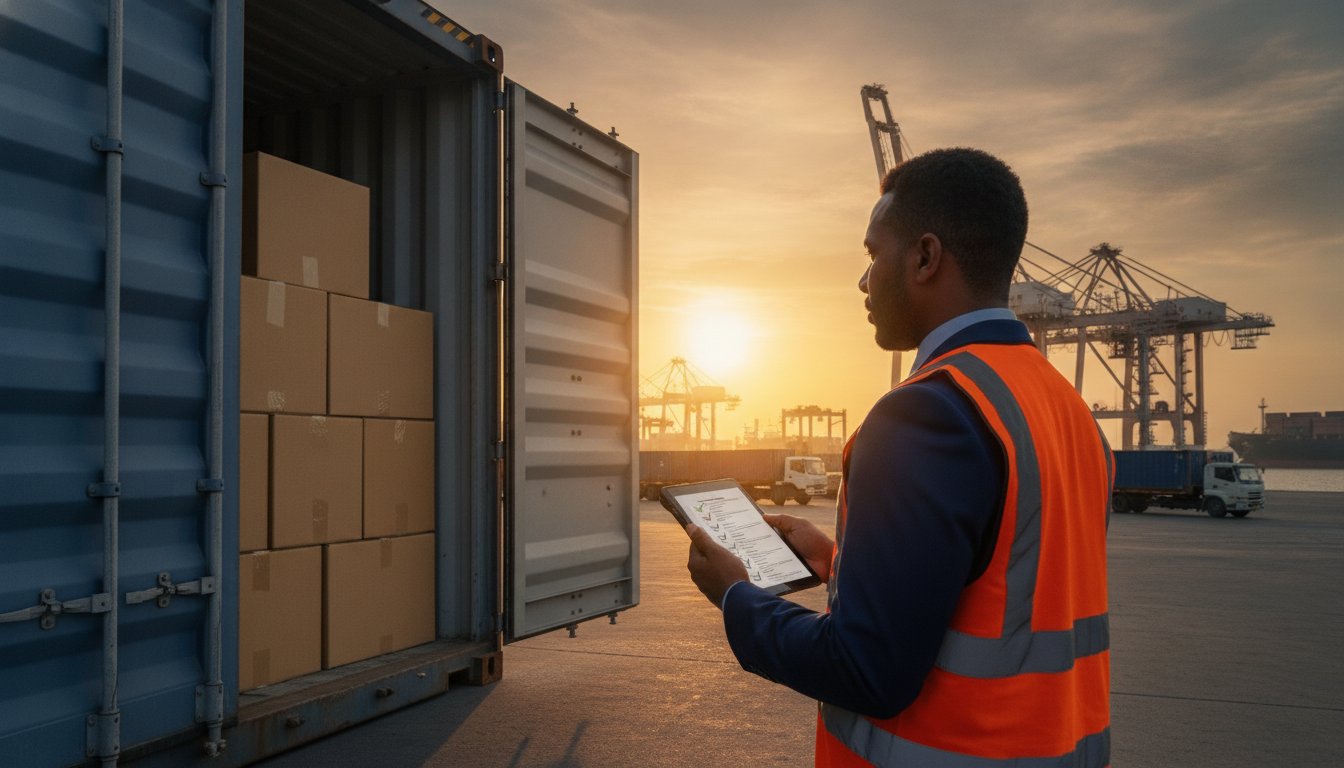
- Container Loading Inspection (CLI): We supervise the loading process to ensure the correct quantity is packed and that the packaging is robust enough for transit. This prevents "short shipments" and transit damage caused by poor stacking.
- Data Centralization: Managing PDF reports via email is a risk in itself. The TIC Quality Platform digitizes all inspection data, allowing you to track supplier performance trends over time.
- Actionable Insights: By centralizing your data, you can identify which factories consistently fail specific tests, allowing for data-driven procurement decisions.
With over 25 years of experience and European management, we understand the high stakes of Asian manufacturing. Our team provides the transparency required to manage complex logistics without the fear of costly surprises or defective inventory arriving at your warehouse.
Don't leave your product quality to chance. Book a professional inspection today to secure your 2026 shipments.
Building a Resilient Future with Independent Inspection
De-risking your international supply chain requires more than just strong contracts; it demands boots on the ground. Relying solely on a factory’s internal quality reports is a gamble that most modern businesses cannot afford. Independent, third-party oversight serves as the ultimate tool for transparency. It bridges the gap between your expectations and the actual output of a factory thousands of miles away. The Inspection Company acts as your professional eyes and ears across Asia, providing a level of scrutiny that internal staff might overlook or intentionally hide.
Our unique advantage lies in the fusion of European management standards with deep local expertise. With over 25 years of experience, we understand the cultural nuances of Asian manufacturing while maintaining the strict quality benchmarks required by Western markets. This combination ensures that communication is clear, standards are uncompromising, and your interests are always prioritized over factory convenience.
The ROI of Risk Mitigation
The financial math of quality control is straightforward. A standard Pre-Shipment Inspection (PSI) typically costs around $300 per man-day. Compare this to the cost of a full product recall, which the Consumer Product Safety Commission (CPSC) estimates can exceed $100,000 for even small batches when factoring in shipping, disposal, and legal fees. Beyond direct costs, poor quality destroys your reputation with major retailers and jeopardizes Amazon account health. High return rates lead to suppressed listings and lost Buy Box eligibility. One day of inspection saves months of trouble.
- Prevent Total Loss: Catching a batch of defective electronics before they leave the port saves the entire investment.
- Retailer Confidence: Providing independent reports to buyers at Target or Walmart proves your commitment to 2026 compliance standards.
- Data-Driven Decisions: Use inspection data to identify which suppliers are improving and which are becoming a liability.
Getting Started with The Inspection Company
Securing your production shouldn't be a bureaucratic headache. We've streamlined our operations into a simple 3-step booking process. First, you submit a Request through our platform. Second, we Coordinate directly with your supplier to schedule the visit. Third, you receive a comprehensive Report detailing every finding with high-resolution photos and video evidence.
Speed is essential in a volatile market. Our 24-hour report turnaround is a critical speed-to-market factor, allowing you to approve or reject shipments without missing your vessel's departure. Don't leave your brand's future to chance. You can learn more about our team and 25 years of experience in helping businesses master the art of de-risking your international supply chain. Take the first step toward a secure, predictable, and resilient supply chain today.
Secure Your Operations for 2026 and Beyond
Navigating the global trade complexities of 2026 requires a shift from passive observation to proactive control. You've seen how strategic relocation and a structured 5-step framework provide the foundation for stability. However, the final line of defense is always physical verification at the source. One day of inspection saves months of financial trouble. It's the only way to ensure your suppliers meet the standards you've set.
The Inspection Company provides the transparency you need with over 700 professional inspectors across Asia. We deliver detailed photo reports within 24 hours of the site visit, ensuring you have the data to make informed decisions before goods leave the factory. As an ISO 9001 certified firm under European management, we bridge the gap between Western quality standards and local production realities. Effectively de-risking your international supply chain means you don't leave your reputation to chance. You gain total oversight without the overhead of a local office.
Stop costly surprises before they sail—book your inspection today
You've built a solid strategy. Now, ensure it's executed perfectly at every milestone.
Frequently Asked Questions
What is the most effective way to de-risk a supply chain in 2026?
The most effective way to manage de-risking your international supply chain in 2026 is through a "China Plus One" strategy paired with real-time digital transparency. Data from 2025 shows that 67% of successful importers now diversify production across at least two distinct geographical regions. You shouldn't rely on a single source for your goods.
Combining regional diversity with professional on-site inspections ensures you maintain quality standards while avoiding total shutdown risks from local disruptions. This dual approach provides a safety net that protects your bottom line from unpredictable geopolitical shifts.
How much does it cost to implement a de-risking strategy?
Implementing a professional strategy usually costs between 1% and 3% of your total procurement value. A standard on-site inspection in Asia averages $250 to $300 per man-day. This small investment prevents massive financial hits. Statistics indicate that identifying a defect at the factory level is 10 times cheaper than handling a product recall once goods arrive.
You'll also need to budget for secondary supplier audits, which typically range from $500 to $900 depending on the factory's location and size. While these upfront costs exist, they're negligible compared to the 15% revenue loss businesses often face during a major supply chain break.
Is moving production out of China the only way to de-risk?
Moving production out of China isn't the only solution, as the country still accounts for 28.7% of global manufacturing output. Successful de-risking focuses on multi-sourcing rather than total relocation. Most experts recommend keeping 70% of production in established hubs while shifting 30% to emerging markets like Vietnam or India.
This balance maintains your cost efficiency while protecting your business against regional lockdowns or trade tariffs. It's about building a flexible network that doesn't collapse if one country experiences a disruption. Diversification within China, such as moving from coastal provinces to inland hubs, is also a valid tactic for many brands.
Can an inspection company help with social compliance and ESG goals?
Yes, an independent inspection company is vital for meeting ESG goals through structured social audits like Sedex or SA8000. These audits verify that your suppliers follow fair labor practices and environmental regulations. With 85% of consumers now demanding ethical transparency, these reports provide the documented proof your brand needs to stay competitive.
We check everything from wage records to waste management protocols to ensure your partners remain compliant. These audits prevent the 30% drop in brand value that often follows a public social compliance scandal. Regular monitoring ensures your supply chain stays clean and your reputation remains intact.
How often should I audit my international suppliers?
You should audit your primary international suppliers at least once every 12 months to ensure continued compliance. For new partners, the frequency should be higher. Conduct a comprehensive factory audit before the first order and follow up with a Pre-Production Inspection (PPI) for the next 3 shipments to ensure they meet your standards.
This rigorous schedule identifies potential failures early. It saves you from the 20% average loss associated with unverified new supplier relationships. Consistent auditing creates a culture of accountability at the factory level, which is essential for successful de-risking your international supply chain over the long term.
What happens if an inspection fails right before a shipment deadline?
If an inspection fails, you must stop the shipment immediately to prevent a total loss. While a failed report is frustrating, it's your last chance to fix defects before they leave the factory. Usually, a 48-hour re-work period solves minor issues. Shipping defective goods results in a 100% loss on that inventory plus wasted freight costs.
It's always better to delay a shipment for 5 days than to face a mass return. We provide a detailed report within 24 hours of the inspection, allowing you to make an informed decision. You can then negotiate with the factory to fix the errors at their expense before the final container is loaded.
How do I manage supply chain risks for an Amazon FBA business?
Managing Amazon FBA risks requires strict adherence to quality standards to keep your Return Dissatisfaction Rate below 10%. Use During Production (DuPro) inspections to catch defects when only 20% of the order is finished. This proactive approach ensures your inventory meets Amazon's rigorous requirements and packaging rules.
One day of inspection saves months of trouble with account suspensions or negative reviews that destroy your product's ranking. Catching errors early prevents the "Death of a Listing" that occurs when Amazon flags your products for quality issues. High-quality inventory is the only way to maintain a 4.5-star rating or higher in a competitive marketplace.