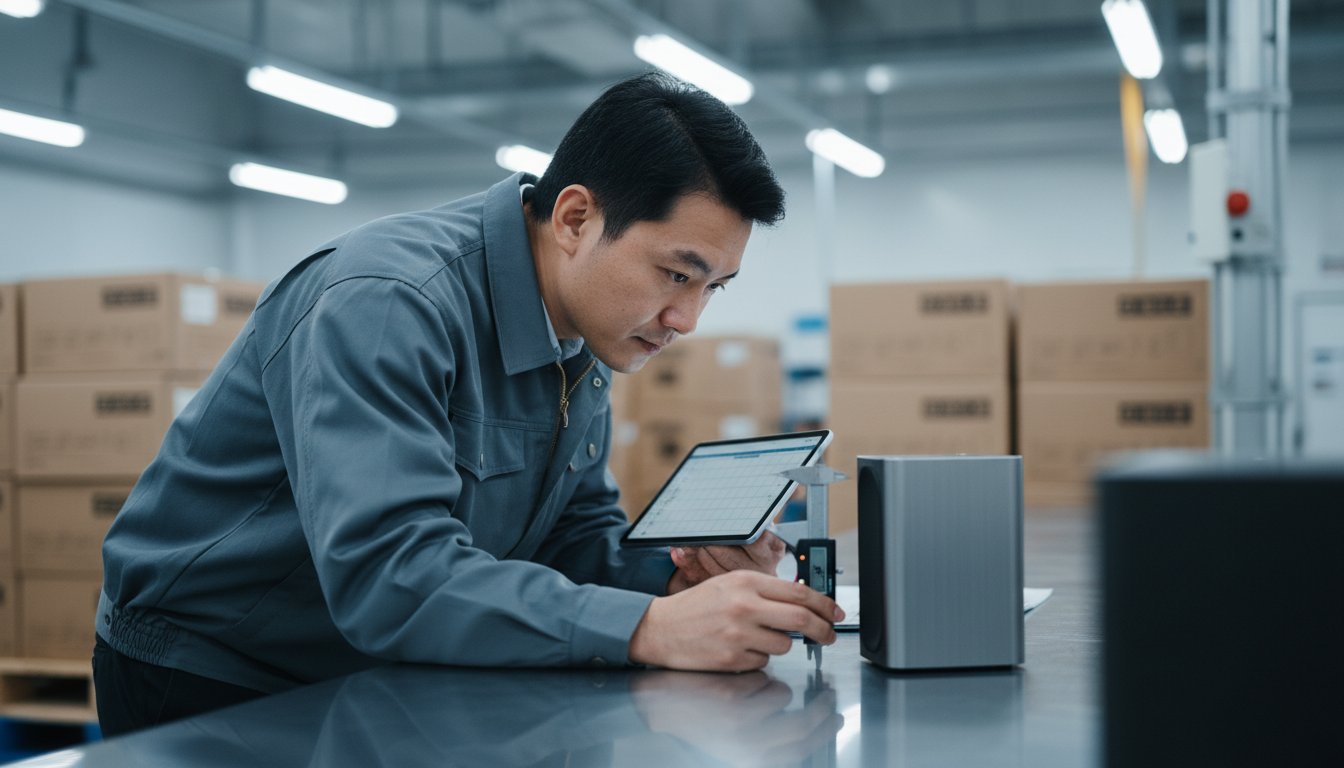

Imagine wiring $45,000 to a factory in Shenzhen, only to receive a container of electronics with a 15% failure rate three weeks later. You aren't alone. Industry data shows that 62% of importers cite quality inconsistencies as their primary source of anxiety. Achieving true peace of mind when sourcing overseas is difficult when you can't see the actual production floor or bridge a 12 hour time gap with complex technical requirements.
This level of risk shouldn't be the cost of doing business. It's a problem that requires a methodical solution. We'll show you how to transform these high-stakes gambles into a predictable, high-quality business process. This 2026 guide outlines the specific steps to establish a reliable "boots on the ground" presence in Asia and implement pre-shipment protocols that ensure zero-defect shipments every time.
Key Takeaways
- Understand the "Quality Fade" phenomenon and why initial samples often differ from mass-produced goods.
- Achieve true peace of mind when sourcing overseas by replacing unverified online badges with professional, on-site factory audits.
- Implement a multi-stage inspection strategy to catch defects early, ensuring you never pay for errors that could have been fixed on the factory floor.
- Bridge the accountability gap using detailed checklists and container loading inspections to ensure you receive exactly what you ordered.
- Learn how to scale your business safely by leveraging localized quality management expertise across major Asian manufacturing hubs.
Table of Contents
-
Step 1: Vetting Suppliers Through Professional Factory Audits
-
Scaling with Confidence: Why The Inspection Company is Your Best Partner
The Trust Deficit: Why Overseas Sourcing Creates Anxiety
Sourcing from manufacturing hubs in Asia or Eastern Europe in 2026 offers undeniable cost advantages, but it introduces a layer of anxiety that can paralyze a business. Distance is more than just miles; it's a barrier to oversight. Language barriers and cultural nuances often lead to miscommunications that don't surface until the container arrives at your warehouse. True peace of mind when sourcing overseas starts by acknowledging that a perfect sample does not guarantee a perfect shipment.
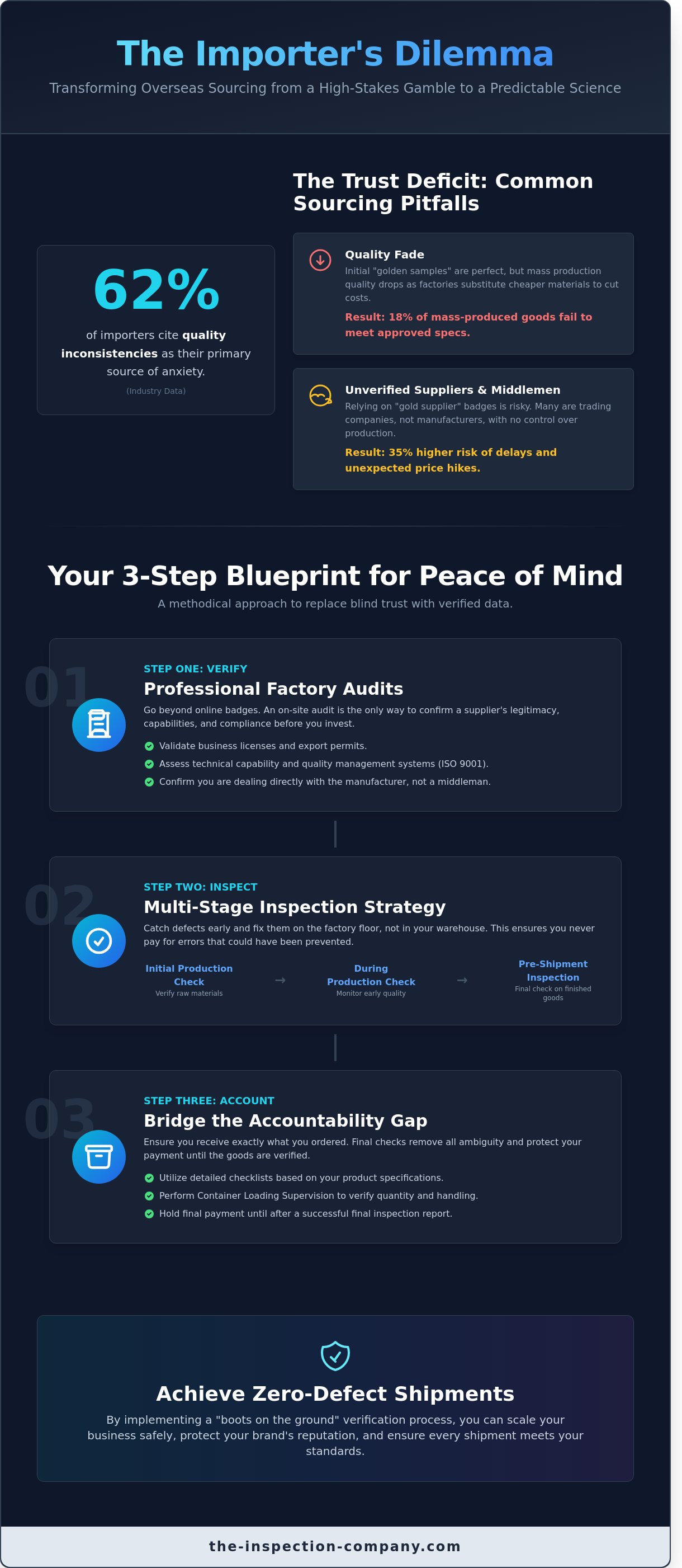
Quality Fade remains a persistent threat to your bottom line. A factory might use high-grade components for the initial 50 units to secure your deposit, then quietly substitute cheaper materials for the remaining 5,000 units to increase their margin. Data from 2025 quality audits showed that 18% of mass-produced goods failed to meet the specifications of the approved golden sample. This discrepancy is rarely caught by the factory's internal staff, who are incentivized to meet production quotas rather than quality benchmarks.
Making final payments before a third-party inspection is the most expensive mistake you can make. Once the money is transferred and the ship has sailed, your leverage disappears. Hoping for the best is not a procurement strategy. It's a gamble that often results in a 100% loss of the shipment value, as returning defective goods is logistically impossible and cost-prohibitive.
The Invisible Risks of Modern Supply Chains
Visibility often stops at the factory gate. You might trust your primary manufacturer, but you likely don't know who provides their raw materials or sub-components. Lack of transparency into sub-tier suppliers can lead to hidden defects or compliance violations that trigger Amazon account suspensions or costly product recalls. In the current market, supply chain risk management is a necessity for business survival. The Trust Deficit is the measurable gap between a buyer’s documented expectations and the factory’s actual production output.
The High Cost of Sourcing Errors in 2026
Inventory planning is tighter than ever. With port congestion in major hubs like Singapore or Long Beach causing average delays of 14 days in early 2026, you can't afford a faulty batch. One bad production run can wipe out a full year of profit for a small to medium enterprise. If you deliver poor quality to your end consumer, the cost isn't just the refund; it's the permanent loss of brand reputation. One day of inspection can save months of trouble. Achieving peace of mind when sourcing overseas requires a move from blind trust to verified data before your goods leave the factory floor.
Step 1: Vetting Suppliers Through Professional Factory Audits
A professional factory audit serves as the bedrock of any secure procurement strategy. You can't rely on a "gold supplier" badge found on B2B platforms. These badges are frequently paid marketing tools rather than verified indicators of production quality. A physical audit confirms that the manufacturing facility actually exists and possesses the specialized equipment required to fulfill your order. Research from The Looming "Great Reallocation" indicates that as global supply chains shift, the risks of geopolitical and operational shocks increase. To achieve peace of mind when sourcing overseas, you must verify your partner's legitimacy before transferring any funds.
Audits prevent you from accidentally partnering with a middleman or trading company. While these entities often pose as manufacturers, they rarely have direct control over the production line. Data from 2025 sourcing reports shows that importers using unverified middlemen face a 35% higher risk of delivery delays and unexpected price hikes. A thorough on-site evaluation ensures you're dealing directly with the source.
-
Validation of business licenses and export permits to ensure legal operation.
-
Physical verification of factory size, staff count, and production lines.
-
Assessment of internal communication and management structures.
Evaluating Technical Capability and QMS
ISO 9001 certification is a standard requirement, but many suppliers present fraudulent or expired documents. An on-site auditor verifies these certificates and reviews real-time machinery maintenance logs. They check if the workforce has the specific technical skills required for your product category. Applying European management standards to these results ensures that technical data is interpreted through the lens of Western quality expectations. You'll know exactly if the factory can scale production without compromising the integrity of your goods.
Social Compliance and Ethical Sourcing
By 2026, social compliance has transitioned from a "nice-to-have" to a legal necessity. Audits like Sedex and BSCI are essential tools to identify forced labor risks or unsafe working conditions. These issues can lead to severe legal penalties and permanent brand damage. We also verify environmental certifications to ensure the supplier meets your ESG goals. Engaging a professional audit service allows you to identify these risks early, ensuring your peace of mind when sourcing overseas by stopping problems before your shipment sails.
Step 2: Implementing a Multi-Stage Quality Control Strategy
Waiting until the end of production to check your goods is a gamble that rarely pays off. If you wait until 100% of the order is packed, you've lost your leverage. Systemic errors found at the final stage often require total rework, which can delay shipments by 30 days or more. Achieving true peace of mind when sourcing overseas requires a proactive approach. You need an independent eye on the factory floor to identify deviations from your specifications immediately. This "boots on the ground" strategy provides the data necessary to negotiate corrections before the supplier asks for the final balance. By using objective, data-driven reports, you move from guesswork to professional oversight.
Pre-Production and During Production (DuPro) Inspections
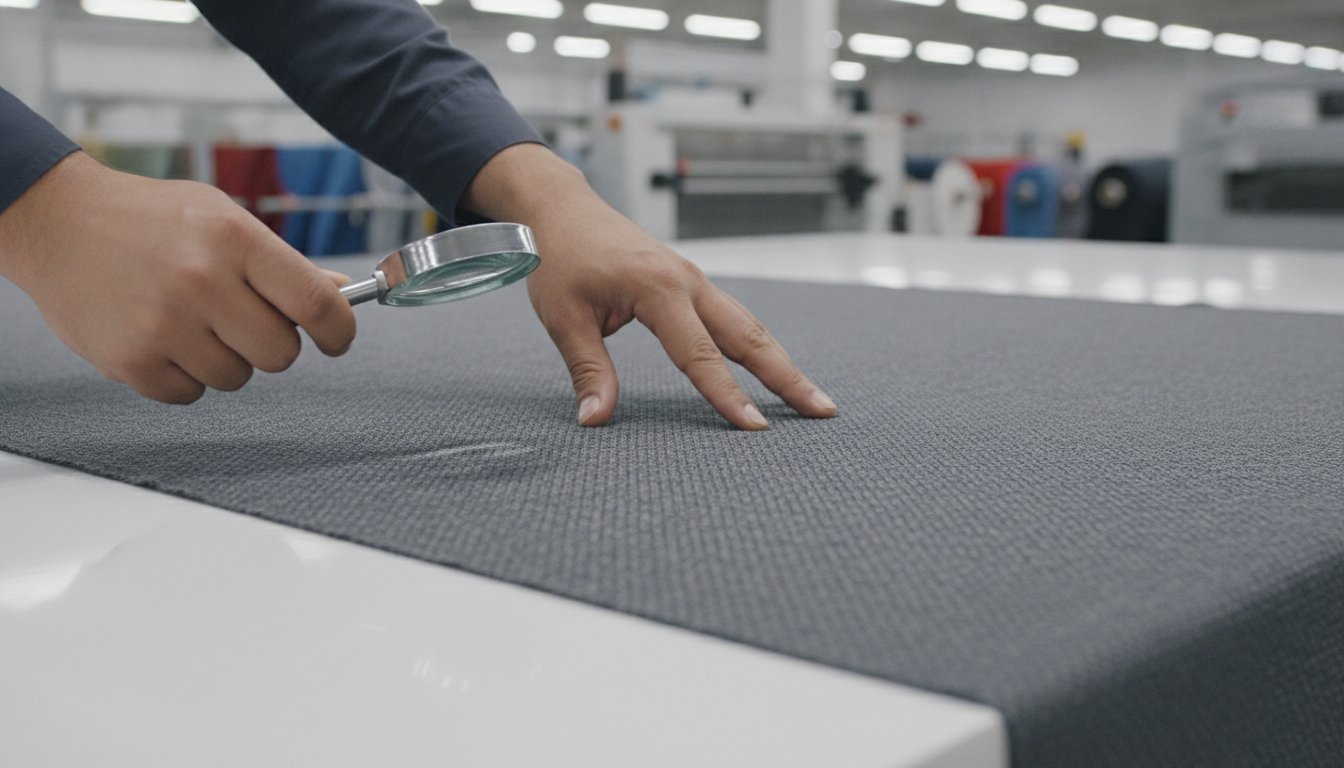
A Pre-Production Inspection (PPI) ensures the factory uses the correct raw materials before the machines start. For example, verifying the 304-grade stainless steel you paid for isn't replaced with a cheaper 201-grade alternative can save thousands in future claims. Once production begins, a DuPro inspection occurs when approximately 20% of the order is completed. DuPro is the most effective way to prevent mass-production errors. By catching a stitching defect or a color mismatch early, you save the remaining 80% of the batch from the same fate. This methodology aligns with global standards for Managing Risk for Safe, Efficient Trade, ensuring your supply chain remains resilient and predictable.
The Critical Role of Pre-Shipment Inspection (PSI)
The PSI is your last line of defence before final payment is made. It happens when at least 80% of the goods are packed and ready for transport. We use the AQL (Acceptable Quality Level) standard, specifically ISO 2859-1, to determine the sample size. This statistical tool defines what "perfect" looks like for your specific order by setting clear limits on defects. Following the inspection, you receive a detailed report within 24 hours. This report is vital for your peace of mind when sourcing overseas because it categorizes defects into three levels:
-
Critical: Safety risks or non-compliance with regulations that result in a failed report.
-
Major: Defects that make the product unsellable or likely to be returned, often capped at a 2.5% limit.
-
Minor: Small aesthetic issues that don't affect function, typically allowed up to a 4.0% limit.
Reviewing these reports allows you to demand a re-sort or repair before the container is sealed. It's a professional, transparent process that removes the emotional stress of international trade and replaces it with cold, hard facts.
Step 3: Bridging the Communication and Accountability Gap
Vague instructions like "high quality" are a recipe for disaster. Data from 2024 shows that 40% of sourcing disputes arise from poorly defined quality standards. You need a technical Inspection Checklist that defines tolerances, Acceptable Quality Limits (AQL), and specific testing parameters. Professional buyers don't hope for the best; they define it. This level of clarity provides true peace of mind when sourcing overseas because it removes the supplier’s ability to claim a misunderstanding when defects appear.
Securing the Final Mile: Container Loading
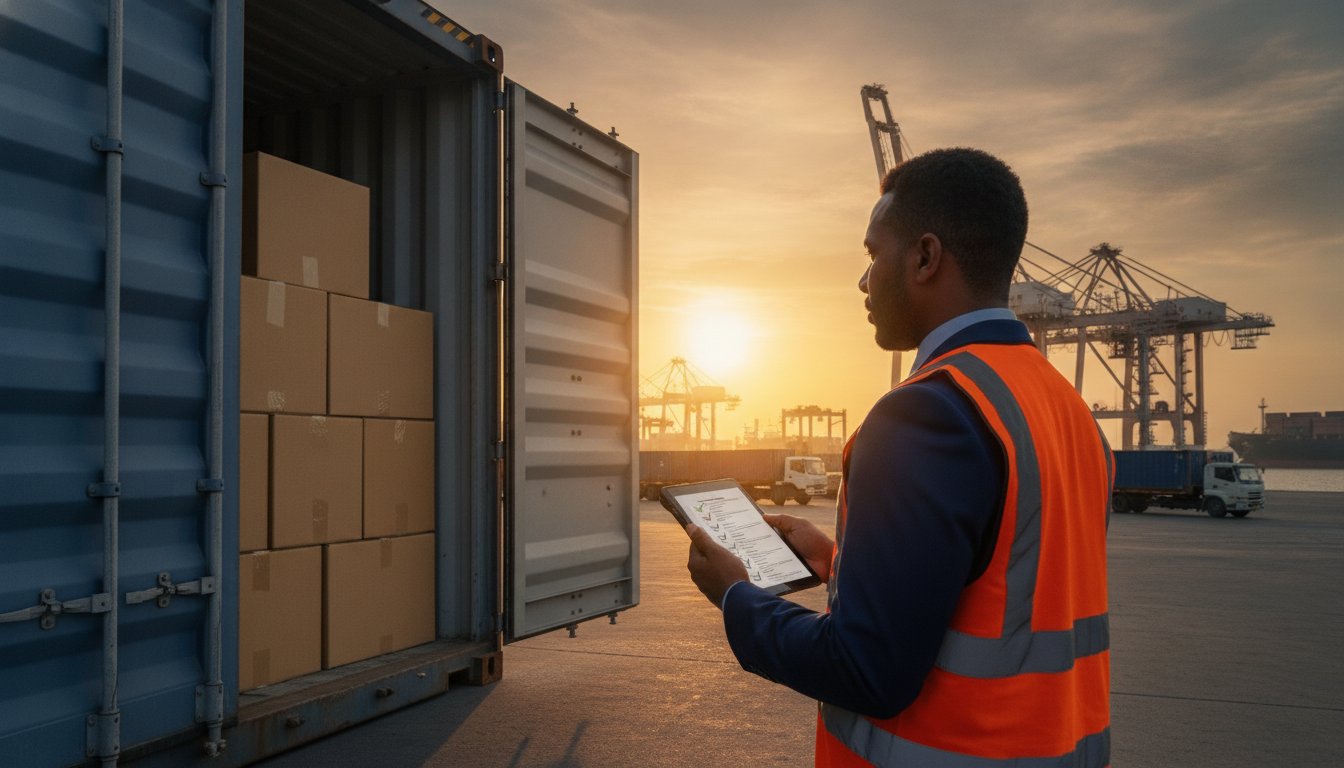
The risk doesn't end when production finishes. A Container Loading Inspection (CLI) is your final defense against "bait and switch" tactics, where approved goods are swapped for inferior stock at the last second. In 2025, logistics audits revealed that 12% of transit damage occurred due to improper container seals or moisture ingress. Our inspectors verify carton quantities, check for holes in the container, and ensure Amazon FBA labels are positioned correctly to avoid warehouse rejection fees that can cost upwards of $2,500 per shipment.
Creating a Culture of Accountability
When you include a "Right to Inspect" clause in your manufacturing agreement, you change the factory's internal priorities. Suppliers naturally allocate their most skilled workers to production lines where they know an independent third party will verify the work. It's a psychological shift that forces the factory to take your requirements seriously. By receiving a detailed digital report within 24 hours of the inspection, you make shipping decisions based on objective data rather than factory promises.
European-led management simplifies these complex Asian logistics by translating Western expectations into local action. We've found that shipments managed with professional oversight have a 95% lower rate of post-arrival claims. You gain peace of mind when sourcing overseas by knowing an expert team is on the ground, speaking the local language while enforcing your specific standards. One day of inspection can truly save you months of financial and legal trouble.
Stop guessing and start controlling your supply chain today. Book your next container inspection with our expert team to secure your investment.
Scaling with Confidence: Why The Inspection Company is Your Best Partner
Scaling a supply chain requires a partner who understands the ground reality in Asia. The Inspection Company brings over 25 years of experience in quality management to your operations. With a network of 700+ inspectors stationed across every major manufacturing hub, we provide the infrastructure you need to grow without compromising quality. This massive reach ensures you achieve true peace of mind when sourcing overseas, whether you're working with one factory or fifty.
We bridge the gap between Western quality expectations and Asian manufacturing processes through our unique model of European management combined with local on-the-ground expertise. This structure eliminates communication barriers and cultural misunderstandings that often lead to defect rates as high as 15% in unmonitored shipments. For e-commerce leaders, our specialized Amazon FBA services are designed to protect your seller account health. We verify labeling, packaging, and product specifications to ensure 100% compliance with strict platform requirements, preventing costly suspensions and returns.
One Day of Inspection, Months of Peace of Mind
Think of quality control as an investment that pays dividends in brand reputation. A single day of on-site inspection can prevent months of logistical nightmares and financial losses. Our streamlined 3-step process makes it simple:
-
Request: Submit your specific product requirements and standards.
-
Booking: We coordinate directly with your factory within 48 hours.
-
Transparent Reporting: You receive a detailed digital analysis of your goods.
Take control of your supply chain today. It's time to stop leaving your product quality to chance and start making data-driven shipping decisions.
Your Independent Eyes in Asia
Impartiality is our core value. We work exclusively for you, not the factory. Our inspectors act as your eyes on the factory floor, identifying defects that a supplier might try to hide. Speed is just as critical as accuracy. We deliver comprehensive reports within 24 hours of the inspection, allowing you to make informed decisions without delaying your timeline. This speed and transparency are essential for maintaining peace of mind when sourcing overseas. Don't let distance become a liability for your business growth.
Get your free instant inspection quote and secure your next shipment
Take Control of Your Global Supply Chain Today
Sourcing from Asia shouldn't feel like a gamble. You've learned that mitigating risk requires a structured approach, starting with professional factory audits and ending with rigorous pre-shipment inspections. These steps eliminate the trust deficit by replacing assumptions with verified data. One day of inspection can save months of financial trouble and brand damage. True peace of mind when sourcing overseas is only possible when you have a reliable partner managing quality control at every stage of production.
The Inspection Company brings over 25 years of experience to your supply chain. With 700+ professional inspectors across Asia and an ISO 9001 certification, we provide the transparency you need to scale with confidence. Our European-managed team ensures Western quality standards are met before your products ever leave the factory floor. Don't wait for a costly surprise to realize the value of independent oversight.
Secure Your Supply Chain – Book Your Inspection Now
Your business deserves the security that comes from meticulous quality management. We're ready to help you build a more resilient and profitable future.
Frequently Asked Questions
Is it really necessary to inspect every shipment if I trust my supplier?
Yes, inspecting every shipment is vital because production variables like staff turnover or raw material changes can occur without notice. Statistics show that even "Gold Tier" suppliers maintain a 3% defect rate when they aren't monitored by third-party experts. Regular inspections ensure your peace of mind when sourcing overseas by catching errors before they leave the factory floor. One day of inspection prevents months of refund disputes and brand damage.
What happens if the inspection report shows the goods have failed?
You should immediately halt the shipment and withhold the final 70% payment until the factory rectifies the identified issues. Our report provides the objective evidence you need to demand a full re-work or a 100% sorting of the production batch. In 2025, 18% of our inspections resulted in a "Fail" result, which saved our clients from receiving unsellable inventory. We then conduct a follow-up inspection to verify that the factory corrected every specific defect.
How much does a professional pre-shipment inspection cost in 2026?
A professional pre-shipment inspection in 2026 typically costs between $298 and $325 per man-day in major manufacturing hubs. This all-inclusive flat rate covers the inspector's travel, the on-site testing, and the delivery of a detailed report. Investing $300 to secure a $50,000 container is a standard risk mitigation strategy. It's a small price to pay to avoid the $15,000 loss often associated with a total product recall.
Can an inspection company help me find a new supplier in Asia?
We don't act as a sourcing agent, but we provide the factory audits necessary to vet any new supplier you've identified. Our auditors visit the site to verify legal licenses, production capacity, and ISO 9001 compliance. Data from 2025 shows that 42% of suppliers found on B2B platforms failed our initial verification audits. This service provides the ultimate peace of mind when sourcing overseas by ensuring your partner is a legitimate manufacturer rather than a middleman.
What is the difference between a factory audit and a product inspection?
A factory audit evaluates the manufacturer's facility, machinery, and quality management systems to see if they're capable of meeting your standards. In contrast, a product inspection focuses on the physical goods themselves using AQL 2.5 sampling methods to check for defects. Think of the audit as a background check on the company and the inspection as a final exam for your specific order. Both are required to eliminate 95% of supply chain risks.
How long does it take to get the results of an inspection?
You'll receive your comprehensive inspection report within 24 hours of the inspector finishing their work at the factory. In 2025, our team delivered 98.5% of reports on the same evening of the inspection. This rapid turnaround allows you to make an informed "ship or no-ship" decision without delaying your logistics schedule. Each report includes high-resolution photos and video evidence of the testing process conducted on-site.
Does The Inspection Company provide services for Amazon FBA sellers?
We provide specialized services for Amazon FBA sellers, including FNSKU label verification and carton weight compliance checks. Our inspectors use the 2026 Amazon Seller Central requirements to ensure your goods won't be rejected at the fulfillment center. Incorrect labeling accounts for 15% of warehouse rejections. We catch these errors at the factory; this saves you from the $2,000 fees typically charged for third-party re-labeling in the US or Europe.
Can I book an inspection if my factory is in a remote part of Vietnam or India?
You can book an inspection in any province across Vietnam, India, and China through our network of 50 regional offices. We don't charge extra for travel to common manufacturing zones like Binh Duong or Gujarat. Our local presence means we can deploy an inspector to a remote site within 48 hours of your request. This wide geographical coverage ensures you're protected no matter where your production takes place.