
For many importers, the weeks surrounding Chinese New Year are a source of significant business risk, triggering a cascade of costly delays, quality control failures, and communication breakdowns. But what if you could turn this period of uncertainty into a strategic advantage? Understanding a few critical chinese new year facts goes far beyond cultural appreciation-it is an essential part of effective supply chain management. This isn't about red envelopes and dragon dances; it's about the operational realities that can make or break your production schedule and budget for the entire year.
In this guide, we move past the surface-level details to reveal the 20 facts every importer must know to prepare for 2026. You will discover how to accurately predict the real length of the shutdown, mitigate the risks of post-holiday quality fade, and communicate effectively with your suppliers before, during, and after the break. Arm yourself with this knowledge to avoid costly surprises, protect your shipments, and ensure your business navigates this critical period with confidence and control.
Core Facts: Understanding the Scale and Timing of Chinese New Year
To effectively manage your supply chain, it's essential to understand the core Chinese New Year facts that directly impact production and logistics. Known interchangeably as the Spring Festival or Lunar New Year, this is the most important holiday in China. Its arrival triggers the largest annual human migration on earth, as millions of workers travel from industrial cities to their hometowns, causing a near-total shutdown of the country's economic engine.
Unlike holidays with fixed dates, the Spring Festival follows a lunisolar calendar, meaning the date shifts every year. For importers, this variability requires proactive planning to mitigate shipment delays. Mark your calendar for the upcoming dates:
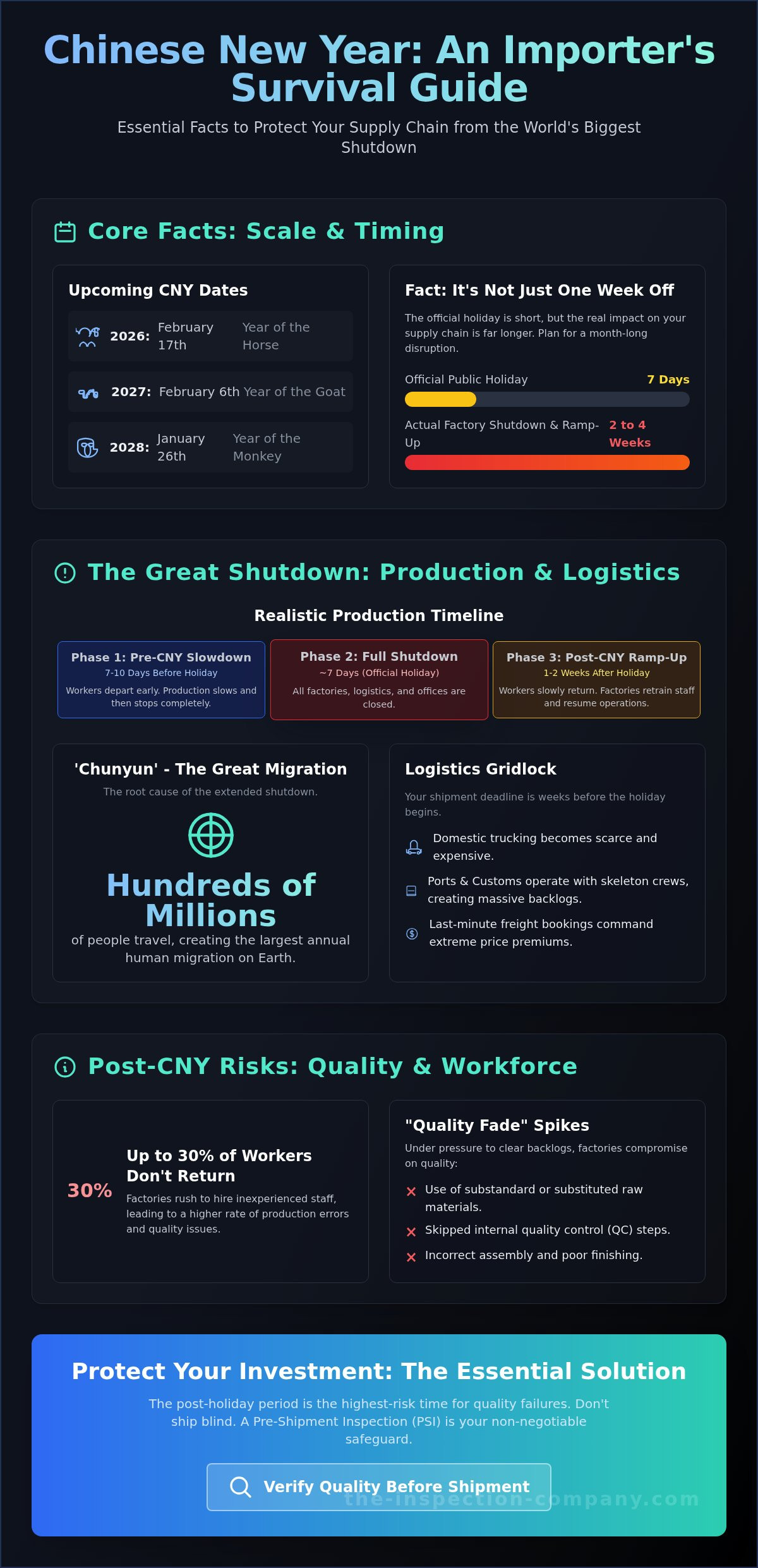
- 2026: February 17th (Year of the Horse)
- 2027: February 6th (Year of the Goat)
- 2028: January 26th (Year of the Monkey)
While the full scope of Chinese New Year traditions extends for 15 days and culminates in the Lantern Festival, the impact on your business operations lasts much longer.
Fact: It's Not Just One Day Off
The official public holiday typically lasts for seven days. However, for practical planning purposes, you must anticipate a much longer disruption. Most factories will shut down for a period of two to four weeks. This extended closure accounts for the pre-holiday production slowdown as workers depart early and the post-holiday ramp-up period as they gradually return. Failure to account for this full window is a common and costly mistake.
Fact: The Zodiac Animal Changes Annually
Each year is associated with one of the 12 animals of the Chinese zodiac. For example, 2026 is the Year of the Horse, an animal associated with energy, enthusiasm, and independence. While this cultural element is a significant part of the celebration and marketing in Asia, its direct operational impact on your supply chain is minimal. Your primary focus should remain on the critical dates of the shutdown, not the specific zodiac animal.
The Great Shutdown: Production & Logistics Facts You Can't Ignore
For importers, the Chinese New Year is more than a cultural celebration; it is the single most disruptive event on the global supply chain calendar. Unlike a standard public holiday, this period triggers a near-complete shutdown of the world's second-largest economy. Understanding the timeline and scale of this shutdown is not just helpful-it is essential for protecting your business from costly delays and quality control failures. This is the most critical period to plan for, as failure to do so guarantees complications.
Fact: Factories Close for up to a Month
The official holiday lasts about a week, but the real-world impact on production is far longer. Most factories cease operations 7 to 10 days before the New Year as workers begin their long journeys home. After the holiday, production does not simply resume. It can take another one to two weeks for factories to return to full capacity, as many workers return late or seek new employment, forcing suppliers to hire and train new staff.
Fact: 'Chunyun' is the World's Largest Human Migration
To understand the extended shutdown, you must understand Chunyun. This 40-day travel period, known as the Spring Festival migration, sees hundreds of millions of people travel across China to reunite with their families. It is the largest annual human migration on Earth. This immense logistical challenge strains all infrastructure and is the primary reason workers leave their factory jobs so early and return so late, creating a prolonged and unpredictable production gap.
Fact: Shipping and Logistics Grind to a Halt
Your products cannot ship if the logistics infrastructure is offline. Weeks before the holiday, domestic trucking becomes scarce as drivers head home. Ports and customs offices operate with skeleton crews, creating massive backlogs for cargo clearance that can take weeks to resolve. This scarcity drives up prices, with last-minute freight bookings commanding extreme premiums. Proactive planning is the only effective way to mitigate supply chain disruption and avoid these costs. One of the most important chinese new year facts for sourcing is that your shipment deadline is effectively weeks before the actual holiday. Don't risk shipping delays. Verify your order with an inspection before the shutdown.
Post-CNY Risks: Facts About the Quality and Workforce Challenges
Once the Chinese New Year celebrations conclude, many importers breathe a sigh of relief. However, the operational challenges are far from over. In fact, the weeks immediately following the holiday represent one of the highest-risk periods for product quality and supply chain stability. Understanding the facts about these post-CNY disruptions is essential to protect your investment and avoid costly defects.
The combination of workforce instability, immense production pressure, and technical restarts creates a perfect storm for quality control failures. Here are the key challenges every importer must anticipate.
Fact: Up to 30% of Factory Workers Don't Return
The holiday is often the only time migrant workers see their families, and many use this break to find employment closer to home or switch jobs entirely. This results in a significant labor shortage, with some factories seeing up to 30% of their workforce not return. To compensate, factories rush to hire and train new, inexperienced staff, which directly correlates to a higher rate of production errors and quality issues.
Fact: 'Quality Fade' Spikes After the Holiday
'Quality fade'-the gradual decline of product quality as suppliers cut corners to save costs or time-is rampant after CNY. Factories face immense pressure to clear order backlogs. This rush, combined with an untrained workforce, can lead to serious compromises:
- Skipped internal quality control steps
- Use of substandard or substituted raw materials
- Incorrect assembly or poor finishing
These are critical chinese new year facts that make a robust post-production inspection non-negotiable. A comprehensive Pre-Shipment Inspection (PSI) is your final, essential opportunity to verify quality before payment and shipment.
Fact: Production Lines are Restarted and Re-calibrated
After weeks of inactivity, machinery doesn't simply turn back on and perform perfectly. Production lines must be restarted, re-calibrated, and tested. The first production runs after this long hiatus are notoriously prone to defects as equipment is fine-tuned and new workers learn their roles. This initial period is when mistakes are most likely. A During Production Inspection (DUPRO) can be invaluable here, allowing you to identify and correct systemic issues before the entire order is compromised.
Cultural Facts with Business Etiquette Implications
Beyond logistics and production schedules, understanding key cultural traditions can significantly strengthen your supplier relationships. Demonstrating cultural awareness is not just polite; it's a strategic tool that builds trust and fosters goodwill, which can be invaluable when navigating production challenges. These essential chinese new year facts provide the context needed to communicate effectively and maintain strong partnerships during the festive season.
Fact: Red Symbolizes Luck and Prosperity
Red is the most auspicious color in Chinese culture, representing luck, joy, and prosperity. During the holiday, you will see it everywhere, from decorations to festive clothing. The most famous tradition is the giving of red envelopes, or hóngbāo, containing money as a gift of good fortune. For your business communications, remember this critical piece of etiquette:
- Never use red ink to write notes or a person's name. In Chinese culture, this is traditionally reserved for marking the names of the deceased and carries severe negative connotations. Sticking to black or blue ink is a simple way to avoid a serious cultural misstep.
Fact: Gift Giving Has Specific Rules
While gift-giving is a common practice to show appreciation, it comes with its own set of protocols. It is customary to politely refuse a gift two or three times before accepting, as this demonstrates humility. More importantly, certain items are considered taboo and should always be avoided as they carry inauspicious meanings:
- Clocks: The phrase for "giving a clock" sounds like "attending a funeral."
- Sharp Objects: Items like knives or scissors imply a desire to sever the relationship.
- Handkerchiefs: These are associated with crying and saying goodbye.
A simple, professional, and always-safe gesture is to send a thoughtful email to your primary contact wishing them and their family a happy and prosperous New Year.
Fact: Key Dates Have Specific Meanings
The 15-day festival is not a single, uniform holiday. Understanding a few key dates helps you set realistic communication expectations. The most important days are at the beginning:
- New Year's Eve: This is for the family reunion dinner, the most important meal of the year. Do not expect any business communication.
- Day 2: Traditionally reserved for visiting the wife's side of the family.
- Day 5: This is the day many businesses and shops traditionally reopen, though it may be with a skeleton crew. Full operations often resume later.
Acknowledging these cultural details is a vital part of a comprehensive risk management strategy. For more on how to secure your supply chain, visit The Inspection Company.
Actionable Facts: How to Plan Your Sourcing Around CNY
Understanding the theory behind the Chinese New Year shutdown is one thing; putting that knowledge into practice is what protects your business. The most critical chinese new year facts for importers are those that translate directly into a strategic plan. Use this timeline and checklist to navigate the holiday period, mitigate risks, and safeguard your supply chain from costly delays and quality issues.
Fact: Your Production Plan Needs a 3-Month Buffer
The single most effective strategy for avoiding CNY disruption is proactive planning. The pre-holiday rush creates immense pressure on production capacity and logistics networks. To secure your spot and ensure a timely departure, you must work months in advance.
- Place Final Orders: To be safe, submit all purchase orders no later than the end of October. This gives your factory sufficient time for material sourcing and production before the peak season hits.
- Confirm Deadlines in Writing: Get firm production completion and shipment dates confirmed in writing from your supplier. Verbal agreements are not enough when deadlines are this critical.
- Build in Extra Time: Add at least two to three extra weeks to your own inventory planning. This buffer will absorb potential delays from port congestion or customs clearance backlogs, which are common at this time.
Fact: Final Payments Should Wait for Final Inspection
As the holiday approaches, factories are incentivized to ship products and collect payments as quickly as possible. This rush can lead to overlooked quality control and costly defects. Protecting your investment requires independent verification before the final payment is released. This is one of the most important chinese new year facts to remember.
Never release your final payment until you have a satisfactory Pre-Shipment Inspection (PSI) report. This is your last point of leverage to demand corrections for any quality issues before your products are shipped. Once the goods sail, your options become severely limited and far more expensive. One day of inspection can save you months of trouble.
Schedule your pre-CNY inspection now to secure your shipment.
Fact: Communication is Key to a Smooth Holiday Period
Clear and consistent communication before, during, and after the holiday prevents misunderstandings and ensures a smoother production restart. A strong supplier relationship is built on mutual respect and clear expectations.
- Request Exact Holiday Dates: Ask your supplier for their specific factory closure and office reopening dates. Do not assume standard dates, as they can vary.
- Send Good Wishes: A simple "Happy New Year" message to your main contacts is a professional courtesy that helps strengthen your business relationship.
- Plan for the Restart: Establish a date for your first post-holiday follow-up call or email to check on the status of returning workers and the planned resumption of your production line.
Navigate Chinese New Year with Confidence
Understanding Chinese New Year goes beyond cultural appreciation; it is a critical component of supply chain management. The key takeaways are clear: the extended factory shutdowns are unavoidable, and the subsequent production rush often leads to quality control issues and workforce instability. These essential chinese new year facts demonstrate that proactive planning is not just an option, but a necessity for any serious importer.
The period immediately following the holiday is one of the highest-risk times for quality fade. Don't let rushed production compromise your standards or lead to costly defects. Verifying your shipment's quality before it leaves the port is the single most effective way to mitigate these risks and protect your investment.
With over 25 years of experience in Asia, European management ensuring international quality standards, and detailed inspection reports delivered within 24 hours, we stop problems before they sail. Don't let Chinese New Year disrupt your business. Get your free quote for a Pre-Shipment Inspection today.
Armed with the right strategy and a reliable partner, you can navigate the complexities of CNY and ensure your supply chain remains robust and reliable year after year.
Frequently Asked Questions About Chinese New Year Factory Closures
How long do Chinese factories really close for the New Year?
While the official public holiday lasts about seven days, most factories shut down for three to four weeks. Many workers travel long distances to their hometowns, leaving a week or two before the holiday and returning a week or two after. This extended closure, one of the most critical chinese new year facts for importers, creates a significant production bottleneck. Plan for a complete halt in manufacturing and communication for at least one month to avoid unexpected and costly delays.
What is 'quality fade' and how can I prevent it after Chinese New Year?
'Quality fade' is the gradual decline in product quality as factories rush to clear backlogs after the holiday. This is often caused by new or temporary staff who are unfamiliar with your product specifications. To prevent this critical risk, you must implement a robust Pre-Shipment Inspection (PSI). An independent inspection verifies that your order meets all quality standards before it leaves the factory, ensuring you do not pay for defective goods and protecting your brand's reputation.
When is the absolute last day I can ship goods from China before CNY?
There is no single "last day," as it varies by port and factory location. A reliable rule of thumb is to ensure your goods are loaded and ready to ship at least 10 to 14 days before the official start of the holiday. Waiting any longer significantly increases the risk of your shipment being rolled to a later vessel due to extreme port congestion. This can lead to your cargo being stuck in China for the entire holiday period, incurring extra fees.
Should I pay my supplier before they close for the holiday?
It is common to pay the final balance before the holiday so your supplier can pay their staff and material costs. However, you must never release the final payment until a successful Pre-Shipment Inspection has been completed and you have approved the report. This inspection is your final point of leverage. Paying your supplier in full without verifying the quality of your entire production run is an unacceptable financial risk that can lead to significant losses and disputes.
Is it better to ship my order before or after Chinese New Year?
Shipping your order before Chinese New Year is almost always the superior strategy. This allows you to avoid the frantic pre-holiday production rush and secure your goods before the shutdown. Shipping after the holiday exposes your order to significant risks, including quality fade from new workers, higher freight costs due to post-holiday demand, and extended lead times as factories struggle to manage a massive backlog. Proactive planning to ship before the holiday is essential for supply chain stability.
What are the most common mistakes importers make during this period?
The most common and costly mistakes include underestimating the full length of the factory shutdown and failing to place orders early enough. Another critical error is neglecting to book a Pre-Shipment Inspection well in advance, leaving no time to address defects. Finally, many importers release final payment without quality verification or fail to confirm a firm shipping date with their supplier. These planning failures inevitably lead to severe delays, quality problems, and unexpected costs.